 Bellingham Siding
 Why Fairhaven's Climate Is Harder on Windows Than People Expect
Fairhaven sits close enough to the water that salt-laden air, wind-driven rain, and a long wet season all work on a home's windows year-round. It's a different set of stresses than a house fifteen minutes inland deals with. Salt air accelerates corrosion on hardware and fasteners that aren't rated for it. Driving rain off Bellingham Bay tests flashing and sealant details that a mild climate would never expose. And Whatcom County's long moss season keeps north- and shade-facing walls damp for months at a stretch, which matters more than most homeowners realize when it comes to window performance.
None of this means Fairhaven homes need exotic products. It means the window package, the installation details, and the material choices all have to account for sustained moisture exposure and salt exposure in a way that a generic "energy-efficient windows" checklist from a big-box retailer doesn't cover.
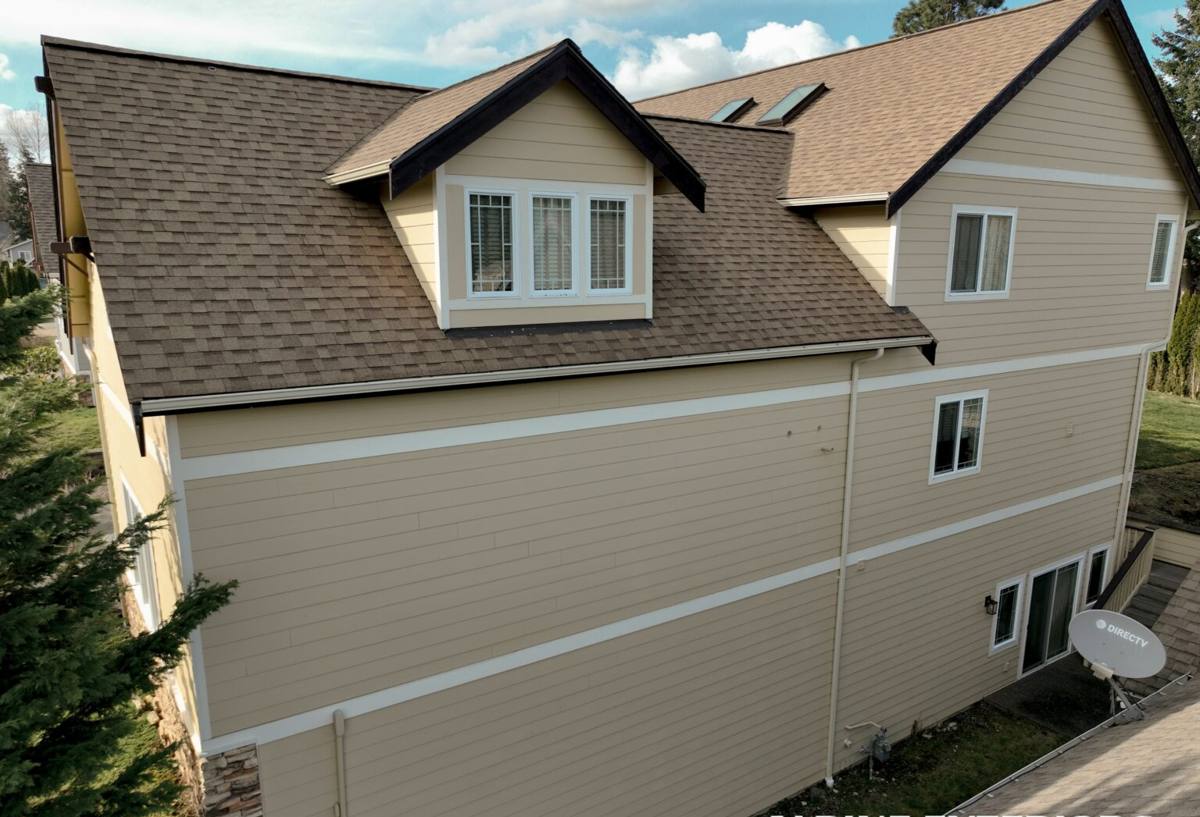
What "Energy-Efficient" Actually Means Here
Energy efficiency in a marine climate isn't only about the glass. A window can carry a good U-factor rating and still perform poorly on a Fairhaven home if the installation lets air and moisture in around the frame. We look at four things together, not just one number on a label.
U-Factor and Solar Heat Gain
U-factor measures how well a window resists heat transfer — lower is better for our climate, where the goal is mostly keeping heat in during the wet, cool months. Solar Heat Gain Coefficient (SHGC) matters less here than it would in a sunnier climate, but it still affects west- and south-facing rooms during the few clear stretches Bellingham gets.
Air Infiltration Rating
This is the number most homeowners never ask about, and it's often the one that matters most. A window with a low air infiltration rating resists the wind-driven rain and gusts common near the water. A drafty window undermines even a good U-factor.
Condensation Resistance
With humidity staying high for long stretches of the year, a window's ability to resist interior condensation affects both comfort and the long-term health of the surrounding wall and trim. Poor condensation resistance shows up as fogged glass, damp sills, and eventually soft wood or mold at the frame edges.
Installation Quality
This is the piece a spec sheet can't capture. Flashing, sealant choice, and how the window ties into the existing wall assembly determine whether all of the above ratings actually hold up once the window is in the wall.
Signs a Fairhaven Home Needs New Windows
Not every drafty room means full replacement. But in our experience working this neighborhood, these are the signals worth taking seriously:
- Condensation forming between the panes (a sign the seal has failed on a double- or triple-pane unit)
- Soft or discolored wood at the sill or bottom corners of the frame
- Visible corrosion on hardware, hinges, or locks — common on older aluminum-framed windows near the water
- Persistent drafts you can feel with a hand near the frame on a windy day
- Difficulty opening, closing, or locking that didn't used to be there
- Noticeable temperature difference near the window compared to the rest of the room
- Paint or finish failing faster on window trim than on the rest of the siding
If you're seeing two or more of these, it's worth having someone look at the actual condition rather than guessing from the symptoms.
Frame Material: What Holds Up Near the Water
Frame material choice matters more in Fairhaven than it does further inland, mostly because of salt exposure and sustained moisture. Here's how the common options compare for this specific setting.
| Material | Salt Air Performance | Moisture Behavior | Maintenance |
|---|---|---|---|
| Vinyl | Good — won't corrode | Handles moisture well, no rot risk | Low — occasional cleaning |
| Fiberglass | Very good — dimensionally stable, resists salt corrosion | Excellent moisture resistance | Low |
| Wood-clad | Fair — cladding protects wood, but any breach exposes it to rot | Vulnerable if seals or cladding fail | Higher — needs monitoring at joints |
| Aluminum | Poor to fair — prone to corrosion and pitting near salt air unless marine-rated | Conducts cold, can promote condensation | Moderate |
We tend to steer homeowners near the water away from standard aluminum frames, not because the material is inherently bad, but because ordinary aluminum hardware and finishes weren't built for sustained salt exposure. That's a maintenance and longevity trade-off worth knowing before you buy, not a knock on any particular brand.
Glass Packages Worth Considering
For most Fairhaven homes, we recommend double-pane units with a low-E coating and an argon or krypton gas fill as the baseline. Triple-pane is worth discussing for north-facing rooms, homes closer to the water where wind load is higher, or anyone prioritizing sound reduction along with energy performance. Triple-pane costs more and weighs more, which affects frame and hardware requirements, so it's not automatically the better choice for every room.
Low-E Coatings
Low-emissivity coatings reflect radiant heat while still letting visible light through. In our climate, a low-E coating tuned for heat retention (rather than heat rejection) usually makes more sense than a coating optimized for hot, sunny climates.
Spacer Systems
The spacer between panes affects condensation resistance at the glass edge. Warm-edge spacer technology (as opposed to older aluminum spacers) reduces the cold spot at the perimeter of the glass, which matters directly for the condensation issues common in this climate.
How We Approach Installation on Fairhaven Homes
The window itself is maybe half the job. The other half is how it's tied into the wall.
Flashing and Water Management
We flash every opening to shed water down and out, not just seal it with caulk and hope. Driving rain off the bay will find any gap in a flashing detail eventually, so the sequencing — sill pan, side flashing, head flashing, all lapped correctly — is the part that actually keeps water out over the long run.
Air Sealing
Low-expansion foam or backer rod and sealant around the frame perimeter closes the air gaps that undermine a window's rated performance. This step gets skipped or rushed more often than homeowners realize, and it's usually invisible once the trim goes back on.
Hardware and Fastener Selection
Near salt air, we use corrosion-resistant fasteners and hardware rated for coastal exposure rather than standard-grade components. It costs a little more up front and saves callbacks for seized locks or rusted hinges down the line.
Interior and Exterior Finish Work
Trim, caulk lines, and interior sealing get finished to match the rest of the home, not left as an afterthought once the window is functional.
Why Local Experience in This Neighborhood Matters
A crew that regularly works Fairhaven and the surrounding Bellingham waterfront knows which walls face the worst of the driving rain, which older homes still have aluminum-framed windows original to construction, and how moss and moisture behave on shaded north walls through a Whatcom County winter. That's not something a general-purpose install crew from outside the area picks up on a single job. It shows up in small decisions — which flashing detail to use on a particular wall assembly, whether a given opening needs extra attention at the sill — that add up to a window installation that actually holds up here.
Maintenance in a Salt Air, Moss Season Climate
Even the best window installation benefits from a little seasonal attention in this climate.
- Rinse salt residue off frames and hardware periodically, especially on homes with a direct water-facing exposure
- Clear moss and organic debris from sills and tracks before it holds moisture against the frame
- Check weep holes (drainage points at the bottom of the frame) to make sure they're clear and draining
- Inspect exterior caulk lines annually and re-seal any that have cracked or pulled away
- Lubricate hardware on operable windows to prevent salt-related stiffness or seizing
What Affects Cost
Every home and opening is different, but these are the main factors that move the price on a window replacement project in this area.
| Factor | Why It Matters |
|---|---|
| Frame material | Fiberglass and wood-clad generally cost more than vinyl; aluminum varies by grade |
| Glass package | Triple-pane and specialty coatings add cost over standard double-pane low-E |
| Opening condition | Rot or damage found during removal adds repair work before the new window goes in |
| Number and size of openings | Larger and custom-sized windows cost more than standard sizes |
| Access and wall type | Second-story, stucco, or masonry openings take more labor than standard siding |
We give straightforward, itemized estimates rather than a single lump number, so you can see exactly what's driving the cost on your specific home.
Get a Free Estimate for Your Fairhaven Home
If you're dealing with drafts, fogged glass, or hardware that's seen better days, we're happy to take a look and give you an honest read on what's going on — no pressure, no obligation. Use the form below to request a free estimate, and we'll walk your home's windows with you and explain what we find in plain terms.