 Bellingham Siding
 Fairhaven's Exposure Is Different From the Rest of Bellingham
Fairhaven sits right on Bellingham Bay, which means the siding on homes here deals with a combination of stresses that inland Whatcom County neighborhoods simply don't see as intensely. Salt-laden air off the water accelerates corrosion on fasteners, flashing, and trim. Wind-driven rain off the Salish Sea pushes moisture sideways into wall assemblies rather than just falling straight down. And the long, damp Pacific Northwest shoulder seasons — fall through spring — create the kind of shaded, slow-drying conditions where moss and algae take hold on north- and west-facing walls and never really let go.
None of that means siding is doomed here. It means the material and the installation both have to be chosen with that exposure in mind. A product and a crew that would be perfectly fine putting up siding in a dry inland climate can fall short in a waterfront neighborhood like Fairhaven, where the margin for error on moisture management is a lot thinner.
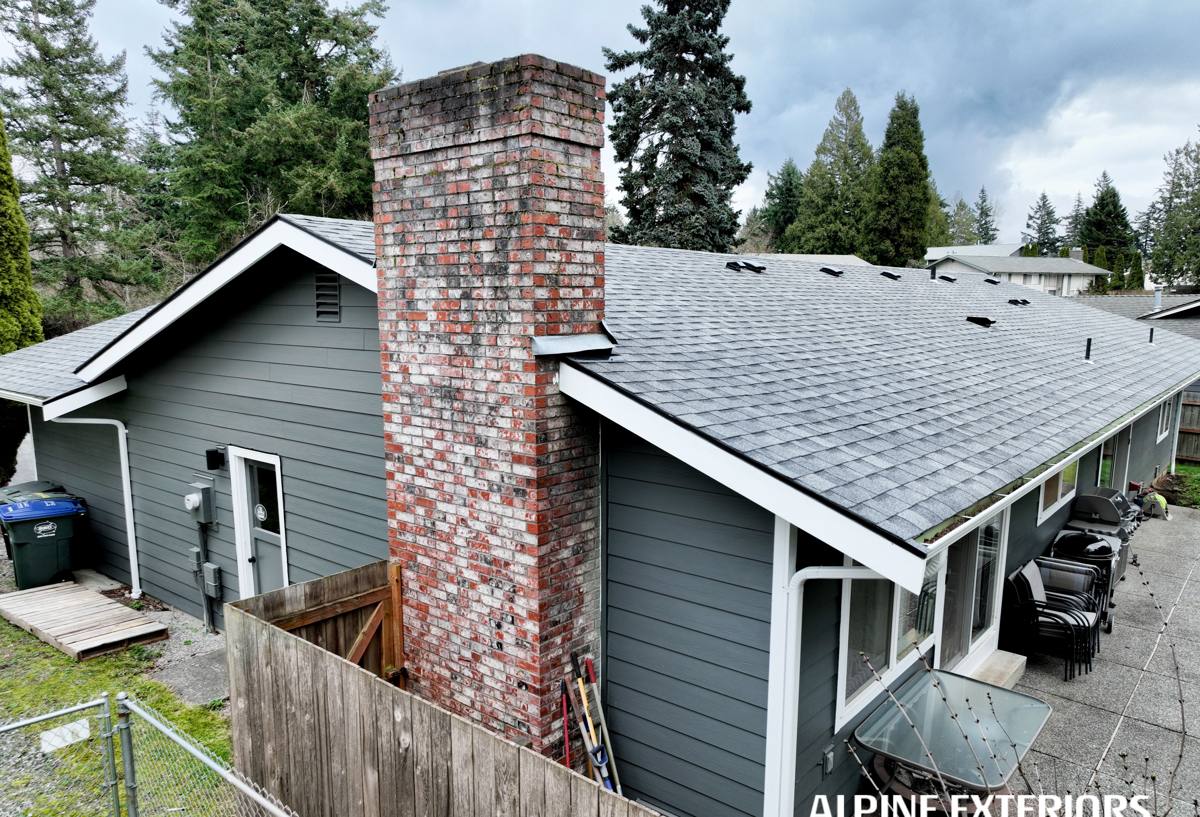
What Salt Air, Rain, and Moss Actually Do to a Wall
Salt Air
Airborne salt is corrosive to unprotected or lower-grade metal. Over years, it attacks exposed fastener heads, flashing seams, and any hardware that isn't rated for coastal exposure. Corroding fasteners eventually lose their grip, and corroding flashing stops shedding water the way it's supposed to — both are slow, quiet failures that don't show up until a wall is already wet behind the siding.
Driving Rain
Storms coming off the bay don't just wet the face of a wall — they drive water horizontally into every joint, seam, and penetration. Siding systems that rely on caulk alone to keep water out, rather than proper lap geometry, flashing, and a drainage plane behind the cladding, are the ones that eventually let moisture in. Once water gets behind siding in a marine climate, it doesn't dry out quickly, and that's when rot and mold become a problem.
Moss and Algae
Bellingham's long wet season keeps siding damp for extended stretches, especially on shaded elevations and under eaves with poor airflow. Moss and algae aren't just cosmetic — they hold moisture against the siding surface longer than it would otherwise sit there, and on materials that aren't dimensionally stable or properly sealed, that sustained dampness is what eventually leads to swelling, cracking, or paint failure.
Why We Install James Hardie Fiber Cement in Fairhaven and Nowhere Do We Install Anything Else
We standardized on James Hardie fiber cement siding for every home we side, and in a neighborhood like Fairhaven that decision matters even more than usual. Fiber cement is non-combustible, dimensionally stable, and doesn't feed moss and algae growth the way untreated wood fibers can. James Hardie's HZ5 product line is specifically engineered for climates like ours — colder, wetter, and more moisture-exposed than the softer HZ10 line built for the Gulf Coast — so the board itself is matched to the kind of weather Fairhaven actually gets, not a generic national spec.
The factory-applied ColorPlus finish is also a real advantage on a waterfront property. It's baked on under controlled conditions, resists fading and moisture intrusion far better than field-applied paint, and comes with its own finish warranty separate from the substrate warranty. That matters here specifically because sun, salt, and rain all work together to break down a lesser paint job faster on an exposed coastal wall than they would a few miles inland.
We won't put up vinyl, LP SmartSide, cedar, primed spruce, Cemplank, or Allura on a Fairhaven home, and we're upfront about why. Vinyl expands and contracts more with temperature swings and can warp or crack in sustained wind exposure. Wood-based products, including engineered wood siding like LP SmartSide, are more vulnerable to sustained moisture and moss growth over time, even with treated strand technology, because the underlying material is still organic. Alternative fiber cement brands may look similar on paper, but we don't have the same manufacturing history, warranty structure, or climate-specific product engineering behind them that we've come to trust with James Hardie. Given what this neighborhood's exposure does to a wall over 20-plus years, we'd rather install one product correctly than offer five options and hope the cheaper ones hold up.
What a Correct Installation Involves Here
Fiber cement siding is only as good as the assembly it's installed into. In a high-exposure neighborhood like Fairhaven, the details behind the boards matter as much as the boards themselves.
- A continuous weather-resistant barrier installed with proper shingle-lap overlap so water is directed out and down, never trapped behind the siding
- Rain screen or drainage gap detailing on the more exposed elevations, giving any incidental moisture a path to drain and dry instead of sitting against the back of the board
- Corrosion-resistant, coastal-rated fasteners set to Hardie's specified depth and pattern — not just "close enough," since over- or under-driven nails are one of the most common causes of premature failure
- Proper flashing at every window, door, and roofline penetration, with head flashing that actually sheds water rather than relying on sealant to do that job
- Correct clearances at the foundation, deck ledgers, and roof lines so the bottom edge of the siding never sits in standing water or snow
- Tight, properly caulked joints at butt seams and trim, using sealants rated for a marine environment rather than standard-grade caulk
Skip any one of these and the siding itself can be top quality and still fail early. This is where a lot of the difference between a siding job that lasts 30-plus years and one that needs rework in year eight actually comes from.
Our Process for a Fairhaven Siding Project
We approach every project here the same methodical way, adjusted for how exposed the specific lot is to wind and water off the bay.
1. On-Site Assessment
We look at the home's orientation relative to prevailing wind and rain, check for existing moisture damage or moss buildup, evaluate the current wall assembly, and identify any trouble spots — problem flashing, poor eave overhangs, shaded north walls — before we ever price the job.
2. Tear-Off and Substrate Check
Old siding comes off and we inspect the sheathing underneath. Any water damage or soft spots get addressed before a single new board goes up — covering a compromised substrate with new siding just hides the problem.
3. Weather Barrier and Flashing
This is the step that determines how the wall performs for the next several decades, and it's the one that's easiest to shortcut and hardest to inspect once the siding is up. We do it right the first time.
4. Installation to James Hardie Spec
Boards, fasteners, clearances, and joint treatment all follow James Hardie's published installation requirements for our climate zone — which is also what keeps the manufacturer's warranty valid.
5. Final Walkthrough
We check reveal consistency, caulking, trim, and flashing details with you before calling the job finished.
Comparing Siding Options for Fairhaven's Exposure
| Material | Salt Air Performance | Moss/Algae Resistance | Typical Lifespan Here |
|---|---|---|---|
| James Hardie Fiber Cement (HZ5) | Strong — engineered for this climate zone | Good, especially with ColorPlus finish | 30+ years |
| Vinyl | Can warp/crack under sustained wind and temperature swings | Moderate; growth sits on surface and stains over time | 15-25 years |
| Cedar / Untreated Wood | Vulnerable without diligent maintenance | Poor — organic material feeds growth | 15-25 years with heavy upkeep |
| Engineered Wood (LP SmartSide) | Moderate; treated but still organic core | Moderate — better than raw wood, still needs upkeep | 20-30 years |
These are general performance patterns, not guarantees — actual results always depend on installation quality, maintenance, and how exposed a specific lot is. But the pattern holds across the industry: materials with an organic core need more upkeep in a marine, moss-prone climate, and materials with more thermal movement need more attention to installation detail.
Living With Fiber Cement Siding in a Marine Climate
James Hardie siding is low-maintenance, not no-maintenance. A little seasonal attention goes a long way toward getting the full lifespan out of it in a place like Fairhaven.
- Rinse siding annually, focusing on shaded north and west walls where moss and algae are most likely to establish
- Keep gutters clear so overflow doesn't run down the wall face and keep it perpetually damp
- Trim back landscaping and tree cover that keeps any wall section in constant shade — airflow is one of the best defenses against moss
- Inspect caulking at trim and joints every couple of years and touch up as needed
- Watch for any chalking, peeling, or color change on the finish and have it looked at before it spreads
Cost Factors for a Fairhaven James Hardie Project
| Factor | Why It Affects Price |
|---|---|
| Home size and wall complexity | More corners, dormers, and trim detail mean more labor and cut waste |
| Substrate condition | Existing water damage found during tear-off adds repair scope |
| Siding profile and finish | Lap width, shingle-style panels, and trim board selections vary in material cost |
| Site access | Tight lots, older streets, and limited staging space common in established neighborhoods can affect labor time |
| Exposure level | Elevations facing the bay may warrant additional drainage or flashing detail |
We don't quote a job over the phone from a square-footage guess. Every estimate comes from an actual look at the home, because the factors above vary enough house to house that a generic number isn't useful to you.
Why It Matters That We Already Work in Fairhaven
A crew that regularly works waterfront and near-waterfront neighborhoods in Bellingham already understands how differently a home a few blocks from the bay behaves compared to one further inland — where moss tends to build up first, which elevations take the worst of the driving rain, and where the older housing stock in a historic neighborhood like this one tends to have specific quirks in wall framing or trim detail. That local pattern recognition shows up in small decisions during the job: where to add extra flashing attention, which elevations need a closer look at the substrate, how to detail around older trim profiles common in the neighborhood. It's the kind of judgment that only comes from having done the work here before, not from a general regional install checklist.
If you're weighing a siding project on a Fairhaven home, we're happy to come take a look, walk the exterior with you, and give you a straight assessment of what the house needs — no pressure, no generic estimate. Reach out below for a free consultation.