 Bellingham Siding
 Fairhaven's Roofs Take a Different Kind of Beating
Fairhaven sits close to Bellingham Bay, under a lot of mature tree canopy, and squarely in the path of the wet, wind-driven weather that rolls off the Salish Sea for most of the year. That combination is harder on a roof than people expect. Salt air moving off the water accelerates corrosion on anything metal that isn't built for it. Driving rain, pushed sideways by wind rather than falling straight down, finds every weak seam and gap in flashing. And a long, mossy season — helped along by shade and near-constant moisture — turns organic growth into a year-round maintenance problem instead of a once-a-summer chore.
None of that is unique to Fairhaven exactly, but the neighborhood's proximity to the water and its older, tree-shaded housing stock put homes here on the higher end of that exposure. A roofing system that's fine two miles inland can wear noticeably faster this close to the bay. Metal roofing, installed correctly, is one of the more reliable answers to that specific combination of problems.
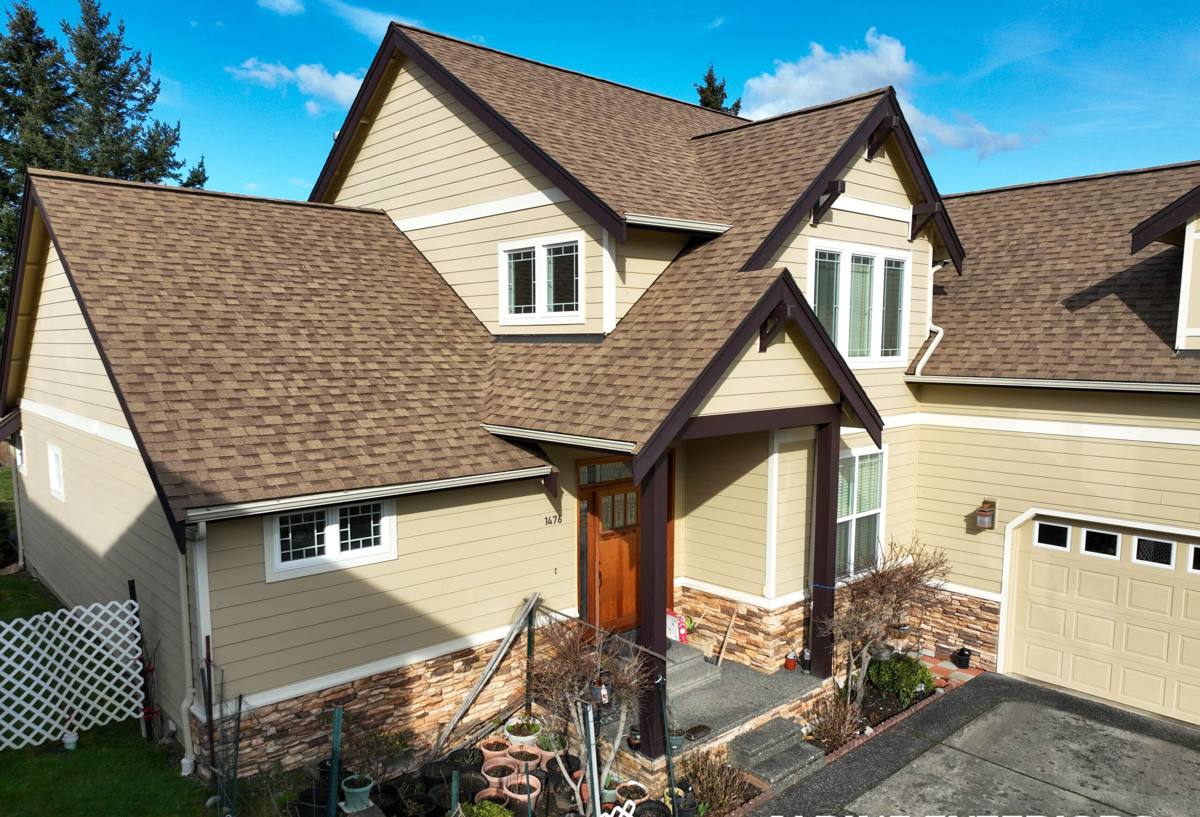
What Salt Air, Rain, and Moss Actually Do to a Roof Over Time
Salt Air and Corrosion
Airborne salt is mildly corrosive to unprotected or poorly coated metal — fasteners, flashing, and gutters are usually where it shows up first. Over years, that can mean rusting screws, staining at cut edges, and premature failure of any metal component that wasn't rated for coastal exposure. This is a materials and detailing issue more than a "metal roofs don't work near water" issue — the right alloy, coating, and fastener spec handle it fine.
Driving Rain and Wind-Driven Water
Straight-down rain is easy for almost any roof to shed. Wind-driven rain is different — it can push water sideways and upward under laps, around vents, and along ridge and valley details that weren't built with that in mind. Whatcom County storms regularly come with enough wind to test those details, and a roof that only performs well in calm weather isn't built for this area.
Moss, Moisture, and Slow Rot
Moss needs shade, moisture, and something to hold onto. Bellingham's tree cover and damp winters supply the first two in abundance for much of the year. On roofing materials with texture or an absorbent surface, moss gets a foothold, holds water against the roof deck, and quietly contributes to rot and granule loss long before it's visible from the ground.
Why Metal Roofing Holds Up Better in This Environment
Metal isn't magic, but its physical properties line up well with what Fairhaven's climate throws at a roof:
- Smooth, non-porous surfaces give moss very little to root into compared with textured or granular materials.
- Properly fastened metal panels have strong wind-uplift resistance, which matters in a location that gets real wind off the water.
- Steep water-shedding profiles move rain off the roof quickly rather than letting it sit and work into seams.
- A correctly installed system commonly lasts several decades, which means fewer full tear-offs and less accumulated risk of a bad installation going unnoticed.
That said, "metal roofing" isn't one product. The system, the metal, and the installation quality all matter more than the category name.
Choosing the Right Metal Roofing System for a Fairhaven Home
There are a few common metal roofing approaches, and they're not interchangeable in terms of cost, appearance, or how well they handle this specific climate.
| System | How It's Fastened | Best Fit | Trade-Offs |
|---|---|---|---|
| Standing seam | Concealed fasteners under raised, interlocking seams | Homes wanting maximum weather-tightness and a clean, modern or traditional look | Higher material and labor cost; installation quality is critical since fasteners are hidden |
| Exposed-fastener panel | Screws driven through the panel face | Budget-conscious projects, outbuildings, simpler rooflines | Fasteners and washers are a long-term maintenance point, especially with salt air exposure |
| Metal shingle or shake profile | Interlocking panels styled to resemble shingles or shakes | Homes wanting a metal roof's durability with a more traditional silhouette | More seams than standing seam, so flashing detail work matters even more |
For most Fairhaven homes, we lean toward standing seam or a quality metal shingle profile because of how well they resist wind-driven rain at the seams. Exposed-fastener panels have their place, but we're upfront that they carry more long-term maintenance in a salt-air environment, since every one of those hundreds of fasteners is a potential future leak point.
What a Correct Metal Roof Installation Actually Involves
Underlayment and Moisture Barrier
A metal panel is only as good as what's underneath it. A synthetic underlayment or self-adhered membrane at critical areas — eaves, valleys, penetrations — gives the roof a second line of defense if wind-driven water ever gets past the panels themselves. Skipping or skimping on underlayment is one of the most common shortcuts we see on poorly done metal roofs.
Flashing and Penetration Details
Chimneys, vents, skylights, and wall transitions are where the great majority of metal roof leaks actually originate — not the field panels. Correct flashing means custom-fit metal at every penetration, proper laps in the direction of water flow, and sealant used as a backup, not a substitute for good metalwork.
Fastening and Panel Layout
Panel spacing, fastener type, and expansion allowance all need to match the metal being used. Metal expands and contracts with temperature; a system fastened without room to move can buckle, oil-can, or work fasteners loose over time.
Ventilation
A roof deck that can't breathe traps moisture underneath the metal, which defeats a lot of the benefit of switching to a more weather-resistant surface in the first place. Ridge and soffit ventilation should be part of the plan, not an afterthought.
Our Process for Fairhaven Metal Roofing Projects
Assessment and Estimate
We start by looking at the existing roof deck, flashing, ventilation, and any moss or moisture damage already present — not just the surface. That tells us whether a straightforward re-roof is realistic or whether deck repair needs to happen first. You get a written estimate that spells out the system, materials, and scope, not a vague number.
Installation
We handle tear-off, deck inspection and repair as needed, underlayment, flashing, and panel installation as a sequence — each step gets checked before the next one covers it up. Job site protection and daily cleanup matter to us, especially on occupied homes.
Final Walkthrough
Before we consider the job done, we walk the roof and the property with you, cover basic care, and make sure everything matches what was estimated.
Maintaining a Metal Roof Through Bellingham's Moss Season
Metal roofing needs less maintenance than most materials, but "less" isn't "none," especially given how long moss season runs in this area. A little attention once or twice a year goes a long way:
- Clear gutters and valleys of needles and debris before fall storms arrive.
- Check shaded, north-facing slopes for early moss growth, since that's usually where it starts first.
- Rinse debris off with a garden hose rather than a pressure washer, which can damage coatings and seams.
- Have flashing and sealant points inspected periodically, particularly around chimneys and skylights.
- Trim back overhanging branches where practical to reduce shade and debris load on the roof.
What a Metal Roof Costs in Fairhaven
Pricing depends on the system, roof complexity, and what's found once tear-off starts, but a few factors drive most of the variation between projects.
| Factor | Why It Matters |
|---|---|
| Panel system | Standing seam generally costs more than exposed-fastener panels due to material and labor |
| Roof complexity | More valleys, dormers, and penetrations mean more flashing labor and material |
| Deck condition | Rot or moisture damage found during tear-off adds repair cost before new roofing goes on |
| Metal gauge and coating | Heavier gauge and better coatings cost more upfront but hold up longer in salt air |
| Access | Steep pitches, tree cover, and tight lot access can add to labor time |
As a broad range, homeowners in this area typically see metal roofing land somewhere in the moderate-to-higher end of roofing options compared with asphalt shingles, offset by a much longer service life. We'll give you real numbers for your specific roof rather than a generic estimate.
Why Hire a Crew That Already Works in Fairhaven
Fairhaven's older housing stock, tree-shaded lots, and closeness to the bay mean the details that make or break a metal roof here aren't always the same ones that matter on a newer inland home. A crew that regularly works this neighborhood already knows to spec fasteners and coatings for salt air exposure, to pay extra attention to flashing on complex older rooflines, and to expect roof decks that may need attention once the old roofing comes off. Some homes in and around Fairhaven's historic core also come with additional considerations for exterior work, and it helps to have a contractor who's navigated that before rather than learning it on your project.
Local experience also means faster, more accurate estimates — we're not guessing at how this climate treats a given material, we're telling you what we've actually seen hold up.
If you're weighing metal roofing for a home in Fairhaven, we're glad to take a look and give you a straightforward, no-pressure estimate — just fill out the form below to get started.