 Bellingham Siding
 Board & Batten Siding in Happy Valley: A Style That Has to Earn Its Keep
Board and batten has a strong following in Happy Valley, and it's easy to see why. The vertical lines suit the craftsman and farmhouse-influenced homes common in this part of Bellingham, and it reads as a step up from flat lap siding without looking fussy. But in this neighborhood, board and batten isn't just a design choice — it's a system that has to hold up to weather most siding profiles never see in the same combination. Salt-tinged air moving in off Bellingham Bay, long stretches of driving rain, and a moss season that can run most of the year all put real demands on a vertical siding profile. Done right, board and batten performs beautifully here for decades. Done wrong, the same style traps moisture, feeds moss, and fails early — usually behind the battens where you can't see it happening.
This page covers what a correct board and batten installation looks like for a Happy Valley home, why we build it exclusively with James Hardie fiber cement, and how our process is shaped by the specific conditions of this part of Whatcom County.
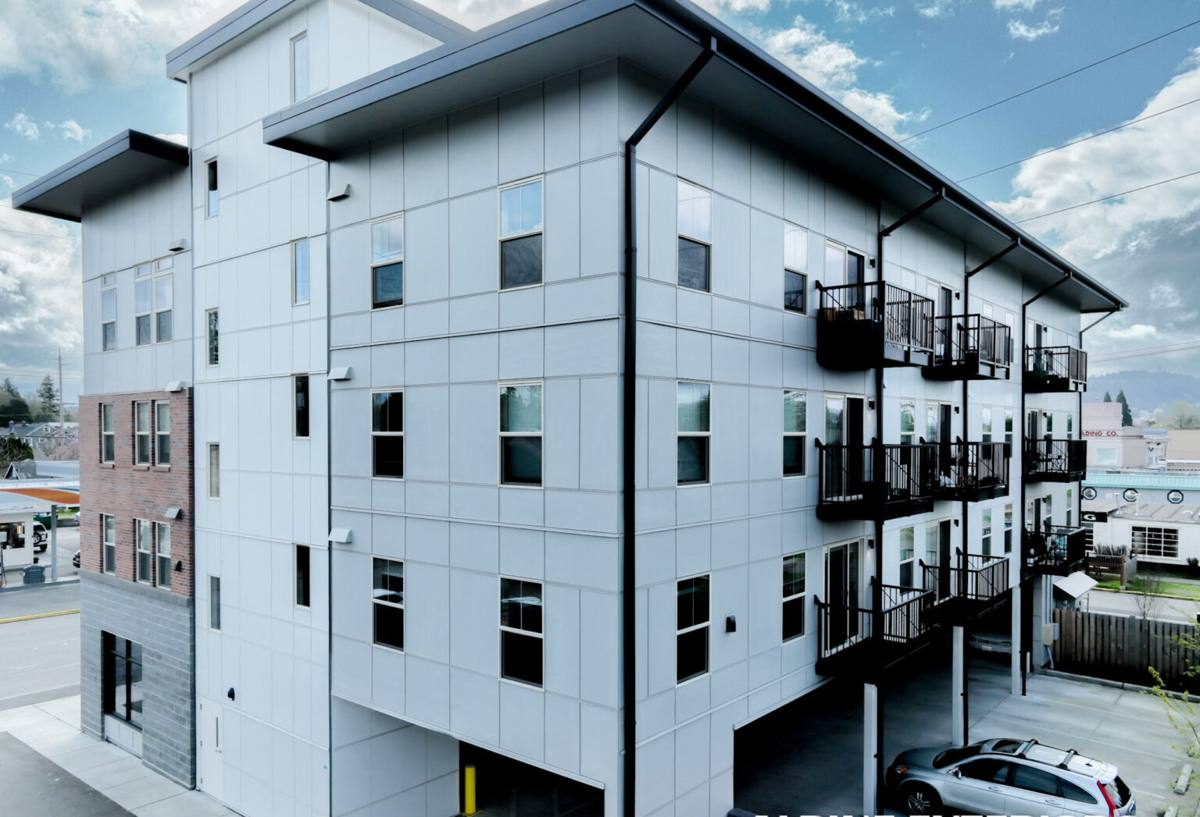
Why Happy Valley's Climate Is Harder on Board & Batten Than It Looks
Board and batten relies on vertical boards with narrow strips (battens) covering the seams between them. That vertical orientation is part of what makes it attractive, but it also changes how water moves across the wall compared to horizontal lap siding. Water runs straight down the face of the boards and battens instead of shedding off overlapping horizontal courses, which means every seam, fastener, and batten edge is a potential entry point if the assembly isn't detailed correctly.
Salt Air and Fastener Corrosion
Happy Valley sits close enough to the water that salt-laden air is a real factor, even a mile or two inland. Salt air accelerates corrosion in exposed or under-spec fasteners and metal flashing. On a board and batten wall, where fasteners are visible and battens depend on those fasteners holding tight over time, using the wrong hardware shows up early — as streaking, loosening battens, or rust bleed through the paint film.
Driving Rain and Wind-Driven Moisture
Storms coming off the Sound don't just drop rain straight down — wind pushes it sideways into wall assemblies, and board and batten's vertical seams give that wind-driven moisture more places to test. A weather-resistive barrier and flashing detail that would be adequate in a drier climate can fall short here.
Moss and Constant Dampness
Whatcom County's moss season is long, and board and batten's texture — with its shadow lines and batten edges — gives moss and algae more surface area and more shaded, damp pockets to take hold in than a flat panel. Once moss establishes on siding, it holds moisture against the surface, which is exactly what you don't want happening against any wall assembly, board and batten included.
What a Correct Board & Batten Installation Actually Involves
A good-looking board and batten job and a correctly built one aren't always the same thing. The visible boards and battens are the last layer of a system — the parts you can't see are what determine whether it lasts.
Water Management Behind the Boards
Underneath the boards, a continuous weather-resistive barrier has to be installed and lapped correctly, with flashing integrated at every window, door, and penetration. Vertical board and batten needs furring or a rainscreen gap in a lot of cases so water that does get behind the cladding has somewhere to drain and dry, rather than sitting against the sheathing. Skipping this step is one of the most common shortcuts we see on re-sides, and it's the one most likely to cause hidden rot years later.
Fastening and Batten Spacing
Fasteners need to hit framing or blocking, not just sheathing, and they need to be corrosion-resistant hardware suited to fiber cement and to this coastal-influenced air. Batten spacing and fastener placement also affect how the boards expand and contract with temperature and moisture — get it wrong and you'll see nail pops, cracked caulk lines, or battens that work loose over a few winters.
Trim, Corners, and Transitions
Board and batten lives or dies at its transitions — inside and outside corners, the base of the wall, roof-to-wall intersections, and window and door casings. These are the spots most likely to leak if flashing and sealant details are rushed, and they're also the spots that define whether the finished look is clean or sloppy.
Why We Only Use James Hardie for Board & Batten
Board and batten is available in vinyl, engineered wood, real cedar, and fiber cement, and we get asked fairly often why we don't offer more options. The honest answer is that in a climate like Bellingham's, the material matters more on a vertical, high-shadow-line profile than it does on some other siding styles.
| Material | How It Handles Happy Valley's Climate | Long-Term Trade-Offs |
|---|---|---|
| Vinyl board and batten | Won't rot, but expands and contracts significantly with temperature swings and can warp or bow, especially on longer vertical runs | Fades and becomes brittle over time; battens can visibly wave; not repairable in sections without replacement |
| Real cedar board and batten | Traditional look, but wood is directly exposed to driving rain and constant dampness on every board and batten face | Requires ongoing refinishing, is vulnerable to moss and rot if maintenance lapses, and is combustible |
| Engineered wood (OSB-based) | More stable than solid wood but still wood-based, meaning any breach in the finish or flashing can lead to swelling at edges | Edge and seam durability depends heavily on installation precision; moisture-sensitive over the long term |
| James Hardie fiber cement | Non-combustible, dimensionally stable in wet-dry cycling, engineered HZ formulations for the Pacific Northwest's moisture profile | Heavier material requiring correct fastening and handling; factory ColorPlus finish reduces but doesn't eliminate the need for good detailing |
James Hardie's fiber cement doesn't expand and contract the way vinyl or wood does, which matters on a profile made of narrow vertical strips. It's also engineered in HZ5 and HZ10 formulations specifically for higher-moisture climate zones like ours, and it carries a factory-applied ColorPlus finish backed by a real transferable warranty. None of that replaces good installation — but it gives an installation built to spec a much longer runway before the climate starts working against it.
Our Process for a Happy Valley Board & Batten Project
- On-site assessment — we look at the existing wall assembly, current siding condition, moisture or moss patterns, and how the home's orientation faces prevailing wind and rain.
- Tear-off and substrate check — old siding comes off and we inspect sheathing and framing for hidden damage before anything new goes up, since covering a problem never fixes it.
- Weather barrier and flashing — a continuous, correctly lapped weather-resistive barrier goes on first, with flashing detailed at every opening and penetration.
- Furring or rainscreen setup — where the wall assembly calls for it, we build in a drainage gap behind the boards so incidental moisture can escape rather than sit.
- Board and batten installation — Hardie boards and battens go up with correct fastener type, spacing, and penetration into framing, following manufacturer specifications.
- Trim, caulking, and final inspection — corners, transitions, and penetrations get sealed and inspected before we call the job finished.
Maintenance That Actually Matters in This Climate
Board and batten siding, installed correctly with James Hardie material, is low-maintenance — but "low" doesn't mean "none," especially with Whatcom County's moss season working against you year-round.
- Rinse siding annually to clear pollen, salt residue, and early moss growth before it establishes
- Keep gutters clear so overflow doesn't run down the wall and feed moss at the top courses
- Trim back vegetation and tree cover that keeps sections of the wall shaded and damp longer than the rest
- Inspect caulking at corners, trim, and penetrations every year or two and re-seal as needed
- Address any nail pops, loose battens, or cracked caulk promptly rather than waiting — small gaps let water in long before they look serious
What Board & Batten Siding Typically Costs to Do Right
| Cost Factor | Why It Matters Here |
|---|---|
| Wall prep and substrate repair | Homes with prior moisture intrusion often need sheathing or framing repair before new siding goes on — this varies a lot house to house |
| Rainscreen/furring requirement | Adding a drainage gap behind the boards adds labor and material but is often the right call given local rain exposure |
| Board and batten vs. lap siding labor | Vertical profiles generally take more time to detail correctly at corners and transitions than horizontal lap siding |
| Trim and corner detail complexity | Homes with more corners, dormers, or roof intersections require more flashing and trim work |
| Material grade and color | ColorPlus factory finishes and specific Hardie product lines affect material cost per square foot |
We won't quote a number without seeing the house — every Happy Valley home has a different combination of exposure, existing wall condition, and complexity — but we're upfront about what drives cost during the estimate so there are no surprises later.
Why Hiring a Crew That Already Works in Happy Valley Matters
Board and batten siding done wrong doesn't usually fail in the first year — it fails three, five, or eight years in, once moisture has had time to work behind the boards. A crew that's worked other homes in Happy Valley and the surrounding Bellingham neighborhoods already knows which orientations take the worst of the driving rain, which older homes are more likely to need substrate repair, and how aggressively moss establishes on shaded walls in this specific area. That local pattern recognition doesn't replace good technique, but paired with it, it means fewer surprises during the job and a better chance the wall assembly is actually built for the conditions it will face — not just conditions in general.
If you're weighing board and batten siding for a home in Happy Valley, we're glad to take a look and walk you through what your specific house needs — no pressure, no obligation. Use the form below to request a free estimate.