 Bellingham Siding
 Why Happy Valley Homes Need Siding Built for This Climate
Happy Valley sits inside one of the more demanding exterior climates in Whatcom County. Homes here deal with salt-laden air drifting in off the water, driving rain that comes in sideways during winter storms, and long stretches of gray, damp weather that keep exterior walls wet for days at a time. Add in the mature tree cover common on many Happy Valley lots, and you get shaded, slow-drying wall sections that grow moss and algae faster than siding on a more open, sun-exposed property.
None of this is unusual for Bellingham. But it does mean that siding choices which perform fine in a drier inland climate can fail early here, and that even a good product installed with generic techniques will underperform. This page covers what Happy Valley homes specifically need from their siding, what a correct James Hardie installation looks like in this environment, and why we install Hardie exclusively rather than offering a menu of cheaper alternatives.
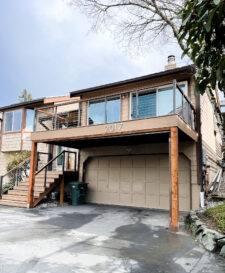
What Bellingham's Marine Climate Does to Exterior Walls
Salt Air and Corrosion
Proximity to Bellingham Bay means airborne salt is a real factor on siding, fasteners, and trim — not just on waterfront lots but well inland, carried by prevailing winds. Salt exposure accelerates corrosion on unprotected metal fasteners and flashing, and it can degrade certain paint and coating systems faster than manufacturers' standard warranties assume. Any siding product installed in this area needs fastening and flashing details that account for that exposure, not just whatever the minimum code requires.
Driving Rain and Wind-Driven Moisture
Whatcom County gets a lot of rain, but volume alone isn't the whole story — wind direction during winter storms often pushes rain sideways into wall assemblies rather than letting it run straight down. That means siding laps, butt joints, and penetrations (hose bibs, vents, light fixtures) take on more water pressure than a fair-weather climate would produce. A siding system that isn't engineered and installed to shed wind-driven rain will eventually let moisture behind the cladding, where it causes rot in sheathing and framing long before anyone sees a problem on the surface.
Moss, Algae, and Shaded Walls
Happy Valley's tree cover is part of what makes the neighborhood pleasant to live in, but shaded, north-facing walls that don't get direct sun stay damp longer after every rain event. That's exactly the environment moss and algae need to take hold. Over years, a siding product that absorbs moisture or has a porous surface will hold onto that dampness and support growth in a way that a dense, factory-finished fiber cement panel simply doesn't.
Why We Install Only James Hardie in This Neighborhood
We get asked why we don't offer vinyl, LP SmartSide, cedar, or primed spruce alongside Hardie. The honest answer is that we've standardized on one product because it's the one we're confident will still be doing its job in Happy Valley's climate two and three decades from now, without the maintenance headaches or moisture risk the alternatives carry in this specific environment.
| Factor | James Hardie Fiber Cement | Vinyl | Wood / LP SmartSide |
|---|---|---|---|
| Moisture behavior | Dense, engineered composition resists water absorption and swelling | Won't rot, but seams and J-channels can trap moisture behind panels | Wood-based core is vulnerable to swelling and rot if moisture gets in |
| Salt air / coastal exposure | Factory ColorPlus finish holds up well; non-combustible substrate doesn't corrode | Can become brittle and discolor faster under UV and salt exposure | Coatings need more frequent recoating in salt air conditions |
| Moss and algae resistance | Dense surface sheds growth better than porous or textured alternatives | Textured vinyl can trap grime and support surface growth | Wood grain texture and moisture retention favor moss and mildew |
| Fire resistance | Non-combustible | Combustible, can melt or deform near heat sources | Combustible |
| Typical maintenance | Periodic washing; repainting only if ever desired, not required for protection | Low maintenance but prone to cracking and fading over time | Recurring caulking, staining, or repainting on a set schedule |
None of these alternatives are junk — vinyl is inexpensive and low-maintenance in mild climates, and wood has genuine appeal. But in a climate that combines salt air, sustained rain, and shaded, slow-drying walls, we've seen enough of how each product ages here to know which one we're willing to put our name behind.
The Right Hardie Product Line for This Climate
James Hardie engineers its siding by climate zone, and homes in the Bellingham area fall into the HZ5 product line, formulated for regions with damp, moderate-to-cold weather rather than the hot, dry conditions HZ10 is built for. Using the correct HZ line matters — it affects how the product's fiber cement formulation handles moisture cycling and freeze-thaw stress over the years, which is exactly what Happy Valley homes go through every winter.
On top of the correct HZ formulation, the ColorPlus factory-applied finish matters more here than in drier regions. A factory-baked finish is more consistent and more resistant to fading and moisture intrusion at the coating level than field-applied paint, which is one less maintenance item homeowners need to track in a climate that already asks a lot of exterior surfaces.
What a Correct Installation Involves Here
James Hardie siding performs to its rated lifespan only when it's installed to the manufacturer's specifications — and in a high-moisture climate like this one, the installation details matter even more than the product itself. A rushed or generic install can undercut even the best siding product.
- Proper weather-resistive barrier and drainage plane behind the siding, so any incidental moisture has a path to escape rather than sitting against the sheathing
- Correct starter strip and clearance at the foundation line to keep splash-back and standing water away from the bottom course
- Manufacturer-specified fastener spacing and type — coated or stainless fasteners rated for coastal and high-moisture exposure
- Proper flashing and kick-out flashing at every roof-to-wall intersection, window, and door to direct wind-driven rain away from the wall assembly
- Correct minimum gaps at butt joints, trim, and any adjoining material to allow for expansion without forcing water into the seams
- Sealant and caulking only where Hardie's install guide calls for it — not as a substitute for proper flashing and gapping
- Field-cut edges properly sealed or primed before installation, especially in a climate where exposed raw edges absorb moisture quickly
Every one of these steps is spelled out in James Hardie's installation guidelines, and skipping any of them is one of the fastest ways to void the manufacturer's warranty — regardless of who installed the siding.
Our Process on Happy Valley Projects
Assessment and Moisture Check
We start by inspecting the existing siding, sheathing, and trim for signs of trapped moisture or rot, since covering up an existing moisture problem with new siding just hides it. On homes with mature tree cover or shaded north walls, we pay particular attention to those sections, since that's where prior moss growth and slow-drying conditions are most likely to have caused underlying damage.
Tear-Off and Prep
Old siding, damaged sheathing, and any compromised flashing come off and get replaced before anything new goes up. We install a proper weather-resistive barrier and drainage plane as part of this stage — not an optional add-on, but a required layer given how much rain this area sees.
Installation to Manufacturer Spec
Panels and trim go up following James Hardie's published fastening, flashing, and clearance requirements for the HZ5 zone, with particular attention to penetrations, roof lines, and ground clearance — the details that matter most in wind-driven rain.
Final Inspection
We walk the finished job checking gaps, caulk lines, flashing, and fastener pattern before calling it complete, since these are the details that determine whether the siding performs for decades or develops problems in a few years.
Maintenance in a Moss-Prone, Salt-Air Neighborhood
Correctly installed Hardie siding is genuinely low-maintenance, but "low-maintenance" doesn't mean zero-maintenance in this climate. An occasional gentle wash — garden hose pressure, not a power washer aimed directly at seams — removes the grime and organic buildup that salt air and shade tend to leave behind. Keeping gutters clear and trimming back vegetation that shades a wall helps that section dry out faster after rain, which goes a long way toward keeping moss from getting a foothold in the first place. Because the color is baked into the ColorPlus finish rather than applied on-site, repainting isn't a maintenance requirement the way it is with wood siding — it's a choice, not a necessity.
Why Local Experience in Happy Valley Matters
A siding crew that regularly works this neighborhood already understands how the local terrain, tree cover, and exposure to weather off the bay affect a given house before they ever start a tear-off. That local pattern recognition shows up in small decisions — where to add extra flashing attention, which walls are most likely to have hidden moisture behind old siding, how much clearance to leave given local rain patterns — that a crew unfamiliar with the area might not think to apply. It also means faster, more accurate estimates, since we're not guessing at how Bellingham's climate has already treated a particular home.
What Affects the Cost of a Happy Valley Siding Project
| Cost Factor | Why It Matters Here |
|---|---|
| Extent of hidden moisture damage | Homes with prior moss or leak issues may need sheathing or framing repair before new siding goes on |
| Home size and wall complexity | More corners, gables, and roof-to-wall intersections mean more flashing detail work |
| Siding profile and trim selection | Lap width, trim style, and accent choices affect material and labor |
| Tear-off and disposal | Removing existing siding down to sheathing adds labor and haul-away costs |
| Access and site conditions | Tree cover, slope, or tight lot lines common in Happy Valley can affect staging and scaffolding |
Every one of these varies enough from house to house that we don't quote siding jobs off a flat per-square-foot number sight unseen — an in-person look at the specific walls, trim, and any existing moisture issues is what gets you an accurate number.
Ready to Talk About Your Happy Valley Home
If you're weighing a siding replacement in Happy Valley, we're happy to take a look, walk you through what we find, and put together a straightforward estimate — no pressure, no sales script. Fill out the form below to get started.