 Bellingham Siding
 Storm Damage Roofing in Happy Valley
Happy Valley sits close enough to Bellingham Bay and the surrounding hills that its homes take a particular kind of weather beating: salt-laden wind off the water, long stretches of driving rain through fall and winter, and a moss season that never really ends. When a windstorm rips through Whatcom County, or a heavy rain event finds the one weak spot in an aging roof, homeowners here need a repair that accounts for all three of those stressors at once — not just a patch that gets them through until the next storm.
This page covers what storm damage roof repair actually involves for a Happy Valley home, what to look for after a storm, and how we approach the job so the repair holds up under the next one.
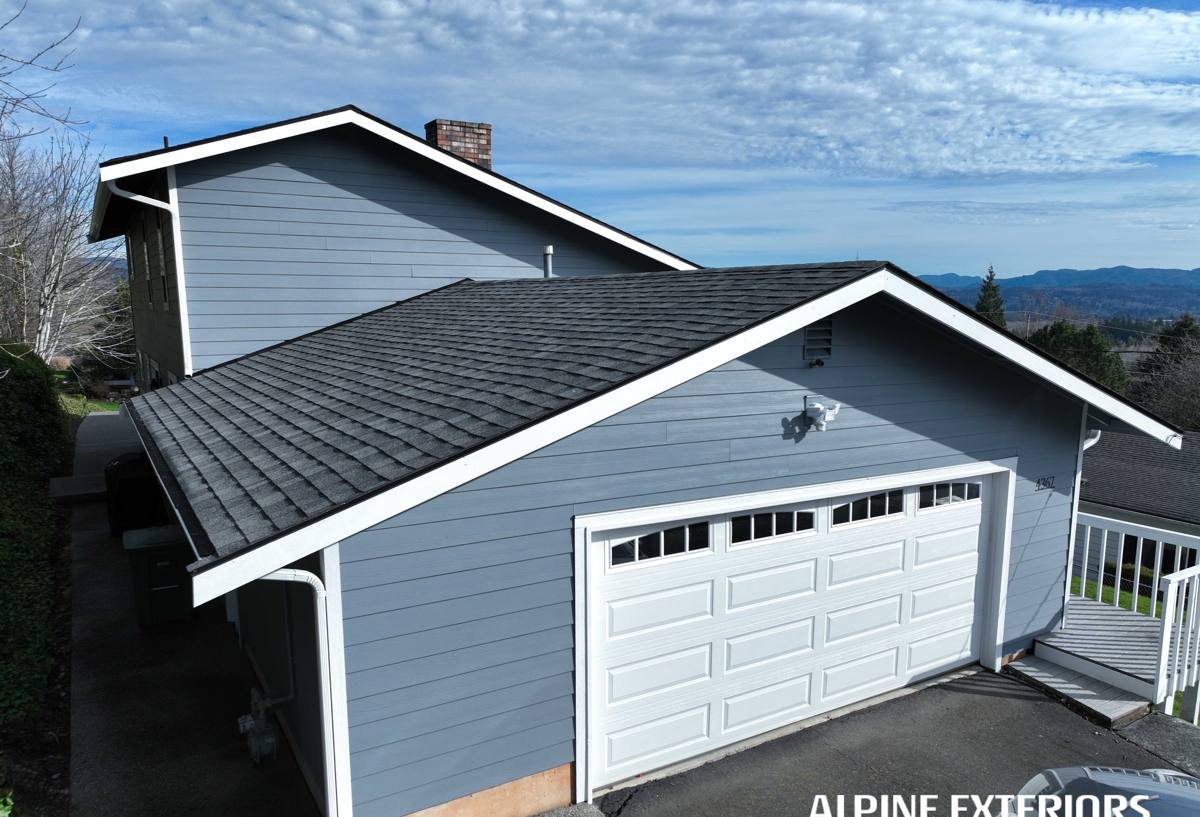
Why Happy Valley Roofs Take a Different Kind of Damage
Storm damage in this neighborhood rarely looks like the dramatic wind-strips-the-whole-roof scenario people picture. More often it's smaller and easier to miss:
- Wind-lifted shingles or panels along ridge lines and roof edges, where uplift pressure is highest during gusty systems moving in off the bay
- Fastener back-out on older roofs, where repeated wind cycles slowly work nails and screws loose without any single dramatic event
- Flashing separation around chimneys, vents, and valleys, often from a combination of wind flex and years of moisture cycling
- Moss-driven lifting, where moss growth under shingle edges has already weakened the seal, so it takes far less wind than normal to cause a tear-off
- Debris impact from limbs and branches, common where mature trees overhang roof lines throughout this part of Bellingham
That last two points matter more here than in drier climates. A roof with an active moss problem is already compromised before the storm hits — the storm just exposes damage that was building for a season or two. That's why we always inspect for moss and moisture history alongside the storm damage itself, not as a separate issue.
Salt Air and Long-Term Wear
Bellingham's proximity to Puget Sound means metal components — flashing, fasteners, vent caps, gutter hardware — corrode faster than they would further inland. Corrosion weakens metal at exactly the points that are supposed to keep water out during a storm. When we're repairing storm damage, we're also checking whether the surrounding hardware is salt-compromised and due for replacement, since patching shingles around corroded flashing just sets up the next failure.
What a Correct Storm Repair Actually Involves
A rushed storm repair fixes what's visible from the ground and calls it done. A correct one works from the roof deck outward:
- Full roof walk, not a drive-by look. Storm damage is frequently on the back slope or in valleys you can't see from the street.
- Check the decking underneath wherever shingles or panels were lifted or torn. If wind pulled material loose, water has usually already gotten under it — sometimes for days before anyone notices a stain inside.
- Assess flashing and seals around every penetration near the damage: chimneys, plumbing vents, skylights. Wind damage rarely stays contained to the exact spot it started.
- Match materials correctly. Replacement shingles or panels need to match not just in color but in profile and age-weathering, or the repair sticks out and can create a slightly different water path than the surrounding roof.
- Clear and treat moss in the repair area and immediately adjacent sections, so the new work isn't undermined within a season.
- Re-seal and re-fasten with corrosion-resistant hardware appropriate for a marine-influenced climate, not standard interior-grade fasteners.
Our Process for Happy Valley Storm Calls
1. Inspection First, Estimate Second
We look at the whole roof, not just the damaged section, before quoting anything. A storm often reveals that a roof was already near the end of its useful life, and homeowners deserve to know that before deciding between a targeted repair and a broader replacement conversation.
2. Temporary Protection When Needed
If a storm has left an active leak point and full repair has to wait — for material, for weather, for insurance paperwork — we can put temporary protection in place so the interior of the home isn't taking on more damage while the permanent fix is scheduled.
3. The Repair Itself
We work section by section: deck check, underlayment where exposed, matched roofing material, flashing and seal work, then a final water-path check to confirm the repair area drains correctly into the rest of the roof system.
4. Documentation for Insurance
Storm damage repairs are often insurance claims. We document what we find with photos and a written scope before starting work, which gives homeowners something concrete to work with when dealing with an adjuster.
Repair vs. Replacement: How We Help You Decide
Not every storm-damaged roof needs replacing, and not every roof is worth repairing again. The table below covers the factors that actually drive that decision.
| Factor | Leans Toward Repair | Leans Toward Replacement |
|---|---|---|
| Roof age | Under 12-15 years, asphalt shingle | Nearing or past manufacturer lifespan |
| Damage extent | Isolated to one section or slope | Multiple sections, or scattered across the whole roof |
| Moss history | Minor, treatable, no deck damage found | Long-term moss with soft decking or rot underneath |
| Prior repairs | First or second repair on this roof | Third-plus patch job — diminishing returns |
| Underlying materials | Decking sound, flashing intact | Decking soft or delaminating, flashing corroded throughout |
We'll give you a straight answer on which category your roof falls into. If repair is the honest recommendation, that's what we'll quote — there's no benefit to either of us in replacing a roof that has years of good service left.
What to Check After a Storm, Before You Call
A quick, safe look around your property can help us prioritize the visit and tell you whether it's urgent:
- Check gutters and the ground around the house for shingle granules, torn material, or metal flashing pieces
- Look for daylight or staining in the attic if it's accessible — a flashlight check takes five minutes
- Note any new ceiling stains, even faint ones, especially near chimneys or where two roof planes meet
- Check for branches or debris that landed on the roof and haven't been removed
- Look at gutters and downspouts for new sagging or separation from the fascia
- Avoid climbing onto the roof yourself after a storm — wet, moss-covered surfaces are genuinely dangerous, and it's not worth the risk when an inspection is a phone call away
Why a Local Crew Matters for This Kind of Repair
Storm damage repair is one of the areas where local experience actually changes the outcome, not just the sales pitch. A crew that regularly works Whatcom County roofs already knows which flashing details tend to fail first in this climate, how aggressive the moss growth gets on north-facing slopes here, and what fastener and sealant products hold up against sustained salt-air exposure versus ones that look fine for a year and then start failing quietly. That knowledge shows up in the small decisions during a repair — the ones that determine whether it's still holding in three years or needs another visit next winter.
It also matters for response time. Storm damage that sits exposed for a week because a contractor is booked out or based hours away almost always gets worse — a small leak becomes a soaked deck, a soaked deck becomes a rot problem. Working with a crew already active in the Bellingham area means a faster look and a faster fix.
Preventing the Next Storm From Doing the Same Damage
Part of a good storm repair is leaving the roof better prepared for the next system, not just patched back to where it was. That can mean:
- Adding or upgrading edge fastening in wind-exposed areas prone to uplift
- Treating moss more broadly than just the repair zone, since untreated moss nearby will just cause the next failure
- Flagging aging flashing or vents for proactive replacement before they fail during the next storm rather than after
- Recommending gutter clearing or minor tree trimming where debris load is a recurring issue
None of this needs to be sold as an upsell — it's just part of doing the repair right the first time.
If a recent storm left you with damage, or you're not sure whether what you're seeing warrants a repair, we're happy to take a look. Reach out for a free, no-pressure estimate using the form below.