 Bellingham Siding
 Board & Batten Siding for Lynden Homes
Board and batten has a long history in Whatcom County. The vertical lines read as barn siding, farmhouse siding, and modern craftsman siding all at once, which is part of why it shows up so often on homes and outbuildings around Lynden's agricultural properties as well as newer builds closer to town. It's a style choice, but it's also a functional siding system with its own installation rules — and in this part of Washington, getting those rules right matters more than the look does.
This page is specifically about board and batten siding installed on homes in and around Lynden. We're not going to talk about board and batten in general terms you could read on any siding website. We're going to talk about what this climate does to vertical siding, what a correct installation actually involves, and why the material behind the boards matters as much as the pattern.
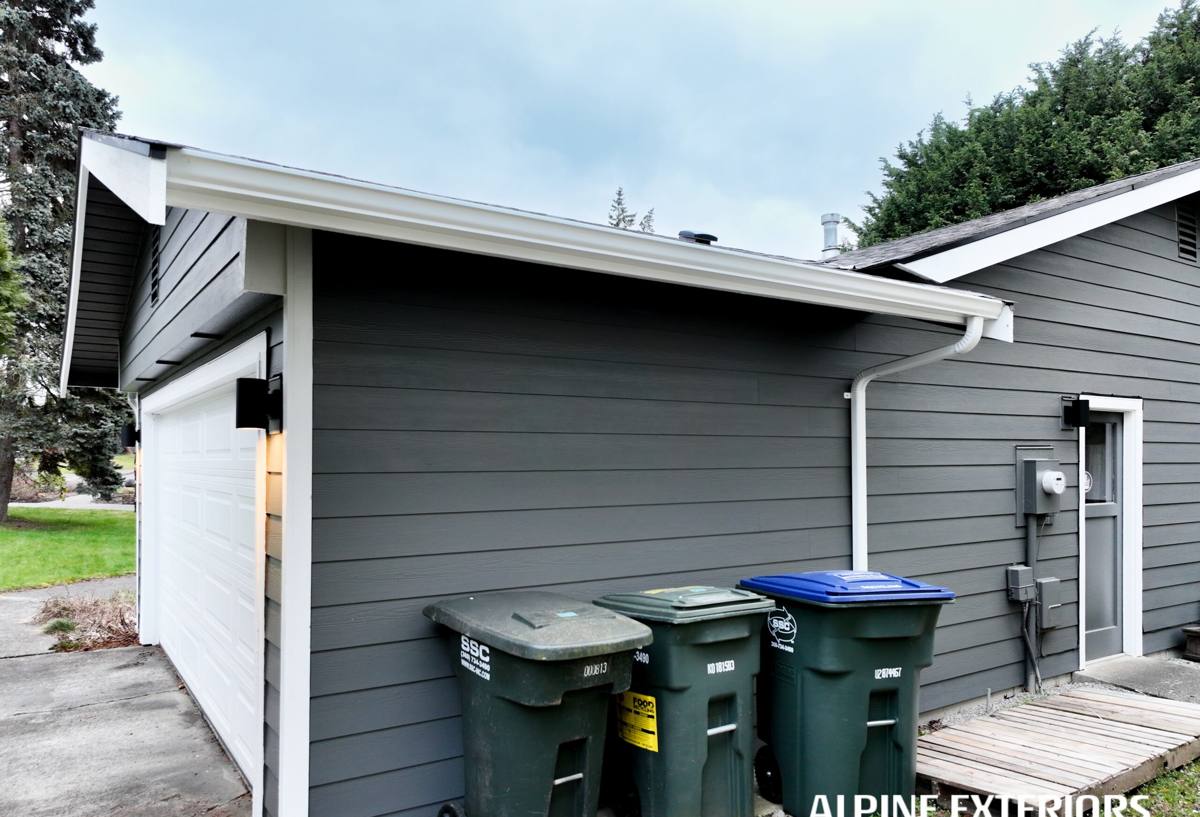
What Lynden's Climate Does to Vertical Siding
Whatcom County sits under a weather pattern that pulls moisture off the Sound and the Strait of Georgia most of the year. That marine influence reaches inland to Lynden as damp, moisture-laden air, long stretches of driving rain, and short winter days that don't give surfaces much chance to dry out between storms. Add a moss season that can run from fall through spring on any north-facing or shaded wall, and you've got conditions that are tough on siding — especially siding with a lot of horizontal seams and butt joints, which is exactly what board and batten has.
Board and batten's vertical boards actually help shed water better than some horizontal profiles, since there's less opportunity for water to pool along a horizontal reveal. But every batten, every panel seam, and every butt joint is a place water can find its way behind the cladding if it isn't detailed correctly. In a climate that gets this much sustained rain, the difference between a board and batten job that lasts decades and one that fails in five to ten years almost always comes down to what's happening behind the boards, not what you can see from the street.
Why Moss and Algae Matter More Here
Moss doesn't just grow on roofs. On shaded siding — under eaves, behind landscaping, on the north side of a house near tree cover — it holds moisture against the surface for months at a time. On a wood or engineered-wood board and batten system, that sustained dampness is what starts rot at butt joints and fastener penetrations. On fiber cement, moss is a cosmetic issue you can wash off; it isn't a structural threat the way it is on moisture-sensitive materials.
What a Correct Board & Batten Installation Involves
Board and batten is simple in concept — wide panels or boards run vertically, with narrow battens covering the seams — but it has more failure points than a lot of homeowners expect. A correct install in this climate includes:
- Drainage plane behind the cladding. A weather-resistive barrier, properly lapped and sealed at penetrations, so any water that gets past the siding has somewhere to go besides your sheathing.
- Rainscreen gap. Furring strips or a drainage mat that hold the panels off the wall assembly slightly, so water draining down the back of the siding can actually get out instead of sitting against the sheathing.
- Correct fastener placement and spacing. Battens and panels need to be fastened per the manufacturer's engineering, not "close enough" — this affects both wind performance and how the panels handle expansion and contraction.
- Butt joint treatment. Every horizontal joint where one panel ends and the next begins is a potential water entry point. These need to be flashed, not just caulked and hoped for.
- Corner and trim detailing. Outside corners, window and door casings, and the transition to roof and foundation are where most siding failures actually start, board and batten included.
- Clearance at grade and roof lines. Siding that ends too close to the ground or tucks under a roofline without a kickout flashing sits wet far more of the year than it should in a climate like this one.
None of this is unique to Lynden. What's unique is how unforgiving the climate is of shortcuts. A butt joint detail that would survive fine in a dry climate can start letting water in within a few wet seasons here if it's not done right the first time.
Why We Install James Hardie, Not Alternatives
We install James Hardie fiber cement exclusively — no vinyl, no LP SmartSide, no cedar, no primed spruce board and batten. For a vertical siding system in Whatcom County's climate, that's a deliberate call, not a default.
Wood and engineered-wood board and batten depend on an intact factory coating and perfect field sealing at every cut and joint to keep moisture out. In a climate with this much sustained rain and moss exposure, any gap in that coating — a cut edge, a fastener hole, a joint that opens up slightly as the house settles — becomes a place moisture can get in and stay in. Vinyl board and batten sheds water fine on the face but doesn't offer the same rigid, factory-finished, non-combustible profile, and it can look and perform noticeably differently than true board and batten once you're up close.
James Hardie's fiber cement panels are engineered specifically for products like these — cement, sand, and cellulose fiber, formulated for wet, temperate climates like ours. The HZ5 product line is engineered for climates that see significant moisture exposure, which describes Whatcom County well. The material doesn't rot, doesn't feed moss the way wood fiber can, and holds its ColorPlus factory finish for years without repainting. It's also non-combustible, which matters more every wildfire season, even on the wet side of the state.
Panel Systems We Use
For board and batten specifically, we work with Hardie's vertical panel systems — wide fiber cement panels installed with matching battens over the seams — finished in factory ColorPlus colors so the finish is baked on, not a field-applied coat that starts weathering the day it's installed. The result reads as true board and batten from the street, with a material underneath built for this climate rather than one that's just tolerating it.
Our Process on a Board & Batten Job in Lynden
- On-site assessment. We look at the existing siding, check for moisture damage at joints, trim, and the base of walls, and evaluate what's actually happening at the sheathing level before quoting anything.
- Tear-off and inspection. Once old siding is off, we inspect the sheathing and framing for hidden rot or moisture damage — common on older wood board and batten homes where problems were papered over rather than fixed.
- Weather barrier and drainage plane. We install and properly lap a weather-resistive barrier and rainscreen system before any siding goes up, since this layer does more long-term work than the visible siding itself.
- Panel and batten installation. Panels and battens go up per James Hardie's fastening and clearance specifications, not generalized carpentry practice — this is a manufacturer-engineered system, and it needs to be installed as one.
- Flashing and trim detail. Corners, windows, doors, and roof transitions get flashed and finished to shed water, not just look finished.
- Final walkthrough. We review the completed job with the homeowner and confirm everything before we consider it done.
Comparing Board & Batten Material Options
| Material | Moisture Resistance in Wet Climates | Maintenance | Typical Lifespan |
|---|---|---|---|
| James Hardie Fiber Cement | Engineered for wet climates (HZ5); does not rot or feed moss growth | Occasional wash; ColorPlus finish resists fading for years | Decades, per warranty terms |
| Cedar / Wood Board & Batten | Absorbs moisture at cuts and joints; vulnerable where coating is compromised | Regular refinishing/repainting; monitor joints for rot | Shorter without diligent upkeep |
| Primed Spruce/Engineered Wood | Sensitive to sustained moisture exposure at seams | Repainting and joint inspection needed regularly | Varies with maintenance and exposure |
| Vinyl Board & Batten | Sheds surface water but different rigidity and profile than true board and batten | Low, but limited repair options if damaged | Varies by product grade |
This isn't a claim that other materials can't work anywhere — it's why we, specifically, standardized on one system for the climate we install in every week.
Why Hiring a Crew That Already Works in Lynden Matters
Board and batten installed poorly can look identical to board and batten installed correctly — for the first year or two. The difference shows up later, in the joints, the corners, and the walls that stay wet longest through a Whatcom County winter. A crew that already works in this area knows which walls on a typical Lynden lot take the worst weather exposure, where moss tends to establish first, and how the county's permitting and inspection process works, so there are no surprises mid-project.
It also means we're not guessing at how a product performs here — we've installed it here, through wet seasons, and we stand behind the workmanship on homes in this community, not just in a general sense.
Questions Worth Asking Any Siding Contractor Before You Hire
- Do you install a rainscreen/drainage gap behind board and batten, or direct-to-sheathing?
- How do you flash butt joints and panel seams specifically?
- What's your experience with this exact product line, not just siding in general?
- Is the manufacturer's warranty transferable if I sell the home?
- Will you show me the weather barrier and flashing before it's covered up?
Signs Your Current Board & Batten Needs Attention
- Soft or spongy spots when you press on boards or battens, especially near the bottom of walls
- Persistent moss or dark staining that keeps coming back after cleaning
- Visible gaps or separation at butt joints or corners
- Paint or finish that's peeling, chalking, or bubbling
- Water stains on interior walls near exterior siding lines
If you're seeing any of these on a Lynden property, it's worth a closer look before another wet season sets in.
If you're considering board and batten siding for a home in Lynden, we're happy to take a look and give you an honest read on what your walls need — no pressure, no obligation. Use the form below to request a free estimate.