 Bellingham Siding
 Why Decks Fail Faster in Lynden's Climate
Lynden sits inland from Bellingham Bay, but it shares the same marine weather pattern that soaks Whatcom County for months at a stretch. Driving rain doesn't just fall straight down here — wind pushes it sideways under railings, into ledger board connections, and between decking boards where it has nowhere to go but down into the framing. Combine that with a long, damp moss season and you get a deck-aging process that's faster and less forgiving than what you'd see in a drier climate.
Moss and algae don't just look bad on decking — they hold moisture against the wood surface long after a storm has passed, which is exactly the condition that starts rot. On the framing side, the same dampness plus limited winter sun exposure (especially on north-facing or shaded decks near trees and outbuildings, common on Lynden's larger residential lots) means joists and beams can be wet more days of the year than they're dry. We've built and replaced enough decks in this area to know that "it's only ten years old" doesn't mean much if it was built without the right flashing, fasteners, and airflow underneath.
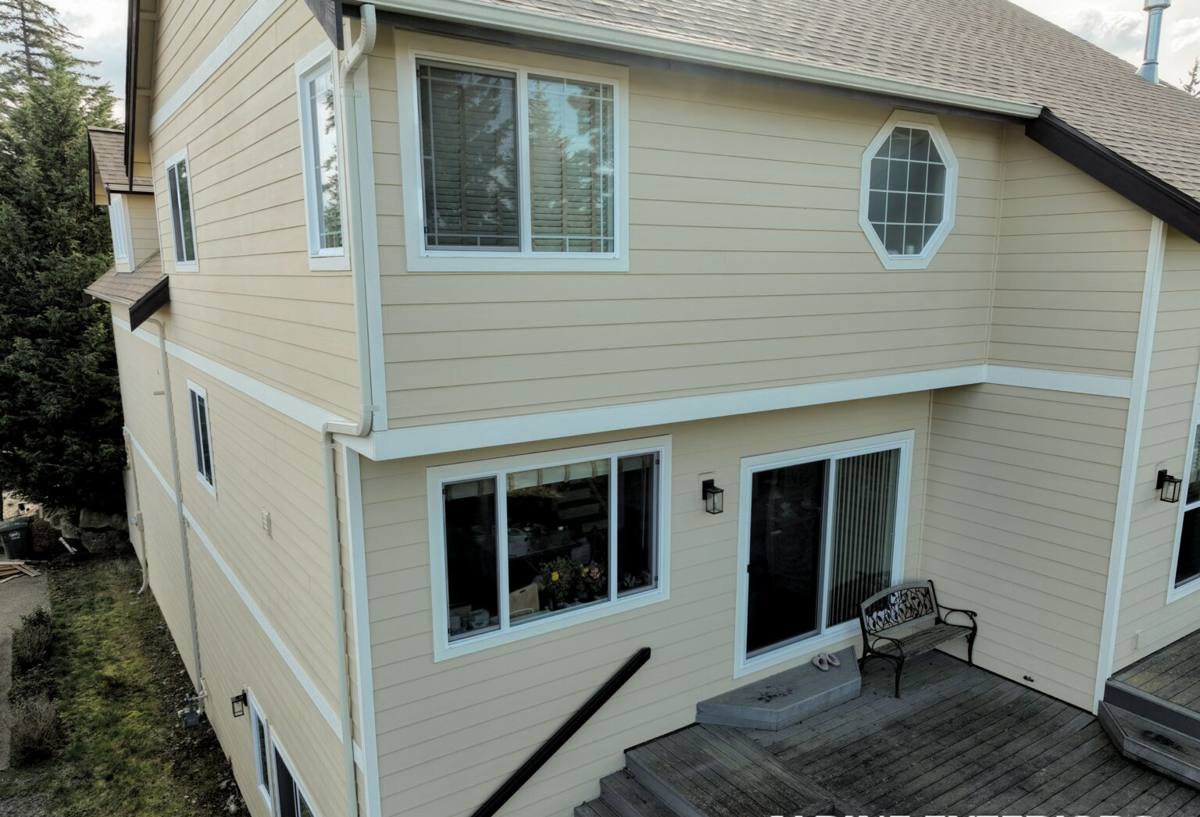
Signs Your Lynden Deck Needs Replacement, Not Repair
Not every tired-looking deck needs to come out. But there's a real difference between a deck that needs new boards and a deck that's structurally compromised. Here's how we tell the two apart on a site visit:
- Soft, spongy, or crumbling wood at the ledger board (where the deck attaches to the house) — this is the most common failure point and the most serious
- Rust streaking or visibly corroded joist hangers and fasteners
- Posts that have settled, shifted, or show rot at the base where they meet concrete or soil
- Persistent moss or dark staining on the underside of the decking, not just the walking surface
- Bounce or flex when walking near the rim joist or stairs
- A railing that wiggles at its posts (often a sign the blocking behind it has rotted)
If the problems are limited to the decking boards themselves and the frame underneath is sound, a resurfacing or partial repair can make sense. If the ledger, framing, or footings are compromised, patching the surface just hides a structural problem — that's when full replacement is the honest recommendation.
What a Correct Deck Replacement Involves
Footings and Posts
Everything starts below grade. In this region, footings need to be set below frost depth and sized for the actual load of the deck, not just whatever the old footings happened to be. Post bases should hold the post above the concrete and above standing water — wood-to-concrete contact is one of the fastest ways to start rot in a wet climate, and it's a shortcut we won't take even though it's faster.
Ledger Board Attachment
This is where most deck failures start, and it's the part most homeowners never see. A correct ledger installation includes proper flashing that directs water away from the house sheathing, lag bolts or through-bolts (not just nails) sized to code, and a gap or flashing detail that keeps water from wicking behind the board. This is also where local building codes are strictest, for good reason.
Framing and Fasteners
Joists, beams, and hardware all need to be rated for exterior, ground-contact-adjacent use. In a climate with this much sustained moisture, we use corrosion-resistant, code-approved fasteners and hangers throughout — mixing incompatible metals (like standard steel screws with ACQ-treated lumber) accelerates corrosion and is a common cause of premature hardware failure we see on older decks.
Decking Surface and Drainage
Board spacing, airflow underneath, and surface drainage all matter more here than in drier parts of the country. A deck that can't shed water and dry out between rain events is a deck that will grow moss and hold rot no matter what material sits on top.
Decking Material Options for This Climate
There's no single "best" material — it depends on your budget, how much upkeep you want to do, and how the deck is used. Here's how the common options actually perform in Whatcom County's wet, moss-prone conditions:
| Material | Moisture Behavior | Maintenance | Typical Lifespan |
|---|---|---|---|
| Pressure-treated lumber | Resists rot when properly sealed; can still hold surface moisture and grow moss if not maintained | Needs cleaning and re-sealing every 1–2 years | 15–20 years with upkeep |
| Cedar | Naturally rot-resistant, attractive grain, but softer surface can hold moisture longer if not finished | Regular sealing/staining to maintain appearance and protection | 15–20 years with upkeep |
| Composite decking | Doesn't rot or absorb water into the board itself; surface can still grow algae/moss film if shaded and damp | Occasional washing; no staining or sealing | 25–30+ years (manufacturer warranty-backed) |
We'll walk you through the honest trade-offs for your specific deck — sun exposure, how much shade it sits in, and how much maintenance you actually want to do — rather than pushing one product across the board.
Permits and Local Code Considerations
Deck replacement in Lynden typically requires a building permit, especially when the ledger attachment, footings, or framing are being replaced rather than just the surface boards. Permit requirements and inspection points are set by the local building department, and they exist to catch exactly the failure points we've described above — ledger attachment, footing depth, and railing/guard height and spacing. We handle the permit process as part of the job so you're not left tracking down inspections yourself, and we build to pass inspection the first time, not to the bare minimum that might scrape by.
Our Deck Replacement Process
- On-site assessment — we inspect the ledger, framing, posts, and footings, not just the decking surface, to determine what's actually driving the failure
- Honest scope and estimate — you get a clear breakdown of what needs to be replaced versus what can be reused, in plain language
- Permit and code check — we confirm what's required for your specific project and handle the paperwork
- Demolition and disposal — old decking, framing, and hardware removed and hauled off
- Structural rebuild — footings, posts, ledger, and framing installed to code, with corrosion-resistant hardware suited to this climate
- Decking installation — your chosen material installed with proper spacing and fastening for drainage and airflow
- Final walkthrough and inspection — we confirm everything meets code and review basic care with you before we leave
Cost Factors to Expect
Every deck is different, but these are the main variables that move the price up or down on a replacement:
| Factor | Why It Matters |
|---|---|
| Deck size and height | More square footage and taller structures mean more material, more framing, and more labor |
| Extent of structural damage | A deck needing only new decking boards costs far less than one needing new footings and framing |
| Decking material chosen | Composite typically costs more upfront than treated lumber but less over the deck's lifetime in maintenance |
| Railing and stair complexity | Multiple stair sections, custom railings, or code-required guard changes add labor and materials |
| Site access | Decks on sloped lots or with limited equipment access can add time to demo and rebuild |
We'll give you a real number after seeing the deck in person — not a phone-quote guess that changes once we start pulling up boards.
Maintenance to Extend Your New Deck's Life
A correctly built deck still needs some seasonal attention in this climate. Here's what actually makes a difference:
- Sweep debris and standing water off the surface regularly, especially in fall when leaves collect between boards
- Clean moss and algae off the surface at the start of moss season before it spreads and stains
- Check and clear the gap between boards so water and debris don't dam up
- Inspect railing posts annually for movement or soft spots
- Re-seal or re-stain wood decking on the manufacturer or trade-recommended schedule — don't wait until it's visibly gray and dry
- Keep gutters and downspouts near the deck clear so runoff isn't dumping directly onto it
Why Hire a Crew That Already Works in Lynden
A deck replacement built to a generic national code minimum can still fail early here if it isn't built for what this climate actually does to wood, metal, and fasteners over a wet Whatcom County winter. Crews who work this area regularly know which details matter most locally — ledger flashing, hardware selection, footing depth, and drainage — because we've seen what happens when they're skipped. That's not something you can tell from a bid sheet; it comes from doing the work here, season after season, and standing behind it afterward.
If your deck is showing signs of rot, movement, or just isn't holding up the way it should, we're happy to take a look. Reach out for a free, no-pressure estimate using the form below.