 Bellingham Siding
 Siding Repair in Lynden: Why This Climate Wears Siding Down Early
Lynden sits inland from the coast, up near the Canadian border in northern Whatcom County, but it still falls squarely inside the marine weather pattern that shapes exterior work across this whole corner of Washington. Moist air moves in off the Sound and pushes up the valley, rainfall through fall and winter is frequent and often wind-driven rather than falling straight down, and mild temperatures give moss and algae a growing season that can run most of the year on shaded, tree-lined walls. Salt-tinged air carries inland too, more diluted than at the immediate shoreline but still enough over time to work on fasteners, trim hardware, and lower-grade finishes.
None of that damages siding overnight. It's cumulative — a small crack that lets in a little water each wet season, a shaded corner that never quite dries out, a nail pop that opens a gap just wide enough for driving rain to find. By the time a homeowner notices a visible problem, the siding has usually been dealing with that stress for a year or more. Siding repair in Lynden is as much about catching and correctly fixing that early damage as it is about the visible symptom on the wall.
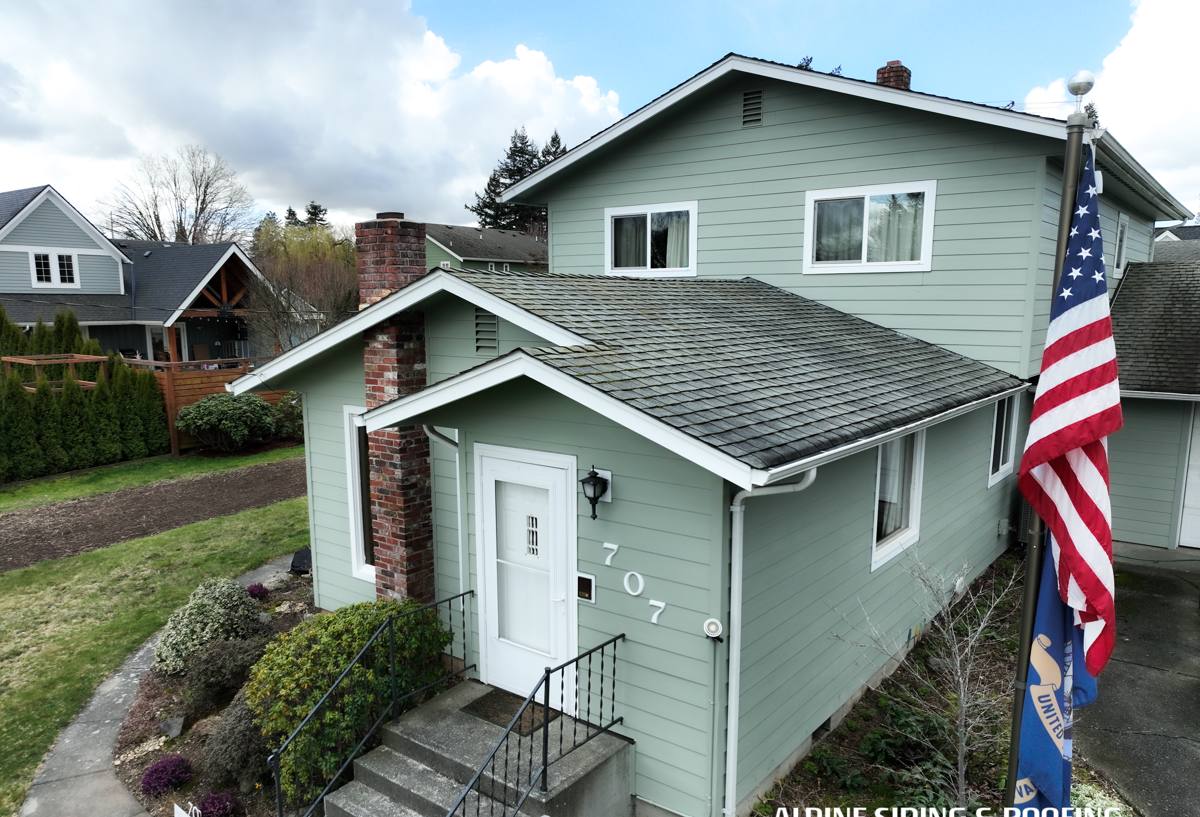
Signs a Lynden Home Needs Siding Repair
Some siding problems are obvious. Others hide in plain sight for a season or two before they show up as something more expensive. Worth a look if you notice:
- Soft, spongy, or bowed spots when you press on a section of siding
- Cracked, split, or visibly buckled boards or panels
- Moss or dark staining creeping in under the laps, especially on shaded or north-facing walls
- Paint that's peeling, bubbling, or failing in one localized area rather than evenly across the wall
- Gaps opening up around trim, window and door casings, or corner boards
- Nail heads popping proud of the surface, or streaks of rust running down from fasteners
- Water stains or discoloration on interior walls near an exterior corner
- A musty smell near an exterior wall that wasn't there before
Any one of these on its own might be minor. Several showing up in the same area, or a problem that keeps coming back after a homeowner has tried to patch it, usually means water is getting behind the siding rather than just sitting on top of it — and that changes what the repair actually needs to accomplish.
What Happens When Damaged Siding Gets Left Alone
The risk with siding damage isn't really the crack or gap itself — it's what happens behind it. Once water finds a way past the siding's surface, it's working against wood sheathing, framing, and insulation that were never designed to handle repeated wetting. In a climate with as much sustained moisture and shade as Lynden gets, that hidden damage can spread for a full wet season or longer before it's visible from the outside. A repair that only addresses the surface crack and skips checking what's happening behind it is a repair that's likely to need doing again, and in the meantime the framing behind it keeps absorbing damage.
This is the main reason we're cautious about quick patch jobs that don't involve pulling back the damaged section to actually look. A five-minute caulk-and-paint fix might make a problem look solved for a season, but if there's already moisture trapped behind the wall, it hasn't solved anything — it's just made the problem harder to see.
What a Correct Siding Repair Actually Involves
A repair done right on a Lynden home generally means:
Finding the Real Source, Not Just the Symptom
Cracked siding at the bottom of a wall is sometimes a siding problem and sometimes a sign of a gutter that's overflowing onto that section every storm. Staining below a window is sometimes failed caulk at the siding joint and sometimes a flashing problem at the window itself. A repair that doesn't identify which of those it's actually dealing with tends to fail again in the same spot.
Checking What's Behind the Damaged Section
Once the damaged siding is pulled back, the sheathing and framing underneath need an honest look. Soft, discolored, or spongy sheathing needs to be addressed before any new siding goes back on — covering damaged sheathing with new siding just hides the problem for a while longer.
Matching Profile, Reveal, and Fastening
Replacement boards or panels need to match the existing siding's width, exposure, and fastening pattern, not just be "close enough." A mismatched reveal is visible from the street, and inconsistent fastening can create the exact kind of weak point that fails again first.
Getting Flashing and Sealant Right
Most siding failures trace back to a flashing or sealant detail, not the siding material itself. Proper repair work re-establishes correct flashing at any window, door, or trim transition involved in the damaged area, and uses sealant only where it belongs — as a secondary defense, not the only thing keeping water out.
Finishing the Cut Edges
Any cut or trimmed edge on fiber cement siding needs to be sealed and properly finished. An unsealed cut edge is one of the more common causes of a repair failing again within a couple of wet seasons, and it's an easy detail to skip if a crew is moving fast.
Repair or Replace? How We Make the Call
Not every damaged section calls for a full re-side, and we don't default to recommending one. The honest answer depends on a handful of factors we walk through on-site.
| Factor | Points Toward Repair | Points Toward Replacement |
|---|---|---|
| Extent of damage | Isolated to one or two wall sections | Spread across multiple walls or the whole exterior |
| Sheathing condition | Dry and sound once opened up | Soft, discolored, or damaged in multiple areas |
| Age and type of existing siding | Newer material still within its useful life | Aging or discontinued material that's hard to match |
| Repeat problems | First occurrence in that area | Same spot has already been patched more than once |
| Overall exterior condition | Rest of the siding is performing well | Siding elsewhere is also showing early failure signs |
We'll explain what we find behind the damaged section and why we're recommending what we're recommending, rather than defaulting to whichever option costs more.
Why Repairs Go Back On With James Hardie Fiber Cement
We install James Hardie fiber cement exclusively — not LP SmartSide, not vinyl, not Cemplank, Allura, primed spruce, or cedar. That standard applies to repair work too. When we're replacing a damaged section on an existing James Hardie wall, the match is straightforward. When we're repairing a section of a different material, we'll talk through the trade-offs honestly rather than just patching like-for-like.
Fiber cement doesn't absorb moisture the way wood-based products can, and it doesn't have the seams and expansion joints that give vinyl panels places to fail under sustained wind-driven rain. It's non-combustible, which matters on its own merits regardless of climate. James Hardie's ColorPlus factory finish is baked on rather than field-applied, which means a properly matched repair section blends in and holds its color instead of standing out as an obvious patch within a year or two. The HZ product lines are engineered for regional moisture and climate conditions rather than a one-size-fits-all specification, and the product carries a strong transferable warranty when installed to Hardie's specifications. None of that makes fiber cement immune to damage — impact, poor installation, or a genuine flashing failure elsewhere on the house can still cause problems — but it holds up better against the specific stresses Lynden's climate applies year after year, and it's the standard we're willing to put our name behind.
Our Siding Repair Process for Lynden Homes
- On-site inspection. We look at the visible damage and check what's happening around it — gutters, flashing, grading, nearby trim — before assuming the siding itself is the whole story.
- Opening up the damaged area. We pull back affected boards or panels to check the sheathing and framing underneath, rather than covering over an unknown.
- Honest scope and estimate. We tell you what we found, what it will take to fix it correctly, and whether repair or a larger scope makes more sense — in writing, before work starts.
- Matched materials. Replacement James Hardie siding is matched to the existing profile, reveal, and color as closely as the product line allows.
- Correct installation. Proper flashing, fastening, clearances, and sealed cut edges — the details that determine whether a repair lasts.
- Cleanup and walkthrough. We clear the work area and walk the repair with you before calling the job done.
Why a Crew That Already Works in Lynden Matters
Lynden's mix of open farmland, mature tree cover, and larger rural lots means exterior work here doesn't always look like a typical in-town job. Properties often have longer driveways, outbuildings, wells, or septic systems to work around, and walls that sit in deep shade behind a tree line age very differently than a wall facing open field. A crew that's worked houses in this specific area already knows which orientations tend to hold moisture longest, what a legitimate Whatcom County repair job actually costs versus a lowball estimate that skips checking the sheathing, and how to schedule around this region's wet season instead of fighting it. That local familiarity shows up in fewer surprises mid-job and repairs that are sized correctly the first time.
Before You Hire: Questions Worth Asking
Siding repair is an easy trade to underbid by skipping the parts of the job that don't show — checking behind the wall, sealing cut edges, matching fastening patterns. Before hiring anyone for repair work in Lynden, it's worth asking:
- Are you licensed, bonded, and insured to do exterior work in Washington State?
- Will you open up the damaged section to check the sheathing, or just patch what's visible?
- Can you show manufacturer training or certification for the siding material you're repairing?
- What's the warranty on the repair itself, separate from any manufacturer material warranty?
- Will I get a written estimate that explains what was found and why the recommended scope is necessary?
- How will the replacement material be matched to my existing siding's color and profile?
A contractor who's confident in their work will answer all of these directly and won't push back on being asked.
If you're seeing cracked, stained, or failing siding on a Lynden home, we're happy to take a look and give you a straight answer about what it needs — repair or otherwise. Reach out for a free, no-pressure estimate using the form below.