 Bellingham Siding
 Roofing a Wooded Lake Community Isn't the Same as Roofing a Subdivision
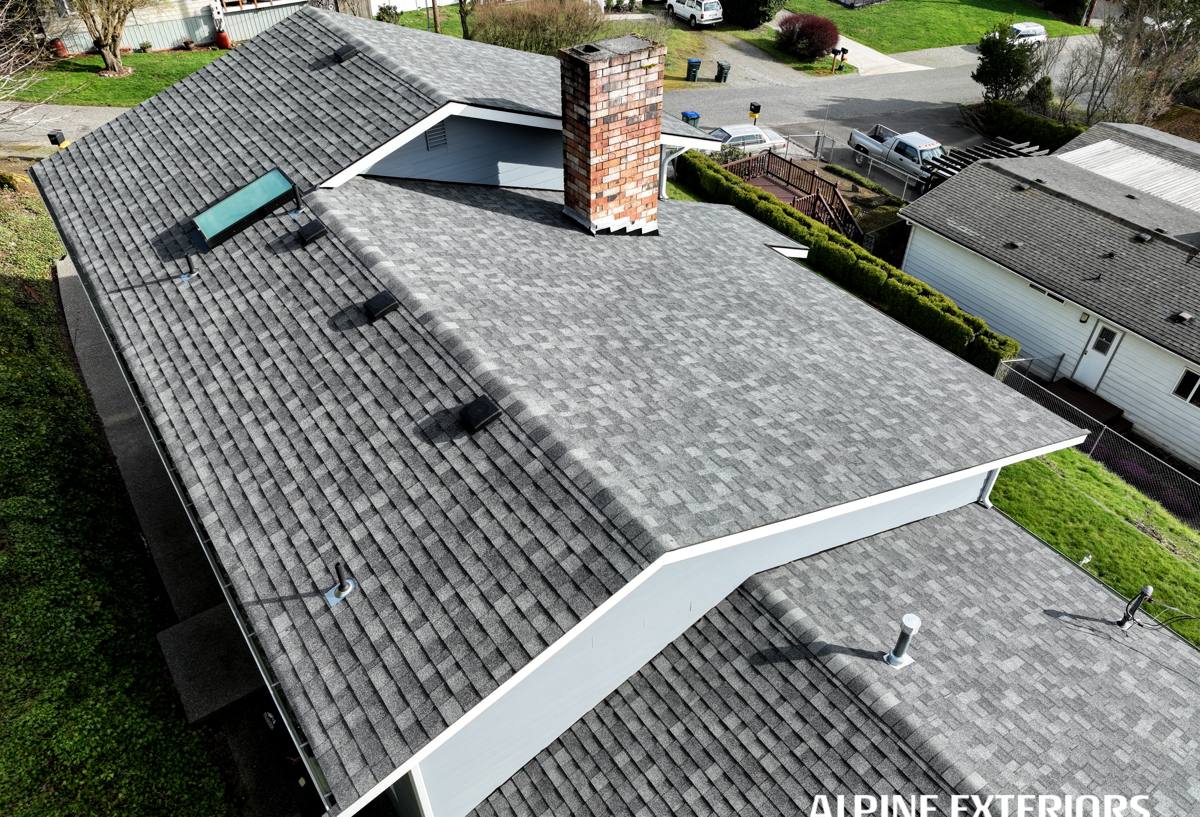
Sudden Valley sits in a heavily wooded setting on Lake Whatcom, and that changes what a roof has to deal with compared to a home out in the open. Mature conifers overhang a lot of rooflines here, which means more shade, more standing moisture, more needle and cone debris in the valleys and gutters, and a moss problem that starts earlier in the fall and hangs on later into spring than it does on a roof with full sun exposure. A new roof installation in this neighborhood has to be planned around those conditions from the start, not patched around them later.
We work in and around Bellingham and Whatcom County regularly, and Sudden Valley's tree cover and lake-adjacent humidity are things we plan for specifically — not a surprise we discover mid-job.
What Bellingham's Climate Does to a Roof Over Time
Whatcom County's marine climate is generally mild, but it's wet for most of the year, and Bellingham's proximity to the bay means the air carries salt and moisture that slowly works on metal fasteners, flashing, and exposed edges. Add Sudden Valley's shaded, tree-heavy lots and you get a roof surface that dries out more slowly after every rain — which is exactly what moss, moisture, and algae need to establish themselves.
The Long Moss Season
In a lot of the country, moss is a seasonal nuisance. In this region, especially on shaded roofs, it's closer to a year-round maintenance item. Moss holds water against the shingle surface, works its way under tabs and edges, and can lift shingles enough to let water in at the fasteners — long before you'd notice a leak inside the house. Roofs installed without moss-resistant strategy tend to need moss treatment or premature replacement years ahead of their rated lifespan.
Driving Rain and Wind Off the Water
Storms coming off the water can push rain sideways, which stresses flashing details, ridge caps, and anywhere two roof planes meet. A roof that's watertight in a light, straight-down rain can still leak under wind-driven rain if the flashing and underlayment weren't installed with that in mind.
Signs a Sudden Valley Roof Is Due for Replacement
Most roofs don't fail all at once — they show warning signs first. On a shaded, tree-covered lot, some of these show up earlier than they would on a more exposed roof.
- Moss or algae streaking that comes back within months of cleaning, even after treatment
- Granules collecting in gutters and downspouts, or shingles that look thin and patchy in spots
- Curling, cupping, or cracked shingle tabs, especially on north-facing or shaded slopes
- Soft spots or slight sagging when walked on, which can mean the decking underneath has absorbed moisture
- Daylight visible through the roof deck from the attic, or damp insulation after a storm
- Flashing around chimneys, skylights, or vent pipes that's rusted, lifted, or separated from the surface
- A roof that's approaching or past 20–25 years old, which is a realistic ceiling for asphalt shingles under this much shade and moisture
Any one of these on its own isn't necessarily an emergency, but a few of them together are usually a sign that patching won't buy much more time.
What a Correct New Roof Installation Actually Involves
A new roof is more than laying new shingles over what's there. Done right, it's a sequence of steps where each layer depends on the one underneath being correct.
Tear-Off and Deck Inspection
We remove the old roofing down to the deck rather than layering over it. That's the only way to actually see the plywood or planking underneath — which matters a lot on a shaded, moisture-heavy lot like Sudden Valley, where rot or soft spots can hide under old shingles for years. Any damaged decking gets replaced before anything new goes down; installing new roofing over compromised deck just guarantees an early repeat of the job.
Underlayment and Ice/Water Protection
A synthetic underlayment layer goes down as the roof's real waterproof barrier — the shingles above it are the first line of defense, not the last. In valleys, at eaves, and around any penetration, we add additional waterproof membrane, since those are the spots where wind-driven rain and pooling meltwater cause the most damage.
Flashing
Flashing around chimneys, skylights, vent stacks, and roof-to-wall transitions is where most roof leaks actually originate — not through the shingle field. New step flashing, counter-flashing, and pipe boots are installed as part of the job, not reused from the old roof, since flashing degrades on its own timeline and reusing it undermines everything else that was done correctly.
Ventilation
Proper intake and exhaust ventilation keeps the attic temperature and moisture level balanced, which slows down moss growth from underneath and prevents condensation from soaking the new decking. On heavily shaded homes, ventilation is one of the details most likely to be under-specified on a lower-cost roof.
Material Options for a Shaded, Wet Lot
There isn't one right roofing material for every home, but on a lot like Sudden Valley's — shaded, tree-heavy, and consistently damp — some materials handle those conditions with a lot less long-term maintenance than others.
| Material | How It Handles Moss & Moisture | Typical Lifespan Here | Trade-Offs |
|---|---|---|---|
| Architectural asphalt shingle | Good, especially with algae-resistant granules; still needs periodic moss removal on shaded slopes | 20–30 years | Most affordable upfront; lifespan shortens under heavy shade without maintenance |
| Standing seam metal | Excellent — sheds moisture fast, gives moss little to hold onto | 40–50+ years | Higher upfront cost; requires an experienced installer for the seams and flashing |
| Cedar shake | Poor in shaded, wet conditions without diligent maintenance — moisture retention is the main weakness | Varies widely with upkeep | We're honest with clients that shaded lots like this are a tough environment for wood roofing long-term |
| Composite/synthetic shake | Good — mimics wood appearance without the moisture absorption | 30–50 years | Higher material cost than asphalt; more limited local installer familiarity |
For most Sudden Valley homes we talk through, a quality architectural shingle with algae-resistant granules is the practical middle ground, and standing seam metal is worth serious consideration on steeper or heavily shaded roof planes where moss has been a repeat problem.
Access, Permits, and HOA Considerations
Sudden Valley is a private, HOA-governed community, and homes here often sit on wooded lots with tighter driveways and less staging room than a standard suburban street. We plan dumpster placement, material staging, and crew access around that before the job starts, rather than figuring it out on-site the first morning. If your home falls under HOA design review for exterior changes, we can provide the documentation — shingle style, color, and material specs — that's typically needed for approval. Whatcom County building permit requirements apply the same way here as anywhere else in the county, and we handle that permitting as part of the job.
Our Process, Start to Finish
- Roof inspection and estimate — we walk the roof (not just look from the ground), check the decking where accessible, and give you a written estimate with material options.
- Material selection — we go over the trade-offs for your specific roof, shade level, and slope, not a one-size answer.
- Permitting and scheduling — we pull the required Whatcom County permit and coordinate around weather windows, since a wet-climate roof install depends on getting dry stretches to work with.
- Tear-off and deck repair — full removal of old roofing, deck inspected and repaired as needed.
- Underlayment, flashing, and shingle installation — installed in the sequence that actually keeps water out, not just what's fastest.
- Cleanup and magnetic sweep — job site cleared of old material and debris, yard and driveway swept for stray nails.
- Final walkthrough — we go over the finished roof with you before we consider the job done.
Why a Crew That Already Works Sudden Valley Matters
A roofing crew that's already familiar with Sudden Valley's access roads, HOA process, and the specific way shade and lake moisture affect roofs here saves you time and avoids surprises mid-project. It also means the roof gets designed for the conditions it will actually sit in — heavier moss resistance, ventilation sized for a shaded attic, flashing details built for wind-driven rain off the lake — instead of a generic specification that ignores the site.
After Installation: Keeping a New Roof Performing
A correctly installed roof still benefits from basic upkeep on a lot like this — it's what keeps it hitting its full lifespan instead of falling short of it.
- Keep gutters and downspouts clear of needles and leaf litter, especially going into fall
- Have overhanging limbs trimmed back where practical to cut down on shade and debris load
- Schedule a roof check every year or two, particularly after a heavy storm season
- Address moss with gentle, roof-safe treatment early rather than letting it establish and spread
If your Sudden Valley roof is showing its age or you're just weighing options before it becomes urgent, we're glad to come out, walk the roof, and give you a straightforward, no-pressure estimate. Use the form below to get started.