 Bellingham Siding
 Roof Repair Built for Sudden Valley's Climate
Sudden Valley sits in one of the wetter, greener corners of Whatcom County, and that setting is hard on a roof. Homes here tend to sit among mature trees and close to the water, which means more shade, more standing moisture, and a lot more organic debris landing on the roof deck than a house out in open, sunny terrain would ever see. Add in the salt air drifting up from Bellingham Bay and the Puget Sound corridor, months of driving rain off the water, and a moss season that can run from fall through spring, and you have a roof environment that ages differently than most of the country.
None of that means a Sudden Valley roof is doomed to fail early. It means the repair work has to account for moisture that lingers, metal that corrodes faster near salt air, and moss that does real structural damage if it's left alone. We've built our repair process around those specific conditions rather than a generic checklist, because a patch that works fine in a dry climate can fail here within a season or two.
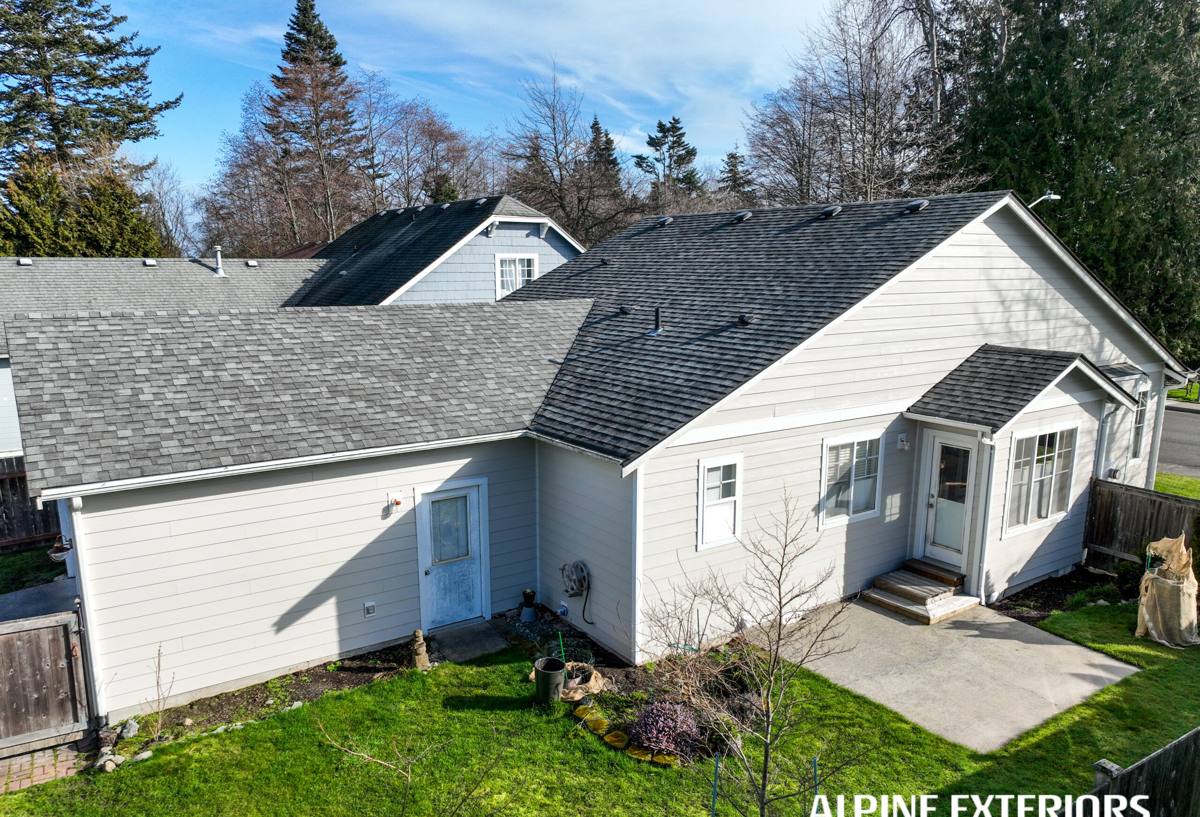
What Bellingham's Coastal, Wooded Climate Does to a Roof
Salt Air and Metal Fatigue
Flashing, fasteners, and gutter systems are usually the first casualties of coastal exposure. Salt-laden air accelerates corrosion on standard steel fasteners and lower-grade flashing, which is why we pay close attention to what metal is holding a roof together, not just what's visible on the surface.
Driving Rain and Wind-Driven Water
Bellingham's rain doesn't always fall straight down. Storms off the water push rain sideways, which forces water up under shingle edges, into valleys, and around anything penetrating the roof plane — vent pipes, chimneys, skylights. A repair that only addresses the visible gap and ignores wind-driven water intrusion tends to come back as a callback within a year.
Moss, Shade, and Organic Buildup
Tree cover common around Sudden Valley properties keeps roof sections shaded and slow to dry. Moss and algae take hold in those damp, shaded areas first, and once established, moss roots work under shingle tabs and lift them, breaking the seal that keeps water out. A roof that looks intact from the ground can already have moss doing damage underneath.
Signs a Sudden Valley Roof Needs Repair
Most roofs give warning signs well before a leak shows up inside the house. Catching these early is almost always cheaper than waiting for interior damage to force the issue.
- Moss or dark streaking concentrated on north-facing or tree-shaded roof slopes
- Granules collecting in gutters or at downspout outlets
- Curling, lifted, or missing shingle tabs, especially along valleys and eaves
- Rust staining or visible corrosion around flashing, vents, or chimney bases
- Soft or spongy spots when walking the roof deck during inspection
- Water stains on interior ceilings, especially after wind-driven storms
- Daylight visible through the attic roof deck at seams or nail holes
- Sagging in the roofline between rafters, which can indicate deck moisture damage
What a Correct Roof Repair Actually Involves
A roof repair done right is more than swapping a few shingles. It starts with figuring out why the original failure happened, because replacing the surface without fixing the cause just buys a little time.
Diagnosis Before Repair
We start by tracing water back to its actual entry point, which is often several feet from where the interior stain shows up. Water travels along the underlayment and rafters before it finds a way through the ceiling, so an accurate diagnosis means getting on the roof, not just looking at the ceiling stain.
Deck and Underlayment Condition
If the roof deck underneath has absorbed moisture — common under long-term moss growth — that section needs to dry out or be replaced before any new shingle work goes down. Laying new shingles over a soft or rotted deck just hides the problem.
Flashing Integrity
Flashing around chimneys, skylights, vent stacks, and roof-to-wall transitions fails more often than the shingle field itself. Proper repair means resealing or replacing flashing with corrosion-resistant material suited to salt air exposure, formed and layered correctly with the shingle courses so water sheds over it rather than behind it.
Shingle Matching and Tie-In
Patching a repair area with mismatched shingles or an improper tie-in to the existing field creates a new weak point at the seam. We match material weight, profile, and where reasonably possible, color, so the repaired section performs — and looks — like part of the original roof rather than a visible patch.
Common Repair Issues We See in Sudden Valley
| Issue | Typical Cause | Repair Approach |
|---|---|---|
| Moss lifting shingle tabs | Shade, moisture retention, organic debris buildup | Careful moss removal, treatment, and shingle reseal or replacement of damaged tabs |
| Valley leaks | Debris damming water flow, worn valley flashing | Clear debris, inspect and replace valley flashing/underlayment |
| Chimney or skylight leaks | Cracked or corroded flashing, sealant failure | Re-flash penetration points with corrosion-resistant metal |
| Gutter overflow damage | Needle and leaf buildup from tree cover | Clear gutters, correct pitch, repair fascia if water-damaged |
| Wind-lifted shingles | Coastal wind exposure, aging adhesive strips | Reseal or replace lifted shingles, reinforce edge fastening |
Repair or Replace: How We Help You Decide
Not every roof issue in Sudden Valley calls for a full replacement, and we're not going to sell one when a targeted repair will hold up. The decision usually comes down to how localized the damage is and how much life is left in the rest of the roof.
| Factor | Repair Usually Makes Sense | Replacement Usually Makes Sense |
|---|---|---|
| Age of roof | Under 15-20 years, depending on material | Nearing or past manufacturer's expected lifespan |
| Extent of damage | Isolated to one section, slope, or penetration | Spread across multiple slopes or the whole roof field |
| Deck condition | Solid, dry deck under the damaged area | Widespread soft spots or rot in the decking |
| Moss/algae history | First occurrence, caught early | Repeated, long-term moss damage with granule loss |
| Interior damage | None or minor, localized staining | Recurring leaks or damage in multiple rooms |
When we inspect a roof, we're honest about which column it falls into. A well-timed repair can add years to a roof's service life; pushing a repair on a roof that's structurally past its point just delays an inevitable replacement while risking more interior damage in the meantime.
Our Roof Repair Process
- On-site inspection: We walk the roof and attic space where accessible, checking deck condition, flashing, ventilation, and moss or moisture patterns tied to shade and tree cover.
- Clear diagnosis: We explain what's actually failing and why, in plain terms, before recommending a scope of work.
- Written estimate: A clear scope and price range, so you know what's included before work starts.
- Repair work: Deck repair where needed, correct flashing installation, matched shingle tie-in, and moss treatment where relevant.
- Cleanup and walkthrough: Debris cleared from the roof and gutters, and a final review of the completed work.
Materials and Our Repair Standards
For a coastal, moss-prone environment like Sudden Valley, we lean toward flashing and fastener materials with better corrosion resistance, since standard-grade metal simply doesn't hold up as long this close to salt air. We're also selective about moss treatment approach — physical removal and proper drainage correction matter more long-term than a one-time chemical treatment, because if the underlying shade and moisture conditions aren't addressed, moss simply returns. Our standard is to fix the condition that caused the failure, not just the visible symptom, even when that means a slightly larger scope of work than a quick patch.
Why a Crew That Already Works Sudden Valley Matters
Roofing crews that mostly work drier, sunnier regions don't always account for how differently moss, shade, and salt air behave here. A crew familiar with Sudden Valley's tree cover and lake-adjacent microclimate knows to check for moisture retention patterns that wouldn't show up as a concern elsewhere, and to use flashing and fastening choices suited to sustained damp, salty conditions rather than a one-size-fits-all approach. Local familiarity also means a faster, more accurate estimate — we've seen how these specific conditions play out on roofs in this area and know what to look for before we're even on the ladder.
Simple Maintenance That Extends a Repair's Life
A repair holds up longer with a little ongoing attention, especially in a climate that never fully dries out for long. These are the basics worth staying on top of between professional inspections:
- Clear gutters and downspouts at least twice a year, more often under heavy tree cover
- Trim back branches overhanging the roof to reduce shade and debris buildup
- Have visible moss growth addressed before it spreads across a slope
- Check attic spaces periodically for damp insulation or daylight through the deck
- Schedule a professional roof inspection after major wind or rainstorms
Get an Honest Look at Your Roof
If you're noticing moss buildup, a slow leak, or just want a straight answer on whether your roof needs repair or can wait, we're glad to take a look. Request a free, no-pressure estimate using the form below, and we'll give you a clear picture of what your Sudden Valley roof actually needs.