 Bellingham Siding
 Happy Valley's Climate Is Harder on Siding Than It Looks
Happy Valley is a well-established Bellingham neighborhood, and like most of Whatcom County, it sits inside a climate that quietly wears down exterior siding faster than homeowners expect. Three things stack up against a house here every year: salt-laden air moving in off Bellingham Bay and the Sound, driving rain that comes in sideways during fall and winter storms rather than falling straight down, and a moss season that can run for months on shaded or north-facing walls.
None of these are dramatic events. There's no single storm that ruins a house. It's the accumulation — the same corrosive air day after day on exposed fasteners and trim, the same wind-driven rain finding its way into a seam that was caulked instead of flashed, the same damp shade feeding moss and algae on a wall that never quite dries out between rains. Siding that isn't installed with this in mind will show it within a few years: peeling paint, soft trim, streaking, and boards that swell or cup. Siding installed correctly, in a material engineered for this kind of climate, holds up for decades instead.
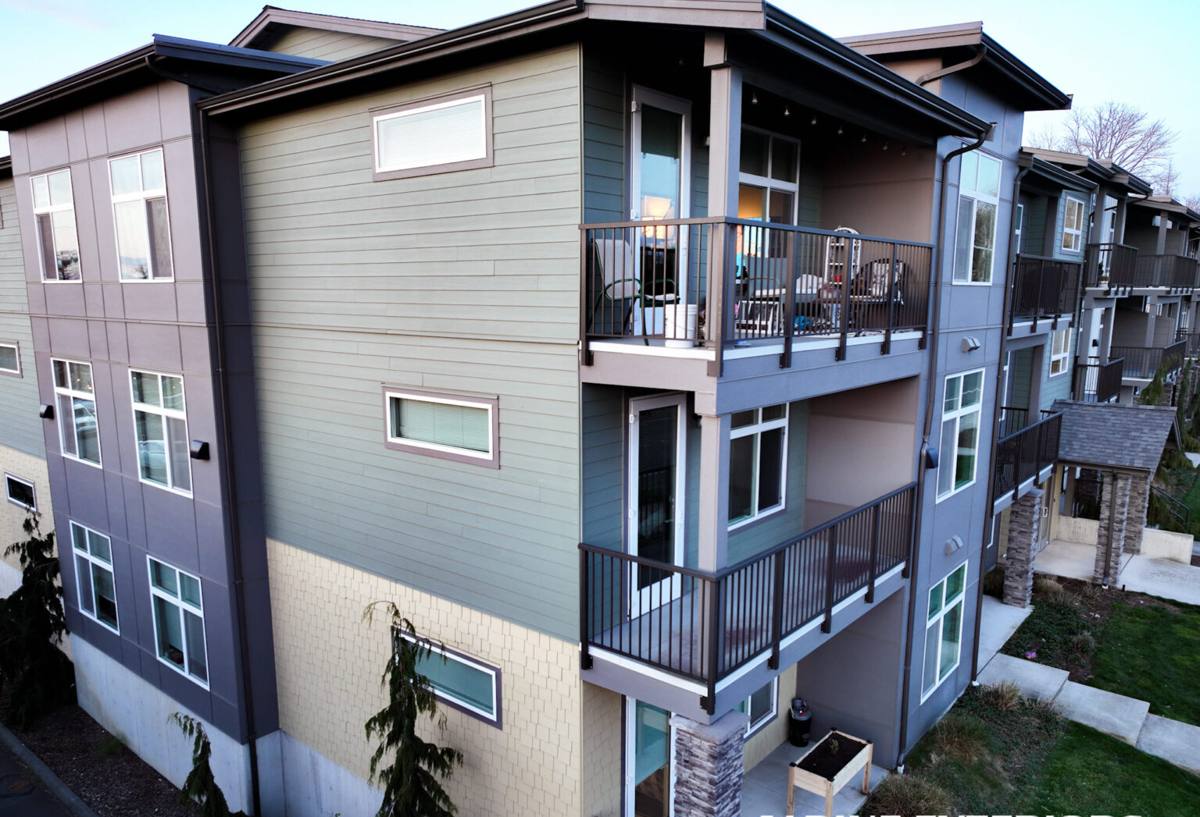
What Correct Siding Installation Actually Involves
Siding installation is often talked about like it's just nailing panels to a wall. It isn't. Most of the siding failures we get called out to inspect in Bellingham neighborhoods trace back to what's happening underneath and behind the visible surface — not the panel material itself.
Weather-Resistant Barrier and Flashing
Before any siding goes up, the wall needs a properly lapped weather-resistant barrier (WRB) installed shingle-style so water is always directed downward and outward, never trapped behind the siding. Every window, door, and penetration needs integrated flashing — not just a bead of caulk over the top. In a climate with as much driving rain as Whatcom County sees, flashing details are what actually keep water out of the wall assembly. Caulk is a backup, not a strategy.
Fastening to Manufacturer Spec
Fiber cement siding has a specific fastening schedule — nail type, spacing, and placement all matter for the product to perform and stay under warranty. Corrosion-resistant fasteners matter even more near the coast, where salt air accelerates corrosion on anything less than the correct grade. Fasteners placed wrong, too close to an edge, or driven too deep are a common cause of cracking and premature failure.
Butt Joints, Caulking, and Trim Details
Fiber cement expands and contracts with temperature and moisture, so joints need the gaps and sealants the manufacturer specifies — not whatever the installer has on the truck. Cut ends need to be sealed and primed before installation, not after. Siding also needs to keep proper clearance from grade, roofing, decks, and other transitions so water can't wick up into the bottom edge of a board. These are small details, but they're the difference between siding that lasts 30-plus years and siding that needs attention in five.
Why We Install James Hardie Fiber Cement — and Nothing Else
We standardized on James Hardie fiber cement siding for every job, including installations here in Happy Valley, and we don't install vinyl, LP SmartSide, or other engineered wood panel products. That's a deliberate choice, not a sales preference.
Hardie's HZ product lines are engineered specifically for climate zones like ours, where sustained moisture and moss exposure are the norm rather than the exception. The material is non-combustible fiber cement, so it doesn't share the moisture-swelling behavior that engineered wood siding can be prone to in a climate this wet. The ColorPlus factory finish is baked on under controlled conditions, which holds color and resists fading far longer than a field-applied paint job, and it comes with a real transferable warranty. None of that matters if the installation behind it is sloppy — but paired with correct installation, it's the combination that holds up best against salt air, driving rain, and moss over the long run, which is exactly what a Happy Valley home has to deal with every year.
Our Installation Process in Happy Valley
- Walk-around assessment — we look at the whole exterior, note trim and detail work, existing siding condition, and any problem areas like shaded walls with heavy moss buildup.
- Tear-off and sheathing inspection — old siding comes off and we inspect the sheathing underneath for rot or water damage before anything new goes up.
- Repairs — any damaged sheathing or framing gets repaired or replaced. Covering over a compromised wall is how small problems become expensive ones.
- Weather barrier and flashing — WRB and flashing go in at every window, door, and penetration, lapped correctly for our rain patterns.
- Siding and trim installation — Hardie siding and trim go up to manufacturer fastening spec, with correct joint gaps and clearances.
- Caulking and finish work — cut edges are sealed, joints are caulked with the right product, and touch-up finishing is completed.
- Final walkthrough — we go over the finished job with the homeowner before calling it done.
Cost Factors for a Happy Valley Siding Project
Every home is different, so we don't publish flat prices — but these are the factors that actually move the number on a siding installation in a neighborhood like Happy Valley:
| Factor | Why It Matters |
|---|---|
| Home size and story count | More wall area and taller walls mean more material, labor, and staging/scaffolding needs. |
| Existing siding removal and sheathing condition | Rot or moisture damage found underneath old siding adds repair scope before new siding can go on. |
| Trim and architectural detail | Gables, dormers, and multiple roof lines take more time to flash and trim correctly than a simple rectangular wall. |
| Siding profile and plank width chosen | Different Hardie profiles and reveals have different material and labor requirements. |
| Site access | Hillside lots, tight side yards, and limited driveway access — common in older Bellingham neighborhoods — can affect staging and labor time. |
Signs Your Happy Valley Home May Need New Siding
- Boards or trim that feel soft or spongy when pressed
- Paint that keeps failing or peeling within a year or two of repainting
- Visible warping, cupping, or bowing in the siding boards
- Persistent moss or algae streaking, especially on shaded or north-facing walls
- Cracked or gapped caulk lines at trim, corners, and window edges
- Rising heating bills that suggest the wall assembly isn't sealing the way it should
Any one of these on its own isn't necessarily urgent. Several of them together, especially on a wall that gets heavy shade or faces prevailing weather, is worth having looked at before it turns into a sheathing repair.
Why Hiring a Crew That Already Works Happy Valley Matters
Happy Valley has a mix of home ages and styles, some hillside lots, and the same building department and permitting process as the rest of the City of Bellingham. A crew that already works in the neighborhood knows what to expect walking up to a job — how a particular era of home was typically framed and sided, where moisture problems tend to show up on sloped or heavily shaded lots, and how to stage a job efficiently on a tighter urban lot without disrupting the property more than necessary.
That familiarity also matters after the job is done. Fiber cement siding installed correctly needs very little attention, but if a question comes up — a caulk line to check, a spot to look at after a hard storm — it's a straightforward call to a crew that's already worked in the area and stands behind the work, not a search for whoever's available.
Maintenance After Installation
Hardie fiber cement needs far less upkeep than wood-based or vinyl siding, but "low maintenance" isn't the same as "no maintenance," especially with Whatcom County's moss season. An annual rinse-down removes moss spores and organic buildup before they get a foothold, particularly on shaded walls. It's worth a look at caulk lines every couple of years, since sealant is the one component that wears out well before the siding itself. And any impact damage — from a ladder, a branch, equipment — should get patched or addressed promptly rather than left to let moisture in.
If you're weighing a siding project for a Happy Valley home and want a straight answer about what your walls actually need, we're glad to come take a look. The estimate is free, there's no pressure, and you'll get a clear explanation of what we'd do and why — just fill out the form below.