 Bellingham Siding
 Siding Repair Built for York's Corner of Whatcom County
Homes in the York neighborhood sit close enough to Bellingham Bay and the surrounding wetlands that siding takes a different kind of beating than it would twenty miles inland. Salt-laden air off the water, long stretches of driving rain that come in sideways off Puget Sound storms, and a moss season that can run eight months out of the year all work on exterior cladding at once. Add in the mature tree canopy common to York's older streets, and you get siding that stays damp longer, collects organic growth faster, and shows wear in places a drier, sunnier climate simply wouldn't touch.
Siding repair here isn't just about making a wall look tidy again. Done right, it's about finding out why a section failed in the first place — usually moisture, either from the outside working in or from trapped condensation working out — and fixing that root cause before the cosmetic patch goes on. Done wrong, a repair just seals the moisture in and buys the homeowner a year or two before the same spot fails again, often worse.
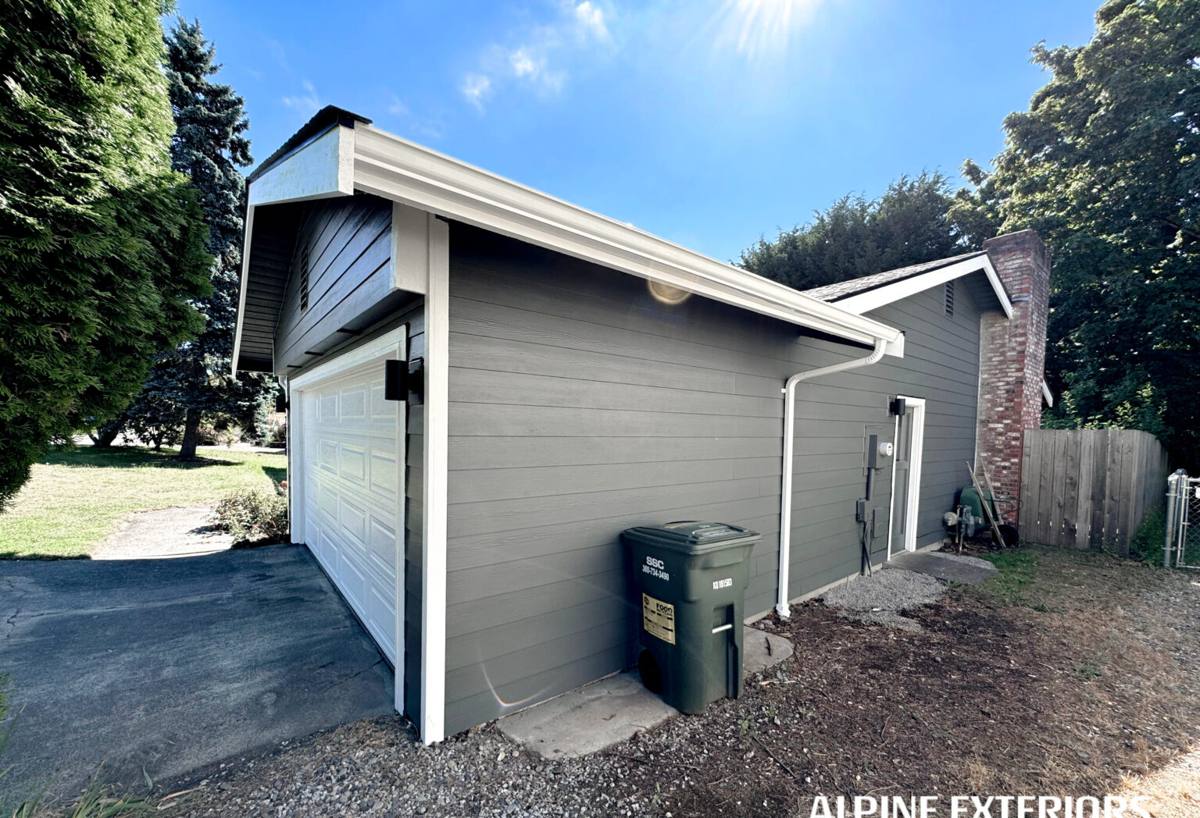
What York's Climate Does to Siding Over Time
Three conditions show up over and over on repair calls in this part of Bellingham:
Salt Air and Corrosion
Proximity to the bay means fasteners, flashing, and trim hardware corrode faster than manufacturers' generic lifespan estimates assume. Rusted nail heads bleed through paint, and corroded flashing at windows and rooflines is one of the most common hidden causes of water intrusion we find once we pull a damaged panel.
Driving Rain
Wind-driven rain doesn't just wet a wall — it pushes water sideways into every gap, lap joint, and unsealed penetration. On homes with older lap siding, this is where you see cupping, soft spots at the bottom edge of each board, and staining that runs down from a single failed joint above.
Moss and Sustained Moisture
Bellingham's mild, wet winters and shaded lots keep siding surfaces damp for days at a time. Moss and algae hold that moisture directly against the material, which accelerates rot in wood-based products and breaks down paint film on almost anything. Areas under eaves, behind shrubs, and on north-facing walls are the first to show it.
Signs Your Siding Needs Repair
Most siding problems don't announce themselves with a hole in the wall. They show up as small signals that get ignored until the damage spreads. Homeowners in York should watch for:
- Soft, spongy, or visibly warped sections when pressed by hand
- Paint that's bubbling, peeling, or flaking in localized patches rather than evenly across the whole wall
- Dark streaking or staining below seams, trim, or window flashing
- Persistent moss or algae growth that keeps coming back after cleaning
- Gaps opening up at butt joints, corners, or where siding meets trim
- A musty smell or visible mold on the interior wall opposite a suspect exterior section
- Nail heads popping, rust streaks, or fasteners backing out
- Higher-than-expected heating bills, which can point to moisture-compromised insulation behind the siding
Any one of these on its own might be minor. Two or three together, especially clustered in one area, usually means water has already gotten past the surface.
What a Correct Repair Actually Involves
A lot of siding "repair" in this region is really just cosmetic — caulk over a crack, a fresh coat of paint over a stain, a new piece nailed over the old. That approach hides a problem instead of solving it. A repair worth paying for includes:
- Removal of the damaged section, not just covering it, so the crew can see what's underneath.
- Inspection of the water-resistive barrier and sheathing behind the siding for rot, soft spots, or mold, since siding is rarely the only thing damaged once water's been getting in.
- Correcting the cause — re-flashing a window, adjusting a kick-out flashing, fixing a caulk joint, or improving drainage at grade — not just replacing the visible board.
- Matching material and profile as closely as possible so the repair doesn't stand out or create a new weak point at the transition.
- Proper fastening and sealing using corrosion-resistant hardware appropriate for a coastal-influenced climate.
Skipping any of these steps is how homeowners end up paying for the same repair twice.
Repair or Replace? How We Help You Decide
Not every damaged section needs a full re-side, and not every repair is worth doing on siding that's already near the end of its useful life. The honest answer depends on how much of the wall is affected and what's driving the damage.
| Situation | Repair usually makes sense | Replacement is the smarter call |
|---|---|---|
| Damage location | Isolated to one or two sections | Spread across multiple walls or elevations |
| Underlying material | Still structurally sound where undamaged | Widespread rot, delamination, or repeated past patch jobs |
| Age of existing siding | Under roughly half its expected service life | Already near or past manufacturer lifespan, especially wood-based products |
| Root cause | A single fixable issue (flashing, caulk, one bad joint) | Systemic moisture problems from grading, ventilation, or original installation |
| Cost over time | One-time fix resolves it | Repeated repairs are costing more than a re-side would over a few years |
We'll tell you straight if a repair is the right move, even when a full replacement would be the bigger job for us. A repair that's set up to fail again isn't a service to anyone.
Our Repair Process
When we come out to a York property, the process is the same whether the job turns out to be a small patch or the first sign of a bigger issue:
- Walk the whole exterior, not just the reported problem spot — siding damage often has a sibling issue elsewhere on the same wall.
- Probe suspect areas by hand to find soft wood or hidden rot that isn't visible from a few feet back.
- Check flashing and water paths around windows, doors, decks, and roof-to-wall intersections, since these are where most leaks originate.
- Give you a clear, written explanation of what we found, what caused it, and what it'll take to fix — repair or replacement, no upsell pressure either direction.
- Do the work to match, using materials and fastening appropriate for Whatcom County's exposure, not whatever's cheapest to grab.
Why We Repair With — and Recommend — James Hardie Fiber Cement
When a repair calls for new material, or when a homeowner decides enough sections have failed that a full re-side makes more sense, we install James Hardie fiber cement exclusively. We don't install vinyl, LP SmartSide, Cemplank, Allura, primed spruce, or cedar, and that's a deliberate standard, not an oversight.
Fiber cement doesn't feed moss the way wood-based siding can, doesn't warp or delaminate the way engineered wood products can under sustained moisture, and it's non-combustible — a real consideration in a region where wildfire smoke seasons have become more common even west of the mountains. James Hardie's ColorPlus factory finish also holds up to UV and salt exposure better than field-applied paint, which matters directly for a wall that's taking on bay air and driving rain year-round. Their HZ5 product line is engineered specifically for climates with high moisture exposure, which describes most of Whatcom County.
None of that means every product we don't install is a bad product — cedar has real appeal, vinyl is inexpensive, engineered wood has its place. It means that for the specific conditions York homes face, we've found fiber cement gives homeowners the best balance of low maintenance, longevity, and a warranty that actually holds up when a repair or a full re-side is on the table.
Why Local Experience in York Matters
A crew that's already worked on homes in this part of Bellingham knows which walls take the worst of the weather, where moss builds up fastest, and which older construction details tend to hide moisture problems. That familiarity shortens the diagnostic part of a repair — less guesswork, fewer surprises once a section comes off the wall — and it means the fix accounts for what actually happens to siding here over a full Whatcom County winter, not a generic national average.
It also means straight talk about scope. A crew unfamiliar with the area might either over-sell a full replacement when a targeted repair would do, or under-scope a repair that's masking a bigger moisture problem. Neither serves the homeowner.
After the Repair: Keeping It From Happening Again
A good repair should buy years, not months. A few habits help:
- Rinse moss and algae off siding annually, especially on shaded or north-facing walls
- Trim back vegetation that keeps siding shaded and damp
- Check caulking at trim and window joints every year or two and re-seal as needed
- Keep gutters clear so overflow isn't running down the wall face
- Have any new staining or soft spots checked promptly rather than waiting for it to spread
If you're seeing staining, soft spots, or moss that keeps coming back on a York-area home, we're happy to take a look and give you a straight assessment — repair, replacement, or just what to watch. The estimate is free and there's no pressure either way; fill out the form below to get started.