 Bellingham Siding
 Composite Decking for Sudden Valley's Lake-and-Forest Setting
Sudden Valley sits in a different microclimate than a lot of Bellingham. It's tucked into the trees along Lake Whatcom, which means most homes here deal with heavier shade, more standing humidity, and slower drying times than a house out in the open on the flats. Add in the rain that defines a Whatcom County winter and you've got a recipe for decks that stay damp far longer than they should. That combination is exactly why composite decking has become the go-to choice for homeowners replacing old wood decks in this neighborhood.
This page is specifically about composite decking installed for Sudden Valley properties — not a generic overview. If you're weighing your options for a deck that actually holds up under a tree canopy next to the lake, here's what matters.
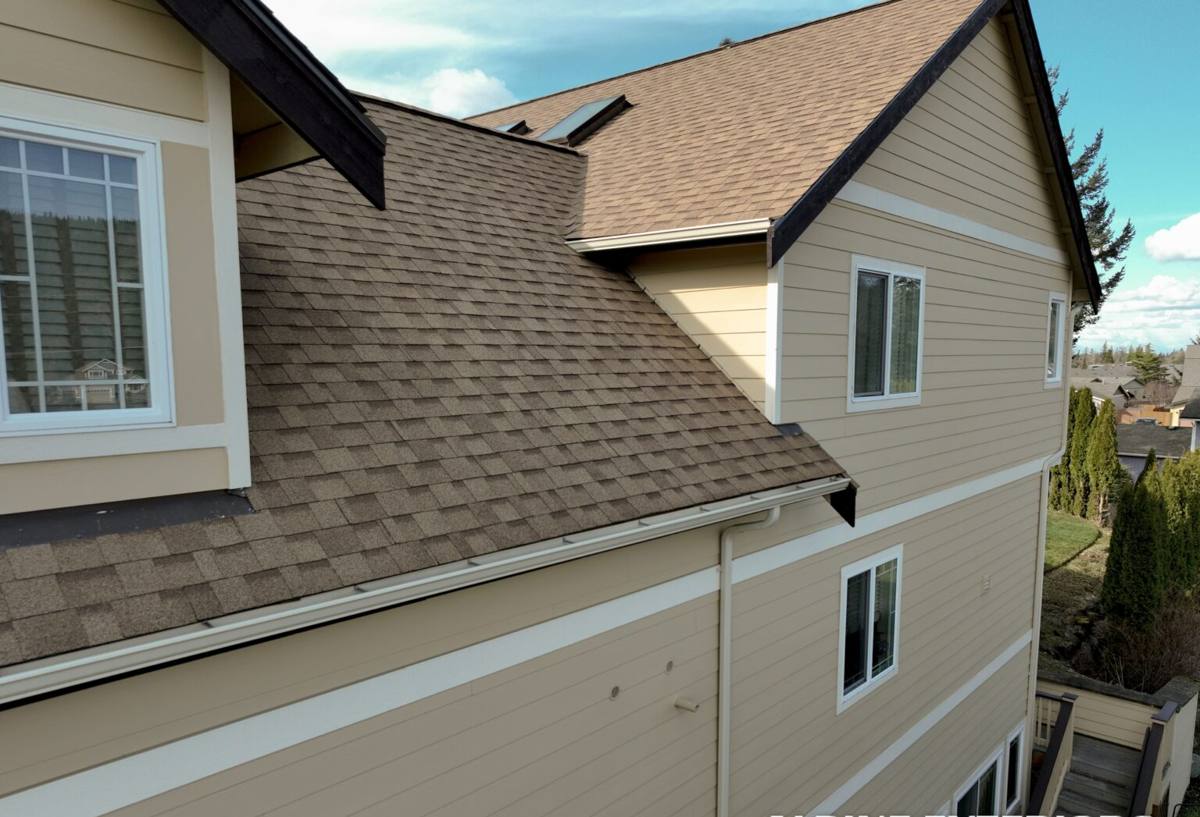
What Sudden Valley Decks Are Actually Up Against
Every part of Whatcom County deals with a wet, marine-influenced climate — driving rain, a long moss season, and salt-laden air moving in off the Sound that eats away at unprotected wood and fasteners over time. Sudden Valley adds its own layer on top of that: because so many lots are wooded and close to the lake, decks here get less direct sun and more standing moisture than decks in open subdivisions closer to town. Shade slows drying after every rain, and slow drying is what feeds moss, algae, and mildew.
What we see most often on older decks out here:
- Moss and green algae film building up on shaded boards, especially the north and east-facing sections of a deck
- Wood decking that's gone soft or splintery at the fastener lines from repeated wet-dry cycling
- Railing posts and ledger connections showing rot before the decking surface itself fails
- Surface staining and slickness that makes a deck genuinely unsafe underfoot for months at a time
None of that is a defect in the original build necessarily — it's just what happens to untreated or poorly maintained wood in a shaded, damp lake environment over enough winters.
Why Composite Makes Sense for This Specific Setting
Moisture behavior
Modern capped composite boards don't absorb water the way wood does, so they don't swell, cup, or hold moisture against the framing underneath the way a wet cedar or fir board will. In a shaded, damp spot like a lot backing onto the lake, that matters more than it would on a sunny south-facing deck across town — the board simply isn't drying out and re-wetting on the same cycle that eventually breaks wood down.
Moss and algae resistance
Composite doesn't feed mildew and algae the way raw wood fiber does, and a capped board gives moss less to grip onto than open wood grain. It still needs to be kept clean — composite isn't maintenance-free — but it doesn't need yearly sanding, staining, or sealing to keep moss from taking hold.
Long-term cost, honestly stated
Composite costs more upfront than pressure-treated wood. Where it pays off in a spot like Sudden Valley is in what you're not doing every year or two: no re-staining, no annual pressure washing to keep it from going slick, no replacing individual boards that rotted out from sitting wet in the shade. Over a 15-20 year horizon, most homeowners in wooded, damp lots come out ahead.
What a Correct Composite Deck Installation Involves
Composite decking fails early almost exclusively from installation mistakes, not from the material itself. In a shaded, wet setting like Sudden Valley, getting the substructure right matters even more than usual, because there's less sun to help anything dry out if it's built wrong.
The parts that actually determine how long it lasts
- Joist spacing tightened to the manufacturer's spec for the board profile — composite typically needs closer spacing than wood, especially on diagonal or picture-frame layouts
- Ventilation underneath the deck so air can move and moisture doesn't sit trapped against the joists, which matters more under tree cover where the ground stays damp longer
- Hidden fastener systems rated for the specific board, installed with the correct gap tolerances for seasonal expansion and contraction
- Flashing and ledger board protection where the deck ties into the house, since that's the single most common point of hidden rot on any deck in this climate
- Proper end-cutting and capping on every board end, since an unsealed cut edge on some composite products can wick moisture even though the face is capped
| Decking Option | Moisture Handling in Shade | Moss/Algae Resistance | Ongoing Maintenance |
|---|---|---|---|
| Pressure-treated wood | Absorbs and holds water; slow to dry under tree cover | Low — feeds algae and moss without regular treatment | Annual cleaning, periodic staining/sealing |
| Cedar | Better natural resistance than PT pine but still absorbs moisture | Moderate; still needs treatment in shaded spots | Regular oiling/sealing to hold up |
| Older/uncapped composite | Can absorb moisture at cut edges and fastener holes | Better than wood, not as good as capped boards | Low, but edge sealing matters |
| Modern capped composite | Minimal absorption; holds up well in shaded, damp conditions | Best of the group when properly installed | Occasional washing, no staining or sealing |
How We Handle a Sudden Valley Project
1. On-site assessment
We look at sun exposure, tree canopy, slope, drainage around the footings, and the condition of whatever's there now — including checking ledger and post connections for hidden rot before we ever talk board selection.
2. Structural check first
If the existing framing has soft spots or was undersized for a composite load, we address that before decking goes down. Putting new composite boards over a compromised substructure just moves the problem, it doesn't solve it.
3. Board and layout selection
We walk through color and texture options with an eye on how the deck actually sits — a lighter color shows less debris but can look dingy faster in a shaded spot; a darker, streaked board tends to hide the natural buildup that happens under trees between cleanings.
4. Installation
Proper joist spacing, ventilation gaps, correct fastener systems, and sealed cut ends on every board — done to the manufacturer's install spec so the warranty actually holds if you ever need it.
5. Walkthrough
Before we call it done, we walk the deck with you, cover basic care, and answer questions about what to expect through the first wet season.
Choosing Boards and Colors for a Shaded Lake Lot
Not every composite line is built the same, and not every color performs the same in a low-light, damp setting. A few practical things worth weighing when you're picking for a Sudden Valley property specifically:
- Streaked or variegated colors camouflage pollen, leaf debris, and the light surface film that builds up under trees better than solid, flat colors
- A textured or wood-grain surface gives better footing than a smooth board once it's damp — worth prioritizing on stairs and any low-sun sections
- Darker boards run hotter in direct sun but that's rarely a concern on the more shaded lots out here — it's a bigger factor on open, south-facing decks elsewhere in Bellingham
- Railing and fastener hardware should be rated for coastal/marine exposure given the broader Whatcom County climate, even on inland lake lots
Keeping a Composite Deck Looking Right in This Climate
Composite is genuinely lower maintenance than wood, but "low maintenance" isn't "no maintenance," especially under tree cover. A simple seasonal routine keeps a Sudden Valley deck performing the way it should:
- Sweep leaves, needles, and pollen off regularly — trapped organic debris is what actually feeds moss and staining, not the board itself
- Rinse or lightly wash the surface a few times a year, more often on shaded sections that don't get direct sun to help them dry
- Keep gutters and downspouts near the deck clear so runoff isn't dumping extra water onto one section
- Trim back overhanging branches where practical to let more light and air reach the deck surface
- Check railing posts and stair connections annually, since hardware and framing are still wood-adjacent failure points even on a composite deck
Why It Matters That We Already Work in Sudden Valley
Sudden Valley isn't a typical subdivision — private roads, an HOA with its own requirements, and lot conditions that vary a lot depending on how close a home sits to the lake and how much tree cover it has. A crew that's already worked the neighborhood knows what to expect from the access, the terrain, and the permitting side of things, and isn't learning the area on your project. That local familiarity, paired with a decking process built around what actually holds up in a shaded, damp corner of Whatcom County, is the difference between a deck that looks good for a season and one that holds up for years.
If you're thinking about replacing a wood deck or planning a new one in Sudden Valley, we're glad to come take a look and give you a straight, no-pressure estimate — use the form below to get started.