 Bellingham Siding
 Deck Repair Built for Sudden Valley's Climate
Sudden Valley sits in a wooded, lake-adjacent pocket of Whatcom County, and that setting is exactly what makes deck repair here different from a typical Bellingham job. Mature tree cover keeps yards shaded for long stretches of the day, which sounds pleasant until you realize it also keeps deck boards damp long after a storm has passed. Add in the marine air that moves through the broader Bellingham region and a moss season that can run from October well into spring, and you get decks that age faster than their counterparts in drier, sunnier parts of the state.
None of this means a deck in Sudden Valley is doomed to constant repair. It means the repair work has to account for shade, moisture retention, and organic growth in a way that a generic "replace the bad boards" approach doesn't. We've worked on enough decks in this community to know the failure patterns are consistent, and consistent problems have reliable fixes.
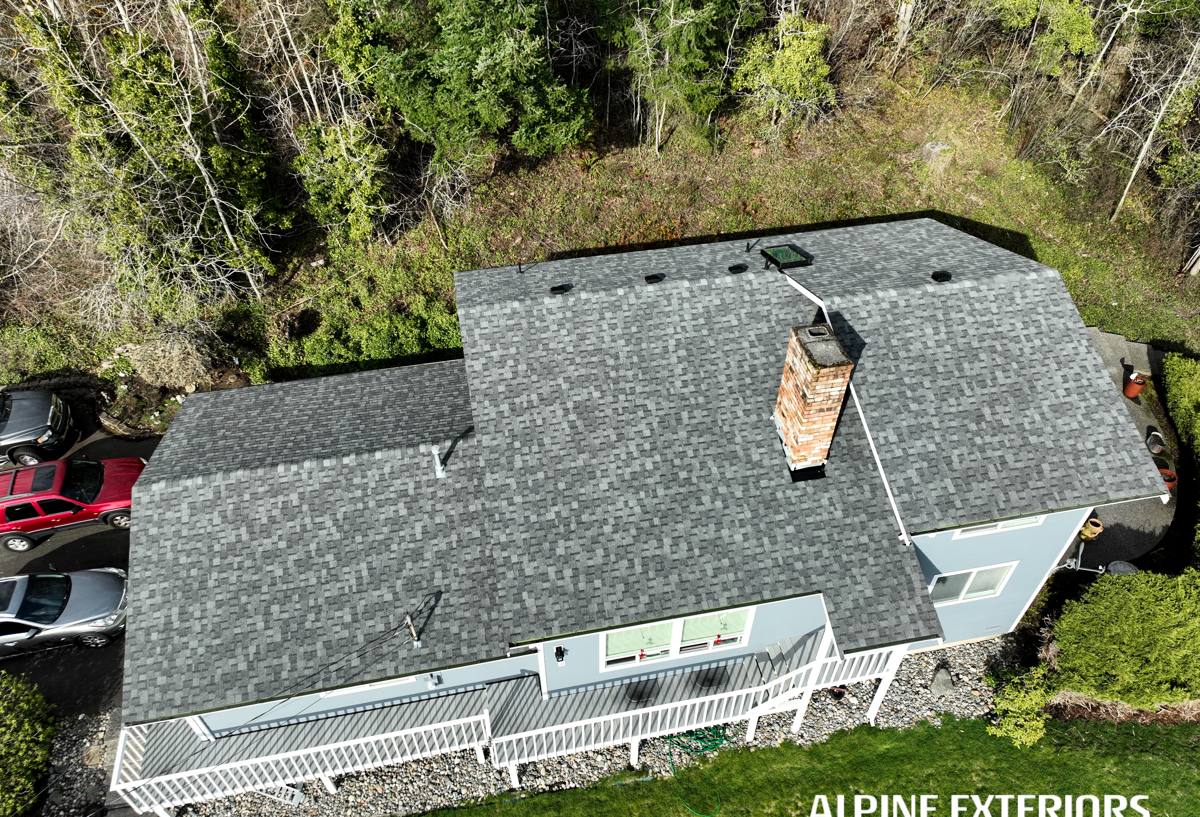
Why Decks Fail Faster Here Than in Other Whatcom County Neighborhoods
Every deck in Western Washington deals with rain. What sets shaded, lake-adjacent properties apart is how slowly that moisture leaves the wood. A deck in full sun might dry out within a day of a storm. A deck tucked under fir and cedar canopy, which describes a lot of Sudden Valley lots, can stay damp for days. That extended damp period is what allows moss, algae, and eventually rot to take hold in places a homeowner wouldn't expect.
The Conditions Doing the Damage
- Driving rain that gets pushed sideways under railings and into board gaps rather than just falling straight down
- Extended shade from surrounding trees that slows evaporation and keeps the top few millimeters of wood perpetually damp
- Moss and algae growth that holds moisture against the board surface and breaks down protective coatings over time
- Salt-influenced marine air common to the wider Bellingham area, which accelerates corrosion on fasteners, brackets, and any exposed metal hardware
- Freeze-thaw cycling during Whatcom County's colder snaps, which widens small cracks in wood and concrete footings
Individually, none of these are unusual for a Pacific Northwest deck. Together, and sustained over years, they're why we see soft board sections, corroded ledger connections, and moss-packed gaps on Sudden Valley decks that are otherwise well-built.
What a Correct Deck Repair Actually Involves
A repair that only replaces what's visibly broken often misses what caused the damage in the first place. Our process starts below the surface, because a deck's problems usually start there too.
Structural Inspection First
Before any board is pulled, we check the ledger board connection to the house, the condition of the support posts and footings, and the joists underneath the decking. This is where the moisture from a shaded, damp environment does its quiet damage — a deck can look fine on top while the framing underneath is compromised. Ledger flashing failures are especially common on older decks and are a leading cause of the kind of collapse that makes news, so we treat this step as non-negotiable, not an upsell.
Board-Level Assessment
We probe boards for soft spots, check fastener corrosion, and look for the telltale dark staining that indicates trapped moisture rather than surface dirt. Moss and algae are cleaned back so we can see the actual wood condition underneath — you can't accurately judge a board's health through a layer of growth.
Targeted Replacement, Not Blanket Demolition
If the framing is sound, we don't recommend tearing off a whole deck to fix a few bad areas. We replace compromised boards, joists, or hardware individually, matching materials so the repair blends with the rest of the structure rather than creating an obvious patchwork.
Drainage and Airflow Correction
A repair that doesn't address why the damage happened will need to be redone in a few years. Where practical, we improve gapping between boards, clear or add drainage paths, and identify whether nearby vegetation is trapping moisture against the deck longer than it should. Sometimes the most useful recommendation is a conversation about trimming back overhanging branches, not more lumber.
Our Process, Start to Finish
- Free on-site inspection — we walk the full deck, check the substructure where accessible, and note every area of concern, not just the obvious ones
- Honest scope and estimate — you get a clear breakdown of what needs fixing now, what's worth monitoring, and roughly what each will cost
- Material matching — we source replacement boards and hardware that match your existing deck's species, dimension, and fastener type wherever possible
- Repair execution — structural work first, then board replacement, then surface treatment and cleanup
- Post-repair guidance — practical notes on cleaning schedule and moisture management specific to your property's sun and shade pattern
Repair vs. Replacement: How We Help You Decide
Not every damaged deck needs to come down. The decision usually comes down to how much of the structural frame is still sound, not just how the surface boards look.
| Factor | Leans Toward Repair | Leans Toward Replacement |
|---|---|---|
| Ledger board and posts | Solid, no rot at connection points | Soft wood, corrosion, or improper flashing found |
| Extent of board damage | Isolated soft spots or staining | Widespread softness across most of the deck surface |
| Age of structure | Under 15-20 years with good bones | Original construction predates current code, or well past typical lifespan |
| Moisture exposure | Addressable with drainage or trimming fixes | Chronic exposure has already compromised multiple structural members |
| Budget goals | Lower upfront cost, ongoing maintenance | Higher upfront cost, longer runway before next major work |
Cost ranges vary widely depending on square footage, decking material, and how much of the substructure needs work — a few damaged boards is a different job than a full ledger and joist rebuild. We'll walk you through where your deck falls on that spectrum during the inspection rather than quoting a number before we've seen the actual condition.
Materials That Hold Up in This Environment
We don't push a single product as the answer for every deck. What matters is matching the material to how much sun and moisture exposure your specific lot actually gets.
Pressure-Treated Lumber
Still a solid, cost-effective choice for framing and even decking when properly maintained. In a shaded, damp setting like much of Sudden Valley, the maintenance schedule matters more than the material itself — treated lumber that isn't cleaned and resealed on a reasonable cycle will still develop moss and soft spots.
Cedar
A regional favorite for good reason — naturally resistant to rot and insects, and it weathers attractively. It does require more consistent upkeep in shaded, damp conditions than in full sun, since its natural oils deplete faster when the wood stays wet longer.
Composite Decking
Composite reduces the rot risk that wood carries, but it isn't maintenance-free in a mossy, shaded environment — algae and moss will still grow on composite surfaces and need regular cleaning, and not every composite handles standing moisture the same way. We'll talk through the trade-offs honestly, including upfront cost versus long-term upkeep, rather than assuming composite is automatically the right call for every property.
Hardware and Fasteners
Given the marine-influenced air across the region, we favor stainless steel or high-grade coated fasteners and connectors over standard galvanized hardware wherever budget allows. Corroded hardware is one of the most common hidden failure points we find on older decks, and it's a relatively small cost to get right compared to the structural risk of getting it wrong.
A Simple Maintenance Checklist Between Repairs
A repair holds up longer when it's paired with basic seasonal upkeep. This is the short list we give Sudden Valley homeowners:
- Sweep debris and standing leaves off the deck surface regularly, especially in fall
- Clean visible moss and algae before it spreads, using a deck-safe cleaner rather than a pressure washer set too aggressively
- Check for soft spots or spongy boards once or twice a year, particularly in shaded corners
- Inspect visible hardware for rust or corrosion at railings and stair connections
- Trim back overhanging branches that keep sections of the deck from drying out
- Reseal or restain wood decking on the manufacturer's recommended schedule, not just when it looks faded
Why Local Experience in Sudden Valley Matters
A crew that only works in drier, sunnier parts of Whatcom County will often underestimate how much shade and moisture retention change a deck's timeline. We've seen how Sudden Valley's tree cover, lake proximity, and the region's broader marine climate combine to create damage patterns that don't show up the same way on a deck in an open, sunny lot elsewhere in Bellingham. That local pattern recognition is what lets us diagnose a problem accurately on the first visit instead of guessing and coming back twice.
It also means we understand the practical side of working in this community — property access, HOA expectations that are common in planned communities like this one, and scheduling around the wetter months when repair windows are tighter. None of that is complicated, but it's the kind of local familiarity that keeps a repair project from taking longer than it should.
When to Call Before Small Problems Get Bigger
Deck damage rarely announces itself all at once. A few signs worth acting on before they turn into structural issues:
- Boards that feel spongy or flex noticeably underfoot
- Persistent moss or dark staining that keeps returning after cleaning
- Visible gaps, rust streaks, or movement at the ledger board where the deck meets the house
- Railings or stairs that feel less rigid than they used to
- A noticeably musty smell near or under the deck
Catching these early is almost always cheaper than waiting until a full section needs rebuilding.
If your deck is showing any of these signs, or it's just been a while since anyone looked at it closely, we're happy to come out for a free, no-pressure estimate and give you a straight answer on what it needs. There's a form below to get that scheduled.