 Bellingham Siding
 Windows Built for the Sudden Valley Microclimate
Sudden Valley sits in the forested hills along Lake Whatcom, southeast of Bellingham, and that setting creates a very specific set of demands on a home's windows. Heavy tree canopy keeps siding and trim shaded and slow to dry. Proximity to the lake adds humidity that lingers in the air long after a storm has passed. And like the rest of Whatcom County, the neighborhood sees a long, wet season where driving rain and persistent moisture are simply part of the calendar. None of that is a problem a window can't handle — but it does mean the window has to be sized, sealed, and installed with that environment in mind, not treated like a generic swap-out job.
Across the wider Bellingham area, homes closer to open water also deal with salt-laden air that accelerates corrosion on hardware, screens, and unprotected metal. Even where a Sudden Valley property is more sheltered by trees than exposed to open water, the same regional air chemistry and constant dampness affect window components over time. Cheap fasteners, unsealed frame corners, and low-grade weatherstripping fail faster here than they would in a drier inland climate.
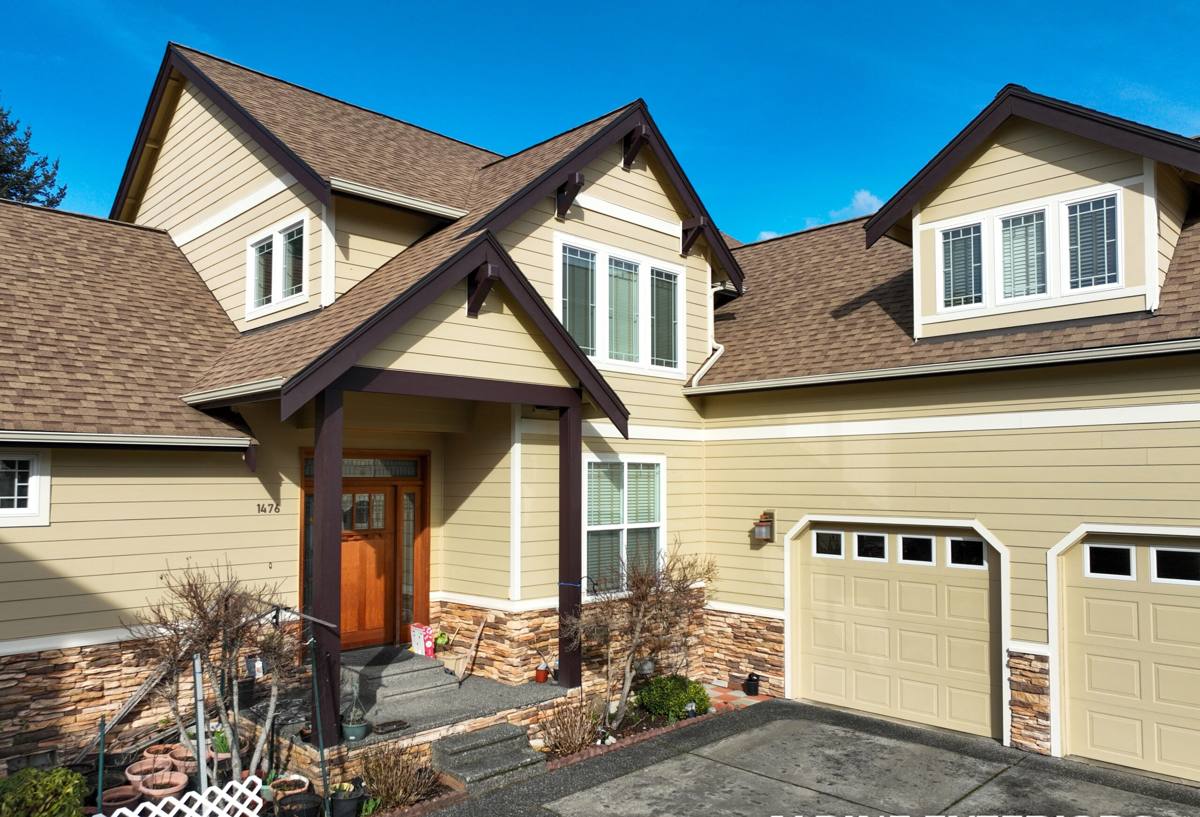
What a Correct Installation Actually Involves
A good window job is mostly invisible once it's done — the visible part is the glass and frame, but the performance comes from what's underneath. In this climate, three things matter more than they would somewhere dry: the flashing detail around the rough opening, the quality of the seal between the frame and the wall, and the glazing package's ability to resist condensation on cold, humid mornings.
Frame Material Choices
There's no single "best" frame material — each has real trade-offs, and the right pick depends on the specific wall, sun exposure, and budget. We walk homeowners through the honest version of this comparison rather than pushing whatever's easiest to install.
| Frame Material | Moisture Performance | Maintenance | Typical Fit |
|---|---|---|---|
| Vinyl | Good — won't rot, handles humidity well | Low; occasional track cleaning | Most standard replacements; best value |
| Fiberglass | Excellent — very stable in wet/dry cycles | Low | Shaded or high-exposure walls; long-term durability priority |
| Wood-clad | Depends heavily on cladding and sealing quality | Higher; requires attentive upkeep | Homes prioritizing interior wood trim look |
| Aluminum (older stock) | Poor thermal and condensation performance | Prone to corrosion near humid/salt air | Generally not recommended for replacement in this climate |
We steer most Sudden Valley replacements toward vinyl or fiberglass, not because other materials are inherently bad, but because they hold up with the least maintenance in a shaded, damp, tree-covered environment. Wood-clad windows can look great and perform well, but only when the cladding and sealant are maintained on a schedule — we'll say so plainly if that's not realistic for a given home.
Glazing and Coatings
Double-pane glass with a low-E coating and argon or krypton gas fill is the baseline we recommend for this region — it isn't an upsell, it's what actually performs in a climate with long stretches of grey, damp weather and real temperature swings between a cold night and a sunny afternoon. The low-E coating cuts heat loss through the glass, which is where a huge share of a home's winter heat actually escapes. Triple-pane glass is worth discussing on north-facing rooms or homes right at the tree line where shade keeps interior surfaces colder longer, but it's not a default recommendation for every opening — the added cost only pays off in specific spots.
Problems We Commonly See in This Neighborhood
Because we've worked on homes throughout Sudden Valley and the surrounding Lake Whatcom area, a few patterns show up again and again:
- Fogged or "sweating" double-pane units where the seal has failed and moisture has gotten between the panes — common on older builds now 15-25+ years old
- Soft or discolored wood trim around window openings on shaded, north- or east-facing walls where surfaces stay damp longer
- Aluminum-framed windows from earlier construction eras that condense heavily on the interior during cold mornings
- Moss and organic buildup collecting in window tracks and sills on homes tucked under heavy tree cover
- Drafts around older single-pane or early dual-pane units that were never properly flashed to the original weather-resistive barrier
None of these are unusual for a wooded, lake-adjacent neighborhood — they're just the predictable result of time, shade, and moisture. The fix is rarely just "put in a new window." It's addressing whatever let water or air get past the old one in the first place.
Our Installation Process
We keep the process straightforward and explain each step as we go, because a window replacement touches the structure of the wall, not just the glass.
1. On-Site Assessment
We look at each opening individually — sun exposure, tree cover, wall orientation, and the condition of the existing frame and sheathing. Two windows on the same house can need different specs depending on where they sit relative to shade and weather exposure.
2. Precise Measurement and Product Selection
We measure for an accurate fit rather than a "close enough" one. An undersized or oversized rough opening forces extra shimming and caulk to compensate, which is exactly the kind of shortcut that fails first in a wet climate.
3. Removal and Opening Inspection
Once the old window is out, we inspect the sheathing and framing underneath for rot or hidden moisture damage before anything new goes in. Covering up a soft or wet substrate with a new window is a guaranteed callback — we address what we find rather than install over it.
Flashing and Moisture Management
This is the step that determines whether a window leaks in five years. We integrate flashing tape and the window's nailing fin with the home's existing weather-resistive barrier in the correct shingle-lap order — sill pan first, then sides, then head flashing over the top — so water is always directed out and down, never trapped behind the siding.
Insulation and Air Sealing
The gap between the window frame and the rough opening gets sealed with a low-expansion foam or backer rod and sealant, not stuffed with fiberglass batting alone. A poorly insulated gap is a common source of both drafts and interior condensation on cold mornings — even with a great window installed.
4. Final Adjustment and Cleanup
We check that each sash operates smoothly, confirm the seal is continuous, and clean up the work area before we leave. We also walk the homeowner through basic care for the new hardware and finish.
What Affects the Cost
We don't post fixed pricing because every home and opening is different, but the main cost drivers are consistent from job to job:
| Factor | Why It Matters |
|---|---|
| Number and size of windows | More or larger openings mean more material and labor |
| Frame material | Vinyl, fiberglass, and wood-clad carry different material costs |
| Glazing package | Double-pane low-E is standard; triple-pane or specialty coatings add cost |
| Access and site conditions | Second-story, steep grade, or tree-obstructed openings take longer |
| Condition of the existing opening | Rot repair or re-framing adds time beyond the window install itself |
| Disposal and haul-away | Removing and disposing of old units and materials |
We'll always give an honest range up front and flag anything — like hidden rot found during removal — before we proceed with extra work, not after.
Reading the Efficiency Numbers
Window labels list two numbers worth understanding: U-factor and Solar Heat Gain Coefficient (SHGC). U-factor measures how much heat escapes through the window — lower is better for our cold, wet winters. SHGC measures how much solar heat passes through the glass — for a shaded, tree-covered lot like much of Sudden Valley, this matters less than it would on a south-facing, sun-exposed wall, since the trees are already doing a lot of that work. ENERGY STAR's Northern climate zone criteria are the right benchmark for this region, and we spec accordingly rather than defaulting to a national average rating that assumes a sunnier, drier climate.
Signs It's Time to Replace
- Visible fog or moisture trapped between panes of glass
- Windows that are difficult to open, close, or lock
- Noticeable draft or cold air near a closed window on a windy day
- Soft, discolored, or swelling wood trim around the frame
- Moss, algae, or persistent grime building up in the tracks and sills
- Rooms that feel colder than the rest of the house or run higher heating costs
One or two of these on an otherwise sound window doesn't always mean full replacement — sometimes it's a re-seal or hardware fix. We'll tell you honestly which is which rather than upselling a replacement a window doesn't need yet.
Why a Crew That Already Works This Area Matters
Sudden Valley's wooded, hillside lots come with real logistics — narrow driveways, tree-obstructed elevations, and homes set well back from the road. A crew that's already staged equipment and material on similar lots in the neighborhood plans for that instead of discovering it on-site. Familiarity with how homes in this specific pocket of Whatcom County were built — construction era, common siding and trim details, typical shade exposure — also means fewer surprises once an opening is cut open, and a more accurate estimate before work begins.
After Installation: Keeping Windows Performing
New windows still need basic seasonal attention in this climate. Clear moss and debris from tracks and sills a couple of times a year, especially on shaded elevations. Check that weep holes along the bottom of the frame stay clear so water can drain out rather than pool. Wipe down hardware periodically, particularly on homes closer to open water where salt-laden air accelerates corrosion. None of this is heavy maintenance — it's the difference between a window that performs well for its full warranty life and one that starts showing problems early because small drainage issues went unnoticed.
If you're weighing whether your Sudden Valley home's windows need attention, we're happy to take a look and give you a straight answer — no pressure, no upsell. Fill out the form below for a free estimate and we'll walk the property with you.