 Bellingham Siding
 Why Sudden Valley Siding Has to Work Harder Than a Typical Bellingham Lot
Sudden Valley sits back from town in a heavily wooded setting along Lake Whatcom, and that setting is exactly why siding choice matters more here than on an open, sunny lot closer to Bellingham proper. Mature fir and cedar canopy shades entire sides of homes for most of the day, lake-effect humidity lingers in the air longer than it does downtown, and the combination keeps exterior wall surfaces damp for extended stretches through fall, winter, and spring. Add in Whatcom County's broader reputation for driving rain and salt-laden air moving in off the Sound, and you get a climate profile that's tough on any cladding that isn't built to handle sustained moisture exposure.
That's not a scare story — it's just the physical reality of a shaded, lake-adjacent property. Siding that would perform fine on a west-facing, full-sun lot in a drier neighborhood can struggle in Sudden Valley's shade pockets, where surfaces simply don't dry out between rain events. The practical result is a longer moss season, more organic buildup on north- and east-facing walls, and faster failure of any siding material that isn't dimensionally stable or that depends on paint film alone to keep water out.
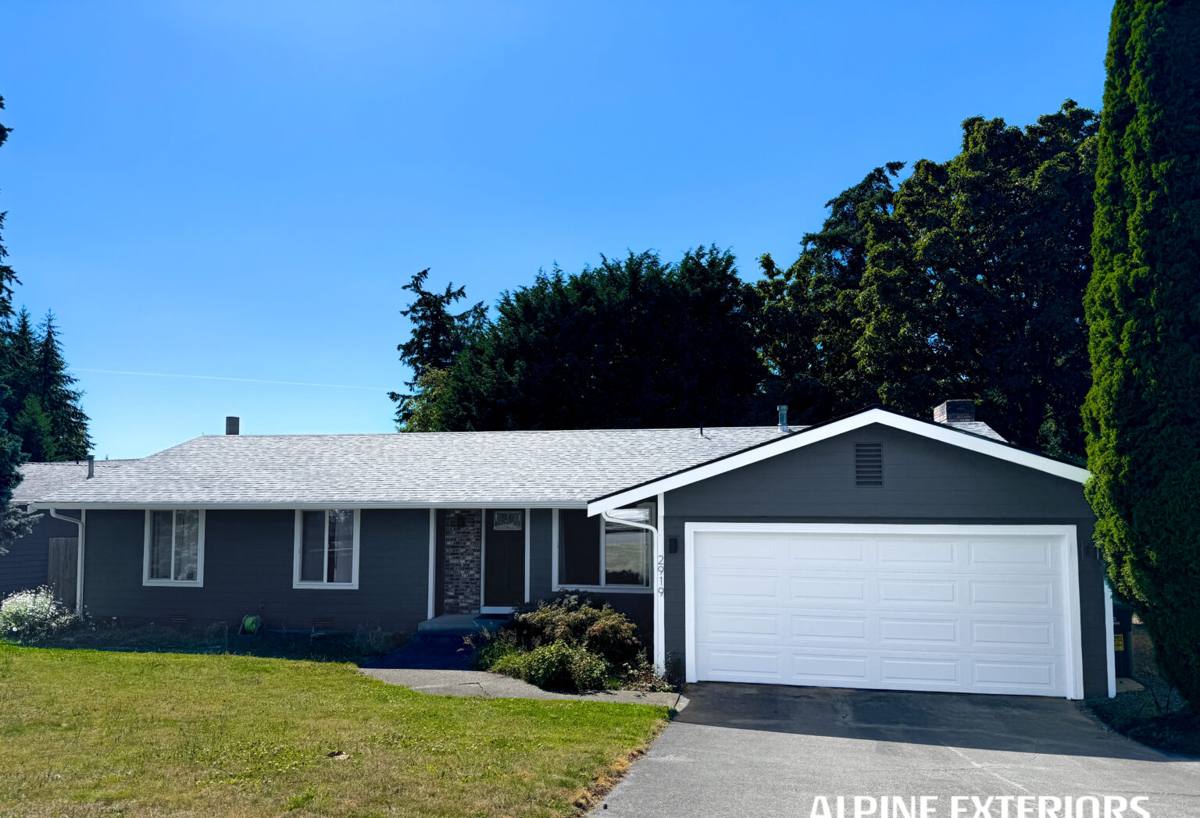
What Moss, Shade, and Standing Moisture Actually Do to Siding
Moss and Algae Aren't Just Cosmetic
Moss holds moisture directly against the wall surface, extending the time siding stays wet after every rain. On wood-based products, that constant dampness is what drives rot at seams, butt joints, and anywhere caulk has started to crack. On vinyl, moss growth is mostly a look problem, but it's a sign that airflow and drying are already compromised in that spot — a warning worth paying attention to.
Why This Favors Fiber Cement
James Hardie fiber cement is cement, sand, and cellulose fiber — it doesn't feed rot fungi and it doesn't swell, cup, or delaminate the way wood-based sidings can when they stay damp for weeks at a time. It still needs to be kept reasonably clean of heavy moss buildup for appearance and long-term finish life, but the material itself isn't structurally at risk from the shaded, slow-drying walls that are common throughout Sudden Valley.
Why We Install Only James Hardie — Not LP SmartSide, Vinyl, or Cedar
We made a standing decision years ago to install exclusively James Hardie fiber cement, and a climate like Sudden Valley's is a big part of why that decision holds up. Engineered wood products like LP SmartSide use a resin-treated wood strand core that performs well when detailing is followed exactly, but it still depends on cut-edge sealing and consistent maintenance to keep moisture out over the long run — a bigger margin for error on a shaded lot that stays wet longer. Vinyl is low-maintenance but it's a thin, flexible material that can warp under heat reflection and doesn't hold paint, limiting color options and repair down the road. Cedar and other untreated wood sidings look great new but require the most ongoing upkeep of any option — refinishing, caulking, and moisture vigilance — precisely in the conditions Sudden Valley has the most of.
Hardie's HardiePlank and HardiePanel products are manufactured in HZ5 and HZ10 formulations engineered for the Pacific Northwest's wet climate zones, with a factory-applied ColorPlus finish that's baked on rather than field-painted, so the color layer isn't relying on a contractor's spray day for adhesion. That's the standard we hold every job to, on this lot and every other.
Fiber Cement vs. Common Alternatives for a Shaded, Wet Lot
| Material | Moisture / Moss Tolerance | Maintenance in Shade | Typical Lifespan Here |
|---|---|---|---|
| James Hardie Fiber Cement | Excellent — non-combustible, doesn't rot or swell | Occasional wash; finish holds color | 30-50+ years with correct install |
| LP SmartSide / Engineered Wood | Good if edges stay sealed; vulnerable at cuts and joints | Regular caulk and paint upkeep | Shorter if maintenance lapses |
| Vinyl Siding | Doesn't rot, but traps moisture behind panels if not vented right | Low, but limited repair options | Variable; UV and impact wear over time |
| Cedar / Untreated Wood | Poor in constant shade — retains moisture, prone to rot | High — refinishing and moisture checks needed often | Shortest without diligent upkeep |
What a Correct Fiber Cement Install Looks Like on This Kind of Lot
On a shaded, moisture-heavy property, the installation details matter more than the siding material itself. We've seen Hardie product fail early on other jobs purely because of installation shortcuts — the board was never the problem.
- Proper weather-resistive barrier and rainscreen or drainage gap behind the siding so trapped moisture has somewhere to go instead of sitting against the sheathing
- Correct flashing at every window, door, and roof-to-wall transition — the single most common failure point we find on older siding jobs
- Manufacturer-specified fastener placement and spacing, sized for the substrate, not just whatever was on the truck
- Proper clearance between the bottom of the siding and grade, decking, or roof surfaces so splash-back and ponding water don't sit against the board
- Caulking only where Hardie's installation guidelines call for it — over-caulking traps moisture just as badly as under-caulking
- Butt joints and seams flashed or backed correctly, especially on the north- and east-facing walls that get the least sun and driest time in a Sudden Valley lot
Our Process for a Sudden Valley Siding Job
Assessment and Scope
We walk the exterior, check the condition of the existing siding, trim, and flashing, and look specifically at drainage paths, roofline transitions, and how much shade and tree cover each wall gets. That tells us where past moisture problems are most likely and where extra attention to flashing and drainage detail is needed on this particular house.
Permitting and, Where Applicable, Community Review
Sudden Valley is unincorporated Whatcom County, so siding permits run through the county rather than the City of Bellingham. Many properties here also fall under a community association with exterior guidelines, so where that applies, we build color and material approval into the schedule up front rather than treating it as an afterthought.
Removal and Prep
Old siding comes off down to the sheathing so we can actually see what's underneath — this is where hidden moisture damage from years of shaded, slow-drying walls tends to show up. Any compromised sheathing or framing gets addressed before a single new board goes up.
Installation
Weather barrier, drainage plane, flashing, and Hardie boards go on to manufacturer spec, with extra care at the joints and transitions that take the most moisture load on this lot.
Walkthrough and Cleanup
We review the finished work with the homeowner, cover care and cleaning expectations for a shaded property, and clear the site fully before we consider the job done.
What Drives Cost on a Job Like This
| Factor | Why It Matters in Sudden Valley |
|---|---|
| Tree cover and access | Overhanging branches and tight, wooded lots can slow staging and require extra care around landscaping |
| Condition of the sheathing underneath | Shaded walls with a history of moisture retention are more likely to need repair before new siding goes on |
| Trim and detail complexity | Homes with more window and roofline transitions need more flashing and labor time |
| Story height | Multi-story walls near the lake or on sloped lots take longer and require more equipment |
| Color and approval timeline | Community association review, where it applies, can affect scheduling more than the install itself |
We give a firm, written estimate after walking the property — broad ranges quoted over the phone rarely hold up once we see the actual condition of the walls underneath.
Signs Your Current Siding Is Losing the Fight
- Persistent moss or dark streaking that comes back within weeks of cleaning
- Soft or spongy spots when you press on siding near the bottom edge or around windows
- Paint that's peeling or bubbling rather than just fading
- Visible gaps or separation at seams and corner boards
- Water stains on interior walls near exterior corners after heavy rain
- Warping, cupping, or panels that no longer sit flat against the wall
Any one of these on a shaded, north- or east-facing wall is worth a look sooner rather than later — those are the walls in Sudden Valley that dry out slowest and where damage tends to progress fastest once it starts.
Why Hiring a Crew That Already Works This Area Matters
A crew that's worked Sudden Valley before already knows the county permitting path, has a feel for how community association review timelines typically run, and understands which sides of a house in this kind of lot need the most flashing attention before the first board goes up. That's the difference between a crew learning the conditions on your job and one that's already accounted for them in the estimate and the schedule.
If your siding is showing moss buildup that won't quit, soft spots, or peeling paint, we're happy to take a look and give you a straight answer on what's going on and what it would take to fix it right. Request a free, no-pressure estimate below — there's no obligation, and we'll tell you honestly if a repair will hold or if it's time to talk about full replacement.