 Bellingham Siding
 Siding Installation Built for Sudden Valley's Conditions
Sudden Valley sits in a pocket of Whatcom County where tree cover, lake-adjacent humidity, and long stretches of shade combine to create some of the toughest conditions a home's exterior will face anywhere in the Bellingham area. Add in the region's driving winter rain, salt-laden marine air that reaches inland on a west wind, and a moss season that can run more than half the year, and you have an environment that punishes siding that wasn't installed correctly the first time.
We install siding specifically for homes in conditions like these. This page covers what Sudden Valley homes actually need from their siding, what a correct installation involves, and why the details matter more here than they do in a drier, more open part of the county.
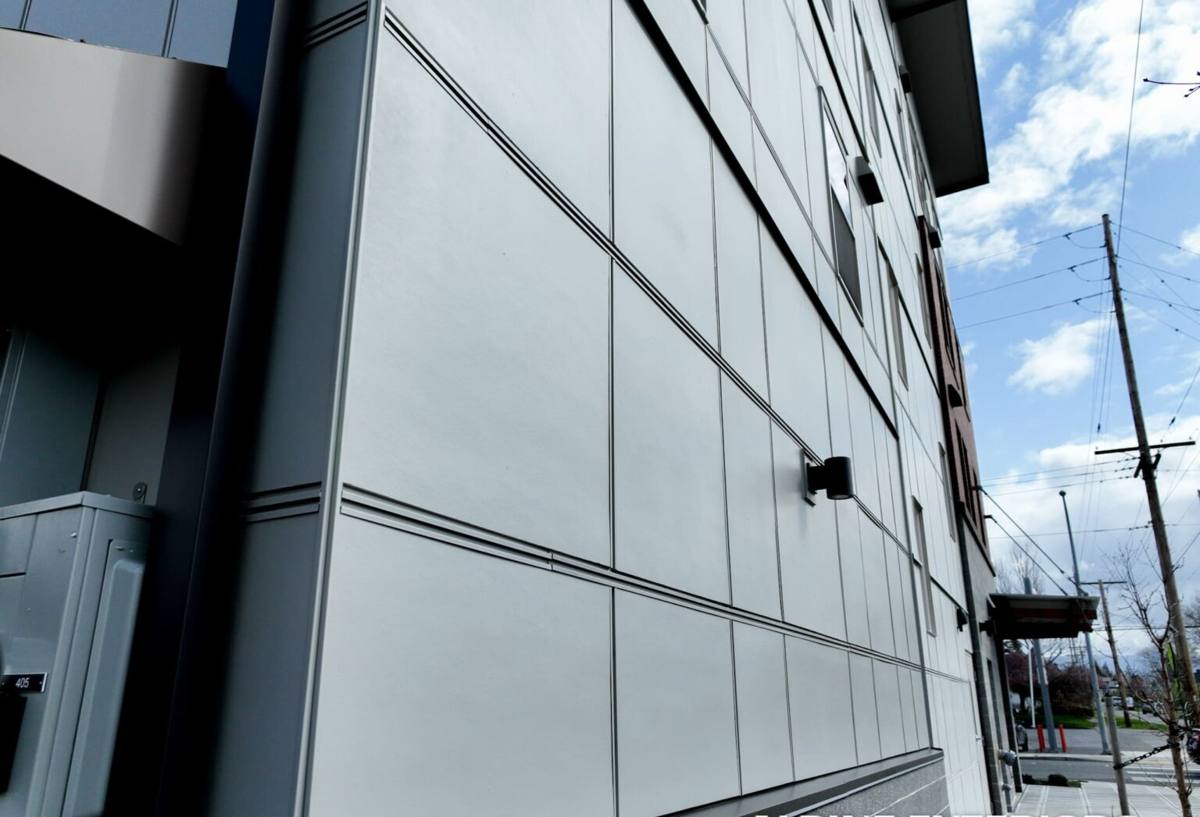
Why This Neighborhood Is Harder on Siding Than It Looks
Shade and Slow-Drying Walls
Homes tucked under heavy tree canopy dry out slower after every rain event than homes in open sun. Wall assemblies that don't get consistent sun exposure hold moisture longer, which gives mold, moss, and rot more time to take hold in any gap the siding leaves behind. This isn't a defect in the home — it's just the physics of a shaded, forested lot, and it means the siding system has to be more forgiving of moisture than it would need to be elsewhere.
Moss and Organic Growth
A long moss season means organic growth isn't a once-a-year nuisance here — it's a near-constant condition on north-facing walls, under eaves, and anywhere airflow is restricted. Moss and algae hold water against the siding surface, and over time that constant dampness is what breaks down poorly sealed seams, cheap caulk joints, and unprotected cut edges.
Driving Rain and Wind-Driven Moisture
Bellingham's rain doesn't always fall straight down. Wind off the water pushes rain sideways into wall assemblies, which means flashing details, lap spacing, and water-resistive barrier work matter more here than in a calmer inland climate. A siding job that looks fine on a still, dry day can fail within a few seasons if those details were skipped.
Salt-Influenced Marine Air
Whatcom County's proximity to the water means salt-laden air reaches homes well beyond the immediate shoreline. Salt accelerates corrosion on fasteners, trim, and any metal flashing components, which is part of why fastener selection and flashing material aren't places to cut corners on a Sudden Valley installation.
What a Correct Siding Installation Actually Involves
Good siding installation is mostly invisible once it's done — it's the layer underneath the finish surface that determines whether the job lasts fifteen years or fifty. For a Sudden Valley home, that means:
- A properly lapped and sealed water-resistive barrier behind the siding, not just a stapled-up wrap
- Correct flashing at every window, door, and roof-to-wall transition, sized and lapped to shed water downward and outward
- Rain-screen or drainage gap detailing where the wall assembly needs it, so moisture that gets behind the cladding has somewhere to go
- Corrosion-resistant fasteners driven to manufacturer spec, not just "close enough"
- Correct lap spacing and butt-joint treatment so panels don't trap water at the seams
- Caulking and sealant only where the manufacturer specifies it — over-caulking traps moisture just as badly as under-caulking
None of this is visible in a finished photo. It's the difference between siding that looks good for two years and siding that performs for decades.
Why We Install Only James Hardie Fiber Cement
We standardized on James Hardie siding and don't install vinyl, LP SmartSide, or other fiber cement alternatives. That's a deliberate call, not a lack of options. In a climate like Sudden Valley's — heavy moisture exposure, extended shade, moss pressure, and salt-influenced air — the material matters as much as the installation.
James Hardie fiber cement is non-combustible, dimensionally stable in wet climates, and finished with a factory-applied ColorPlus coating that's engineered to resist the fading and moisture intrusion that plagues field-painted products in a climate this wet. Hardie's HZ5 product line in particular is engineered for cold, wet, freeze-prone regions like ours, with moisture and impact resistance built into the manufacturing process rather than added on site.
Vinyl siding can work loose or warp under sustained moisture and temperature swings, and its seams give organic growth an easy foothold. Engineered wood products depend heavily on field-applied paint and caulking staying intact, which is a maintenance burden in a climate where surfaces rarely fully dry out. We're not saying those products can't be installed well — we're saying that for the conditions Sudden Valley homes actually face, we'd rather stand behind one product system we know performs, backed by a strong transferable warranty, than install something we'd have to caveat.
James Hardie vs. Common Alternatives in This Climate
| Factor | James Hardie Fiber Cement | Vinyl | Engineered Wood |
|---|---|---|---|
| Moisture tolerance | Engineered for wet climates (HZ5) | Can warp or loosen with moisture cycling | Relies on intact paint/caulk seal |
| Combustibility | Non-combustible | Combustible | Combustible |
| Finish durability | Factory ColorPlus finish, resists fading | Can fade, chalk over time | Field-applied paint needs recoating |
| Moss/algae resistance | Smooth or textured surface sheds growth well | Seams trap organic buildup | Textured surface can hold moisture and growth |
| Warranty | Strong transferable manufacturer warranty | Varies by manufacturer | Varies, often shorter on finish |
Our Installation Process for Sudden Valley Homes
- On-site assessment — we walk the home, check existing siding and sheathing condition, note shaded and moss-prone areas, and identify any moisture damage that needs to be addressed before new siding goes on.
- Tear-off and substrate check — old siding comes off and we inspect the sheathing and framing underneath for rot or existing water damage, since covering a problem with new siding just delays it.
- Water-resistive barrier and flashing — a properly lapped barrier and correctly detailed flashing go in at every penetration and transition before a single piece of siding is hung.
- James Hardie installation to manufacturer spec — correct fastener pattern, lap spacing, and clearances, following Hardie's published installation requirements rather than shortcuts.
- Trim, caulking, and finish details — sealant applied only where specified, with attention to the joints and transitions most exposed to driving rain.
- Final walkthrough — we review the completed job with the homeowner and explain what maintenance, if any, to expect going forward.
Signs Your Sudden Valley Home May Need New Siding
- Soft or spongy spots when you press on the siding, especially near the bottom courses or under windows
- Persistent moss or dark streaking that returns quickly after cleaning
- Visible warping, buckling, or gaps between panels
- Paint that's peeling or bubbling in a pattern that suggests moisture trapped behind the siding, not just weathering
- Rising energy bills that suggest the wall assembly isn't insulating or sealing the way it should
- Rot or discoloration around window and door trim
Any one of these can be minor. Several together, especially on shaded or north-facing walls, usually means it's worth having someone take a real look before it becomes a structural repair instead of a siding job.
What Affects the Cost of a Sudden Valley Siding Project
| Cost Factor | Why It Matters |
|---|---|
| Home size and wall complexity | More square footage and more corners, gables, and transitions mean more material and labor |
| Existing damage | Rotted sheathing or framing found during tear-off has to be repaired before new siding goes on |
| Site access | Steep or wooded lots common in Sudden Valley can require extra staging and care around landscaping |
| Siding profile and trim package | Lap width, trim style, and accent details all affect material cost |
| Removal and disposal of old siding | Tear-off and haul-away adds labor and disposal cost versus a bare-wall install |
Why Local Experience in This Neighborhood Matters
A crew that only works in open, sunny neighborhoods will approach a Sudden Valley home the same way they'd approach any other job — and that's exactly how moisture problems get built into a wall for the next fifteen years. Knowing which walls sit in permanent shade, which lots hold moisture longer after a storm, and where moss pressure tends to concentrate changes real decisions on site: where extra flashing attention goes, how drainage details get handled, and which areas need a closer look during tear-off. That's the difference between a crew that's installed siding here before and one that hasn't.
After Installation: What to Expect
James Hardie siding installed correctly is low-maintenance, not no-maintenance. In a climate like this, an occasional gentle wash to keep moss and organic buildup from accumulating on shaded walls goes a long way. Because the ColorPlus finish is factory-applied and baked on, you're not signing up for a repaint cycle the way you would with field-painted wood siding — but keeping gutters clear and vegetation trimmed back from the walls still matters, especially on the shadiest sides of the house.
If you're weighing a siding replacement for a Sudden Valley home, we're happy to come take a look, walk the property with you, and give you a straight assessment of what your siding needs — no pressure, no obligation. Reach out using the form below to schedule a free estimate.