 Bellingham Siding
 Windows Built for Lynden's Weather, Not Just Its Looks
Lynden sits inland from Bellingham Bay, but it doesn't escape what Whatcom County throws at a house over the years. Long wet winters, wind-driven rain that comes in sideways off open farmland, and a humid marine climate that never really dries out between storms all put steady pressure on window frames, seals, and the wall assembly around them. Whether your home is on an in-town lot or out on a rural parcel with nothing to break the wind, the windows are one of the first places that weather finds a way in.
A lot of window problems in this area don't show up as a dramatic leak. They show up slowly — a sash that's gotten hard to open, a sill that stays damp longer than it should, glass that fogs between the panes, or moss creeping into a corner that never gets direct sun. By the time those signs are obvious, the window has usually been letting in moisture for a while. This page is about what it actually takes to replace windows correctly in a Lynden home, and why the climate here changes some of the decisions along the way.
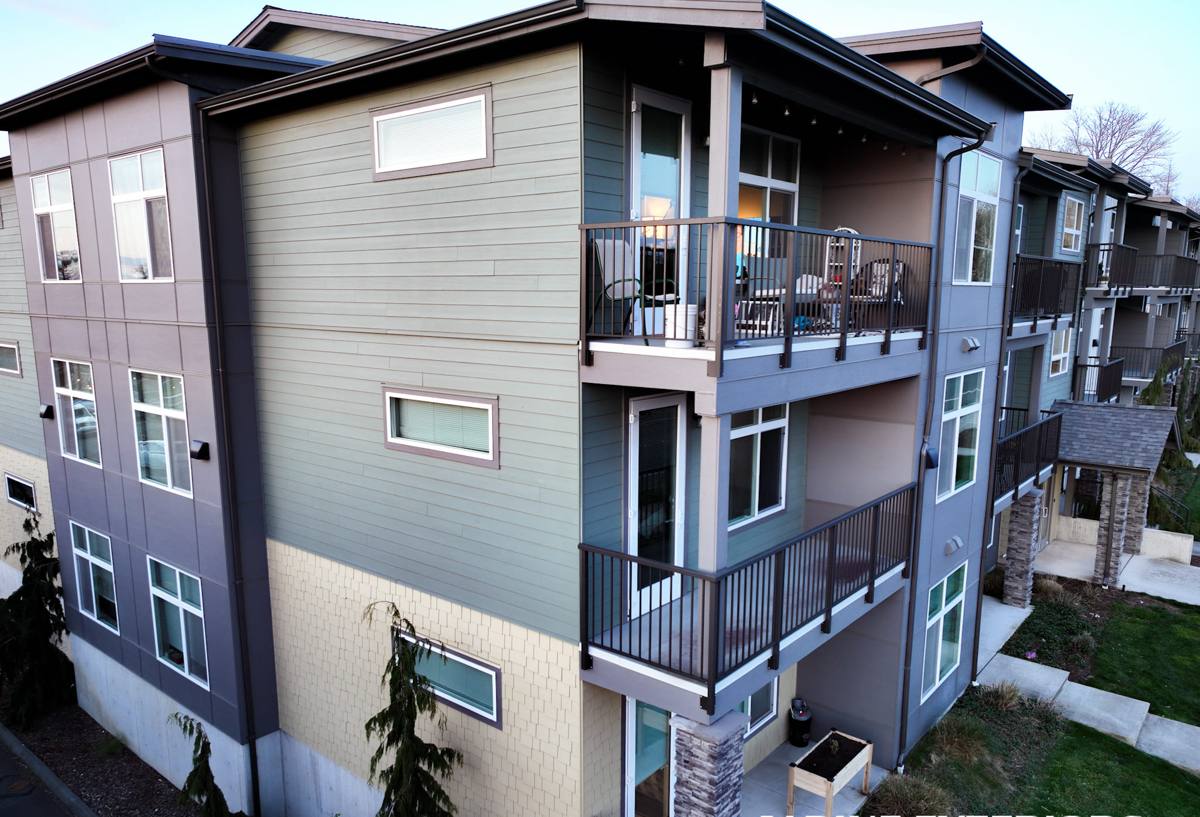
How Whatcom County's Climate Wears Down Old Windows
Wind-Driven Rain and Water Intrusion
Rain that falls straight down is easy for a window to shed. Rain that's being pushed sideways by wind — common on open, exposed lots around Lynden — finds every gap in a worn seal, every hairline crack in old caulking, and every spot where flashing was skipped or done wrong the first time. Older windows, especially ones installed before better flashing practices were standard, are particularly vulnerable to this kind of intrusion even when the glass itself still looks fine.
Humidity, Condensation, and Wood Rot
The Pacific Northwest's humidity doesn't just affect the outside of a window. Warm, moist indoor air meeting a cold single-pane or poorly sealed window creates condensation on the interior, and that moisture works its way into wood sills and jambs over time. On older wood-frame windows, this is one of the most common causes of rot we see — the frame looks fine from a few feet away but is soft or crumbling at the corners when you press on it.
Moss, Mildew, and Frame Deterioration
Whatcom County's moss season is long, and it's not just a roof and siding problem. Moss and mildew take hold anywhere organic buildup and moisture linger — window sills, the bottom of frames, and trim that doesn't get much sun exposure. Beyond looking bad, sustained moss and mildew growth holds moisture against the frame material, which accelerates rot in wood and can degrade caulking and weatherstripping faster than in a drier climate.
Temperature Swings and Seasonal Movement
Even though Whatcom County doesn't see extreme heat, the swing between damp winter cold and summer warmth causes materials to expand and contract. Over many cycles, that movement can loosen seals, crack old glazing putty, and open small gaps that let both air and water through — which is part of why a window that was fine ten years ago may be underperforming now even without any single dramatic failure.
Signs a Lynden Home Needs Window Replacement
Not every window problem means full replacement — some issues are solvable with a repair. But certain signs consistently point to a frame and seal system that has reached the end of its useful life:
- Visible fog or moisture between the panes of a double-pane window (a failed seal that can't be repaired)
- Soft, spongy, or discolored wood at the sill or bottom corners of the frame
- Windows that are difficult to open, close, or lock, especially after damp weather
- Persistent moss, algae, or mildew staining on the sill or frame that returns after cleaning
- Noticeable drafts or cold spots near the window even with it fully closed
- Rising heating bills without another clear explanation
- Visible daylight or gaps around the frame when viewed from inside
- Peeling paint or bubbling on interior trim near the window, often a sign of trapped moisture
What a Correct Window Replacement Job Actually Involves
Proper Flashing and Water Management
The window itself is only part of the system. What happens around the opening — the flashing, the house wrap integration, and the sealant details at the head, jambs, and sill — determines whether wind-driven rain gets managed or gets in. This is the step that's easiest to rush and the most consequential to get right in a climate like ours. A new window installed over old, inadequate flashing will eventually develop the same water problems as the window it replaced.
Insulation and Air Sealing
The gap between the window frame and the rough opening needs to be insulated and air-sealed correctly — not overpacked with rigid foam that can bow the frame, and not left with gaps that leak air and invite moisture. Done right, this step is a big part of why a replacement window performs better than the one it's replacing, beyond just the glass itself.
Frame Material Choices
Material choice matters more in a wet marine climate than in a dry one. Here's how the common options generally compare for a home in this area:
| Frame Material | Moisture Behavior | Maintenance | Typical Fit |
|---|---|---|---|
| Vinyl | Won't rot; handles moisture well | Low — occasional cleaning | Most homes, budget-conscious replacements |
| Fiberglass | Excellent moisture and temperature stability | Low | Homes wanting a stiffer, more paintable frame |
| Wood (unclad) | Attractive but vulnerable to rot without diligent upkeep | High — regular painting/sealing | Historic-style homes where the look matters most |
| Wood-clad (aluminum or vinyl exterior) | Good — exterior shell protects the wood core | Moderate | Homes wanting a wood interior look with better exterior durability |
We don't push unclad wood exteriors on homes in this climate as a first recommendation — not because wood windows are a bad product, but because an unprotected wood exterior facing Whatcom County's rain and moss season demands upkeep most homeowners don't want to keep up with year after year. If the look matters to you, a wood-clad option gets you most of the aesthetic with far less maintenance risk.
Our Process for a Lynden Window Replacement Project
- On-site assessment. We look at your existing windows, the surrounding trim and siding, and any signs of water or rot damage before recommending anything.
- Accurate measurement. Every opening gets measured individually — older homes are rarely perfectly square, and assuming otherwise leads to gaps.
- Product selection. We walk through frame material, glass package, and style options based on your home, your budget, and how exposed that side of the house is to wind and rain.
- Careful removal. Old windows come out without unnecessary damage to surrounding siding or trim, and we check the opening for hidden rot before installing anything new.
- Installation with proper flashing. This is the step that determines long-term performance — we integrate flashing with the existing water-resistive barrier rather than just caulking around the new frame.
- Insulation and sealing. The gap around the frame is insulated and sealed correctly, inside and out.
- Cleanup and final walkthrough. We confirm every window operates smoothly and locks properly before we consider the job done.
Choosing Windows for Rural and In-Town Lynden Homes
Homes on open, rural lots around Lynden generally take more direct wind exposure than a similar home tucked into a more sheltered in-town street. That doesn't necessarily mean a different product, but it does affect where we pay closest attention to flashing and sealant detail, and it's a reason to prioritize a solid glass package and tight installation on the walls that face prevailing wind and weather. For in-town homes, matching window style and trim to the character of the house often matters as much as performance, and we factor that into product recommendations too.
On the glass side, most homeowners in this climate do well with double-pane, Low-E coated glass — it manages both heat loss in winter and glare/heat gain in summer without needing to step up to more expensive triple-pane in most cases. Triple-pane can make sense for a north-facing wall with heavy wind exposure or for homeowners specifically prioritizing maximum efficiency, but it's not a blanket requirement for this climate.
Cost Factors for Window Replacement in Lynden
Every home is different, so we don't quote sight-unseen — but these are the main factors that move the price up or down on most projects:
| Factor | Why It Affects Cost |
|---|---|
| Frame material | Vinyl is typically the most budget-friendly; fiberglass and wood-clad cost more |
| Number of windows replaced | Doing a whole house at once is usually more cost-efficient per window than one-off replacements |
| Full-frame vs. insert replacement | Insert replacement (reusing the existing frame) costs less but only makes sense if that frame is sound |
| Hidden rot or damage | Discovering rot in the rough opening adds repair work before a new window can go in correctly |
| Window size and style | Large picture windows, bays, and custom shapes cost more than standard double-hung or slider sizes |
| Trim and exterior finish work | Matching existing trim or repairing surrounding siding adds labor beyond the window itself |
Broadly, homeowners in this area should expect standard vinyl replacement windows to run from the low hundreds to over a thousand dollars per window installed, with fiberglass, wood-clad, and larger custom units landing higher. The only way to get a number that means anything for your home is a walk-through.
Why Hire a Crew That Already Works in Lynden
A window replacement contractor who works this area regularly already knows how Whatcom County's weather behaves against different house orientations, what kind of rot patterns show up on homes of different ages, and how to flash a window so it actually holds up through a real wet season here rather than a milder climate's version of "normal" rain. That local pattern recognition is the difference between a window that looks right on install day and one that still performs correctly five wet winters later. It also means a crew that's easy to reach if a question comes up after the job is done — not a one-time install-and-disappear operation.
If your windows in Lynden are showing any of the signs above — or you're just ready to stop fighting drafts, fogged glass, or stuck sashes — we're happy to take a look and give you a straightforward, no-pressure estimate. There's no obligation, just an honest read on what your home actually needs. Use the form below to get started.