 Bellingham Siding
 Asphalt Shingle Roofing Built for York's Marine Climate
The York neighborhood sits close enough to the water and the weather patterns that roll off Bellingham Bay that its roofs take a different kind of beating than a house twenty miles inland. Salt-laden air, long stretches of driving rain, and a moss season that can run most of the year all work against a roof that isn't installed and maintained with this specific climate in mind. Asphalt shingle roofing remains one of the most practical choices for York homes when it's done correctly, but "correctly" means more than nailing shingles to plywood. It means understanding what this part of Whatcom County does to a roof over time and building in the details that push back against it.
This page covers what York homeowners should know about asphalt shingle roofing specifically for this area: what the climate demands, what a proper installation includes, how we approach the work, and what to look for when hiring a roofing crew.
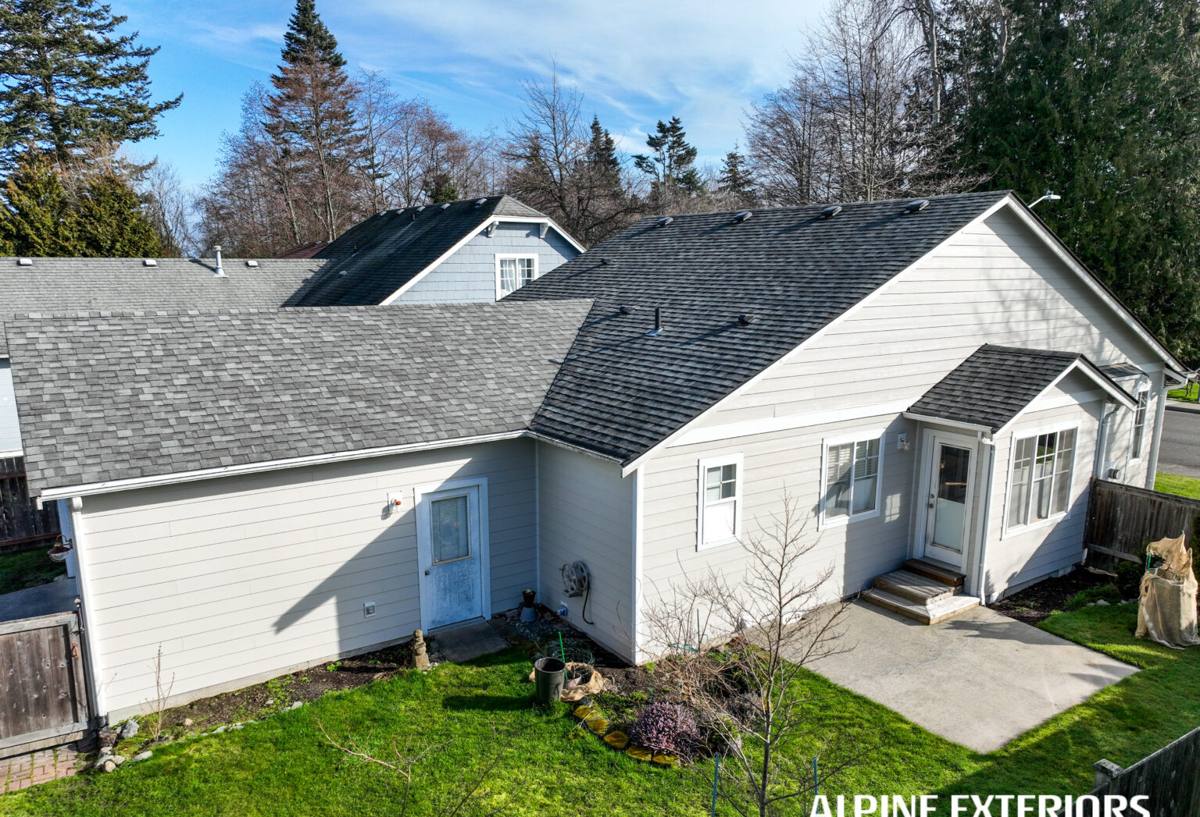
What Salt Air, Rain, and Moss Do to a York Roof
York's proximity to the bay means roofing materials are exposed to a low but steady level of salt in the air. Over years, that salt can accelerate corrosion on exposed metal fasteners, flashing, and vents if lower-grade materials are used. It's not dramatic damage in any single season, but it compounds, which is why fastener and flashing quality matter more here than they would on a roof further from the water.
Rain is the bigger day-to-day factor. Bellingham gets long stretches of steady, driving rain rather than short heavy downpours, and wind off the water can push that rain sideways under improperly sealed shingle edges, around chimneys, and into valleys. A roof here needs underlayment and flashing details that assume water will find its way to every seam, not just the open field of the roof.
Then there's moss. The combination of shade from mature trees common in older York-area lots, consistent moisture, and mild temperatures creates ideal moss conditions for much of the year. Moss holds moisture against the shingle surface, lifts shingle edges as it grows, and can shorten the life of an otherwise sound roof if it's left unmanaged. A roof designed for this area accounts for drainage, sun exposure where possible, and a maintenance rhythm that keeps moss from getting a foothold in the first place.
Why This Combination Matters More Than Any One Factor Alone
Any one of these — salt air, rain, or moss — is manageable on its own. It's the combination, repeated year after year, that separates a roof that lasts its full rated life from one that starts showing problems early. A shingle roof installed without this in mind might look fine for the first few years and then develop granule loss, soft spots, or leaks well ahead of schedule.
What a Correct Asphalt Shingle Roof Job Actually Involves
A shingle roof is only as good as the layers underneath it. The shingles themselves are the visible, weather-facing surface, but the system that actually keeps water out is built in stages before a single shingle goes down.
- Deck inspection and repair — any soft, delaminated, or water-damaged sheathing gets replaced before anything else happens. Roofing over a compromised deck just hides the problem.
- Ice and water shield — self-adhering waterproof membrane at eaves, valleys, and around any roof penetrations, where wind-driven rain is most likely to get pushed backward under shingles.
- Synthetic underlayment — a full water-resistant barrier across the rest of the roof, providing a secondary layer of protection if any water gets past the shingles.
- Flashing — new metal flashing at chimneys, skylights, sidewalls, and roof-to-wall transitions. Reusing old flashing is one of the most common shortcuts that leads to early leaks.
- Proper nailing pattern — correct nail placement and count per shingle, per manufacturer specification, which affects both wind resistance and warranty validity.
- Ventilation — intake and exhaust venting sized to the attic space, which affects both moisture control and shingle lifespan from underneath.
- Ridge and hip detailing — properly capped and sealed to prevent the highest points of the roof, which take the most wind exposure, from becoming a weak point.
Skipping or shortcutting any one of these steps doesn't usually cause an immediate problem — it causes a problem three, five, or eight years down the road, often outside the window where it's obvious what went wrong.
Choosing the Right Shingle for This Climate
Not every asphalt shingle product is built the same way, and the differences matter more in a coastal, high-moisture climate than they would somewhere drier. The table below outlines the general tiers of asphalt shingles and how they tend to perform under York's conditions.
| Shingle Type | Typical Lifespan | Moss/Algae Resistance | Wind Rating | Best Fit |
|---|---|---|---|---|
| 3-tab (economy) | 15–20 years | Low unless treated | Lower | Budget-driven projects, secondary structures |
| Architectural / dimensional | 25–30 years | Moderate, better with algae-resistant granules | Higher | Most York homes; balances cost, durability, appearance |
| Premium/designer | 30+ years | High with algae-resistant granules | Highest | Homes prioritizing longevity and curb appeal |
For York specifically, we generally steer homeowners toward architectural shingles with algae-resistant (copper-infused) granules at minimum. The upcharge over basic 3-tab is modest relative to the roof's total cost, and the resistance to moss and algae growth pays for itself in reduced maintenance and a longer effective lifespan given how much moisture and shade this area sees.
Ventilation and Moisture: The Part Homeowners Don't See
A shingle roof isn't just protecting the house from rain falling on it — it's also managing moisture trying to escape from inside the attic. In a climate as consistently damp as Bellingham's, an under-ventilated attic traps warm, moist air against the underside of the roof deck. Over time that can lead to condensation, mold, and premature deterioration of the sheathing from below, even if the shingles above are performing perfectly.
Correct ventilation balances intake (typically at the eaves or soffits) with exhaust (typically at the ridge). When intake and exhaust aren't balanced, or one is blocked by insulation or debris, the whole system underperforms regardless of how good the shingles are. Part of a proper roof evaluation in this area includes checking existing ventilation and correcting it as part of the reroof, not treating it as a separate, optional add-on.
Our Process From Estimate to Cleanup
- On-site evaluation — we inspect the existing roof, deck condition, ventilation, and any problem areas like valleys, chimneys, or shaded sections prone to moss.
- Written estimate — a clear scope of work and materials, so there's no ambiguity about what's included before work starts.
- Material selection — we walk through shingle tiers and color options suited to the home and the climate, not just the cheapest option available.
- Tear-off and deck inspection — old roofing removed down to the deck, with any damaged sheathing identified and replaced.
- Installation — underlayment, flashing, ventilation, and shingles installed per manufacturer specification to keep warranty coverage intact.
- Cleanup and magnetic sweep — job site and surrounding yard cleared of debris and stray fasteners.
- Final walkthrough — we review the completed work with the homeowner before considering the job finished.
Maintenance Checklist for York Homeowners
A well-installed asphalt shingle roof still benefits from periodic attention, especially given the moss and moisture conditions common in this part of Bellingham. Homeowners can stay ahead of most problems with a simple routine:
- Have gutters cleared at least twice a year, more often if the property has overhanging trees
- Look for moss or dark streaking on north-facing or shaded slopes and address it before it spreads
- Check attic ventilation isn't blocked by insulation, storage, or debris
- After major windstorms, do a visual check from the ground for lifted or missing shingles
- Schedule a professional inspection every few years, or sooner after any storm damage
- Avoid pressure washing shingles directly — it can strip protective granules and shorten shingle life
Cost Factors for Asphalt Shingle Roofing in York
Every roof is different, and an accurate number requires an on-site look, but the general cost drivers are consistent across projects in this area:
| Factor | Why It Affects Cost |
|---|---|
| Roof size and pitch | Steeper roofs take longer to work safely and require more materials per square foot of coverage |
| Deck condition | Rot or delamination found during tear-off requires sheathing replacement before shingles go on |
| Shingle tier | Architectural and premium shingles cost more upfront but offer better moss/algae resistance and longevity |
| Number of penetrations | Chimneys, skylights, and vents each require additional flashing work and labor time |
| Access and layout | Steep lots, limited driveway access, or multiple roof levels can affect setup and staging |
| Ventilation upgrades | Correcting inadequate intake/exhaust venting adds material and labor but protects the whole system |
Why a Crew That Already Works York Matters
Roofing crews unfamiliar with this specific stretch of coastline sometimes treat it like any other Pacific Northwest job — which gets most of it right but misses the finer points that matter here. Knowing which slopes in this neighborhood tend to hold moss longer because of shade patterns, understanding how wind off the bay behaves during a storm, and having a feel for how local building conditions typically run all come from doing this work in this specific area repeatedly, not from general roofing experience alone.
That familiarity also shows up in smaller, practical ways: knowing what to check for on older York-area homes, having a maintenance rhythm that matches the actual moss and rain patterns here rather than a generic seasonal schedule, and being available locally if a question or issue comes up after the job is done.
Signs It's Time to Replace Rather Than Repair
Not every roofing problem in York calls for a full replacement, but there are signs that patching is no longer the right answer:
- Granule loss heavy enough that shingles look bald or patchy in multiple areas
- Multiple past repairs in different locations across the roof
- Soft or spongy spots on the deck felt from inside the attic
- Shingles curling, cracking, or losing their seal at the edges
- Persistent moss regrowth despite regular cleaning
- A roof approaching or past its expected lifespan for its shingle tier
An honest evaluation should tell a homeowner clearly which category their roof falls into, with the reasoning explained rather than just a recommendation to replace.
If you're weighing a repair, a full reroof, or just want an honest read on where your York roof currently stands, we're happy to take a look and walk you through it. The estimate is free, there's no pressure attached to it, and you can use the form below to get started.