 Bellingham Siding
 Building a Deck That Actually Holds Up in York
York is one of Bellingham's older, tighter-knit neighborhoods, and a lot of the homes here were built long before "composite decking" or "hidden fasteners" were even a conversation. When a homeowner in York calls us about a deck, it's usually one of two things: replacing a deck that's rotted out faster than it should have, or adding a new one to a house that's never had usable outdoor space. Either way, the conversation always comes back to the same thing — Bellingham's weather is hard on wood, hard on fasteners, and hard on anything that traps moisture.
A deck built the same way you'd build one in Spokane or Boise won't last in Whatcom County. The difference isn't the design, it's the details underneath the design — flashing, fastener choice, footing depth, and airflow under the boards. Get those right and a deck in York can easily outlast the mortgage. Get them wrong and you're looking at soft spots, black staining, and squeaking joists inside of five or six years.
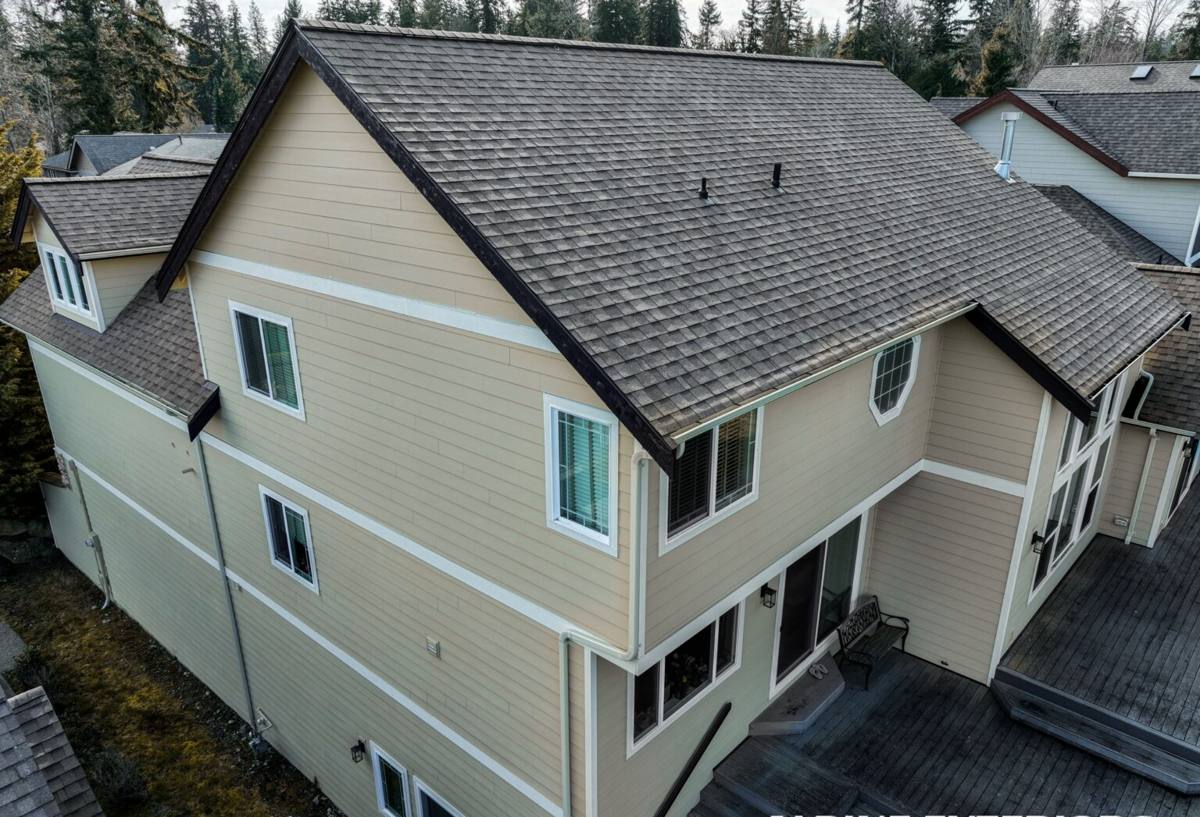
What Bellingham's Climate Actually Does to a Deck
Driving rain and standing moisture
Bellingham doesn't get flash floods, it gets long, low-intensity rain that comes sideways off the Sound and Bellingham Bay for days at a stretch. That kind of weather doesn't just wet the surface of a deck — it drives moisture into end grain, fastener holes, and any spot where two boards meet without a gap. Decks that fail early almost always fail at these joints first, not in the middle of a board.
The long moss season
Shaded yards, tree cover, and short winter daylight hours mean moss and algae get a long runway in Whatcom County — often eight or nine months of the year on a deck that doesn't get much direct sun. Moss holds moisture against the wood surface, which accelerates rot and turns a deck slick and unsafe underfoot long before it looks obviously "old."
Salt air from the coast
York isn't right on the water, but it's close enough that homes throughout Bellingham see the slow, steady corrosion effect of salt-tinged air off Bellingham Bay. It's subtle — you won't see rust overnight — but standard hardware store screws and joist hangers will show surface corrosion within a few seasons, and corroded fasteners are one of the most common reasons a deck starts to feel loose or bouncy.
Choosing the Right Decking Material for This Climate
There's no single "best" decking material — there's a best material for your budget, your maintenance tolerance, and how much shade and moss exposure your yard actually gets. Here's how the common options actually perform under Bellingham conditions:
| Material | Moisture Behavior | Maintenance | Typical Lifespan | Cost Tier |
|---|---|---|---|---|
| Pressure-treated fir/hem-fir | Absorbs and releases moisture readily; prone to cupping if not sealed | Needs re-staining/sealing every 2-3 years | 10-15 years | Lowest |
| Cedar | Naturally rot-resistant, but surface still needs protection from constant damp | Regular cleaning to slow moss/gray-out, occasional oil or stain | 15-20 years | Mid |
| Composite decking | Doesn't absorb water into the board itself, but can trap moisture underneath if airflow is poor | Occasional wash to clear algae film; no staining | 25-30+ years | Higher |
| PVC/cellular decking | Fully moisture-resistant board; best choice for constantly shaded, damp yards | Lowest of all options | 30+ years | Highest |
For a shaded York lot with heavy tree cover, we usually steer people away from bare pressure-treated boards left unsealed — it's not that the wood is bad, it's that unsealed PT lumber in constant shade and moisture is the fastest path to the cupping and graying homeowners complain about. Composite and PVC cost more up front but trade almost all of that maintenance burden away, which matters a lot on a deck that spends most of the year under moss pressure.
Framing and Structure: Where Decks Really Fail
Ledger board flashing
The ledger board — where the deck attaches to the house — is the single most common failure point we see on older decks in this region. If it wasn't flashed correctly when it was built, water works its way behind the siding and into the rim joist over years, and by the time it's visible it's often already rotted the framing behind it. Any deck we attach to a house gets proper flashing and a water-resistant barrier between the ledger and the wall, full stop.
Joist protection
Every cut end and every top edge of a joist is an entry point for water once the decking is fastened down. We run joist tape or a comparable protective barrier across joist tops and seal cut ends before decking goes on — a cheap step during construction that prevents the slow rot that otherwise starts invisibly under the boards.
Fasteners and hardware
Given the salt air exposure across Bellingham, we use stainless steel or heavy hot-dip galvanized fasteners and connectors rated for exterior/coastal exposure rather than standard coated screws. It costs a little more in hardware. It's not worth cutting on a deck that's supposed to last decades.
Footings and drainage
Footings need to sit below the local frost depth and bear on undisturbed, well-draining soil — not on backfill or organic topsoil, which is common in older York yards where garden beds have crept toward the house over the years. We also grade and drain around footings so water doesn't pool against them through the wet months, which is a bigger risk here than in drier climates simply because of how many months a year the ground stays saturated.
Airflow and Drainage Under the Deck
A deck that can't breathe underneath is a deck that grows moss and mildew faster and rots from the bottom up. Proper board spacing, correct joist height above grade, and keeping the area underneath clear of debris all matter more here than in a drier climate. On low-clearance decks, we also look at whether ground-level moisture needs a vapor barrier or gravel bed below to keep humidity from just sitting under the structure all winter.
Our Process for a York Deck Project
- On-site assessment — we look at sun/shade exposure, drainage patterns, existing structure (if replacing), and how the deck will tie into the house.
- Design and material selection — sized to how the space will actually be used, with materials matched to the amount of shade and moisture exposure the site gets.
- Permitting — most decks above a certain size or height need a permit through the City of Bellingham or Whatcom County; we handle that process rather than leaving it to the homeowner.
- Framing with moisture protection built in — proper ledger flashing, joist tape, corrosion-resistant hardware, and correctly set footings.
- Decking and railing installation — including guardrail height and baluster spacing to current code.
- Final walkthrough — we go over basic maintenance expectations for your specific material choice before we consider the job done.
Permits, Guardrails, and Code Basics
Most raised decks in Bellingham need a building permit, and any deck more than a modest height off grade needs a code-compliant guardrail with baluster spacing tight enough to keep small children from squeezing through. Exact thresholds can shift with code updates, so we confirm current requirements with the local building department on every project rather than working off memory — it's a five-minute call that avoids a failed inspection later.
Keeping a Bellingham Deck Healthy Year-Round
Whatever material you choose, a little seasonal attention goes a long way in this climate. A simple maintenance routine we recommend to every client:
- Sweep leaves and debris off the deck surface regularly through fall — wet leaves left in place are one of the fastest ways to stain and soften boards
- Rinse or lightly scrub moss and algae film off the surface at least twice during the wet season, especially in shaded corners
- Check that gaps between boards haven't filled with debris, which blocks drainage and traps moisture
- Inspect the ledger board area and any visible fasteners once a year for corrosion or gaps in flashing
- Re-seal or re-stain wood decking on the schedule appropriate to the product — don't wait until it's visibly gray or cracking
- Confirm the area underneath the deck stays clear of stored materials that block airflow
Why Hire a Crew That Already Works in York
A crew that works this neighborhood regularly already knows which streets have heavier tree cover and moss pressure, which lots have drainage quirks from the older grading, and which older homes need extra care around ledger attachment because of how they were originally built. That local familiarity means fewer surprises mid-project and a deck that's designed for the actual conditions of your yard, not a generic spec sheet. It also means a company that's still around and reachable in five or ten years if you ever need a repair or have a warranty question — not a crew that showed up from out of the area for one job and moved on.
If you're thinking about a new deck or need to replace one that's showing its age, we're happy to come take a look and put together a straightforward, no-pressure estimate — just fill out the form below and we'll set up a time to walk the site with you.