 Bellingham Siding
 Why Decks in York Wear Differently Than Decks Inland
York is one of Bellingham's older, established neighborhoods, and a lot of the decks we get called out to here were built for a different climate reality than the one we actually live in. Being close to Bellingham Bay means homes in York deal with a steady dose of salt-laden air on top of everything else Whatcom County throws at exterior wood: long stretches of driving rain in the fall and winter, and a moss season that can run from October well into spring. None of these factors are dramatic on their own, but stacked together over years, they're exactly why deck repair here looks different than it would in a drier, inland climate.
Salt air accelerates corrosion on fasteners, hardware, and any metal flashing or connectors that weren't rated for coastal exposure. Driving rain finds its way into every joint, seam, and end-grain cut that isn't properly sealed or flashed. And moss doesn't just make a deck look neglected — it holds moisture against wood surfaces for months at a time, which is a big part of why so many "cosmetic" deck problems turn out to be structural once we pull a board.
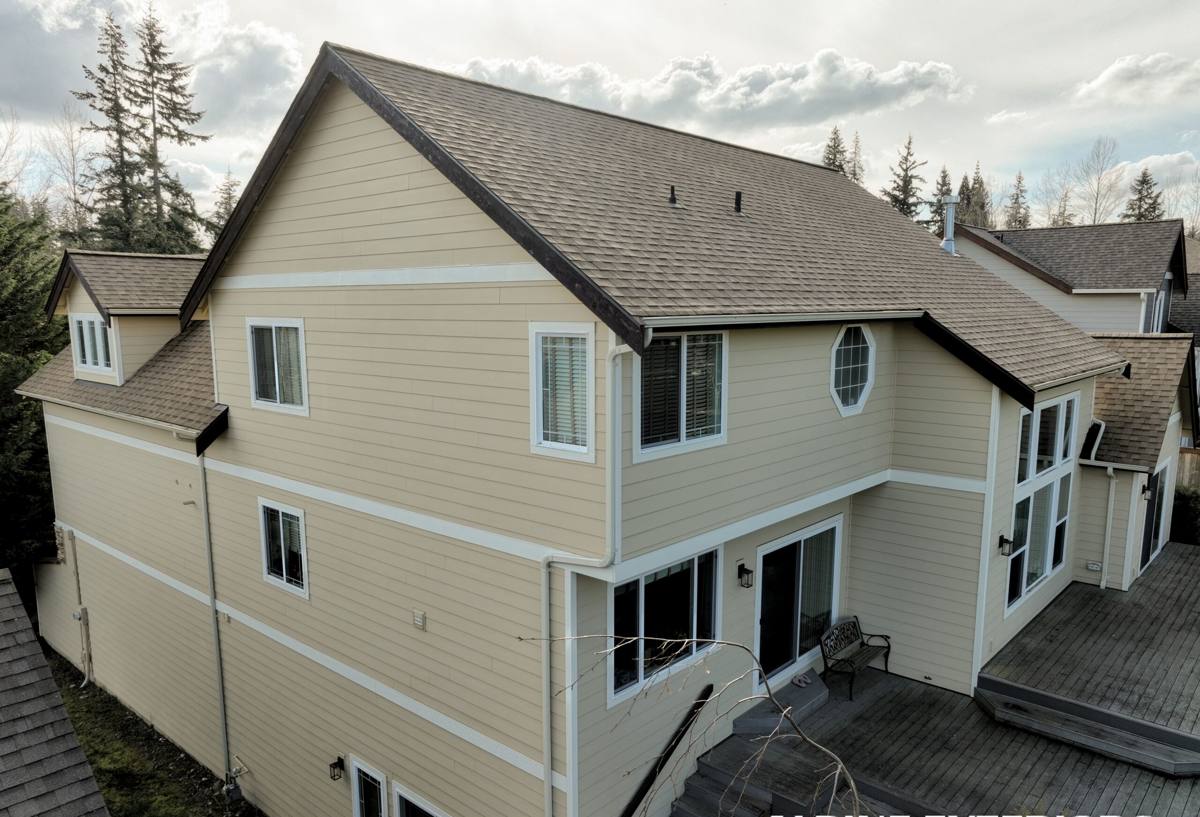
Signs Your Deck Needs Repair, Not Just a Cleaning
A pressure wash can make a tired deck look better for a season, but it won't fix what's actually failing underneath. Here's what we look for — and what you can check yourself before calling anyone out.
- Soft, spongy, or bouncy spots when you walk across the decking
- Boards that stay damp or dark long after the rest of the deck has dried out
- Rust streaks running down from screw heads, joist hangers, or ledger bolts
- Gaps opening up between the house and the ledger board where the deck attaches
- Wobble or give in the railing when you push on it
- Stair stringers that flex or feel uneven underfoot
- Green or black buildup in the gaps between boards that never fully dries
- Visible splitting, cupping, or checking on the top surface of the boards
Any one of these on its own might be minor. Two or three together, especially near the ledger board or stairs, usually means there's rot or fastener failure that needs to be addressed before it becomes a safety issue.
What a Correct Deck Repair Actually Involves
Structural Framing and the Ledger Board
The ledger board — the piece that bolts the deck to the house — is the single most important component on most decks, and it's also the piece most likely to be hiding water damage because it sits right where the deck meets the siding or sheathing. A correct repair means pulling decking back far enough to actually inspect the ledger, the flashing behind it, and the joists it carries, rather than just patching what's visible from the top. If the flashing was installed poorly or is missing altogether, that gets corrected as part of the repair, not left in place under new boards.
Decking Boards and Fasteners
Individual board replacement only works if the framing underneath is sound. We check joist spacing and condition before replacing surface boards, because putting new decking over compromised joists just resets the clock on the same failure. Fasteners matter more here than people expect — in a salt-air environment, standard coated screws can start showing corrosion well before the wood around them fails.
Railings and Stairs
Railing posts are notorious for rotting at the base, right where they're bolted through the rim joist, because that's a spot where water collects and rarely dries fully. Stairs take a similar beating at the stringer-to-deck connection. Both get inspected as part of any repair scope, even if the original complaint was about the decking surface.
Common Repair Scenarios We See in York
Every deck is a little different, but a few patterns show up often enough in this neighborhood that they're worth calling out directly.
- Ledger rot from missing or failed flashing: water has been getting behind the deck at the house connection for years before it becomes visible.
- Moss-driven surface decay: boards that hold moss through the wet season develop soft, punky wood well before the deck looks obviously bad.
- Corroded fasteners near the shoreline side of a property: screws and joist hanger nails showing rust and weakening their grip.
- Railing post rot at the base: a safety issue that's often discovered only when someone leans on the rail.
- Stair stringer flex: usually from a combination of undersized framing and years of standing water at the base.
Repair vs. Replacement: How We Help You Decide
Not every deck problem calls for a full rebuild, and not every deck can be reasonably patched. The honest answer usually comes down to how much of the structure — versus just the surface — has been affected.
| Factor | Favors Repair | Favors Replacement |
|---|---|---|
| Ledger board condition | Solid, dry, properly flashed | Soft, rotted, or flashing missing |
| Joist condition | Sound, only surface boards affected | Multiple joists soft or failing |
| Age of the deck | Under 15-20 years, built to reasonable spec | Older, outdated framing or fastening methods |
| Extent of damage | Localized to a few boards or one railing section | Spread across the whole deck |
| Original build quality | Correct spacing, hardware, and flashing | Undersized lumber or missing flashing throughout |
We'll always tell you honestly which side of that table your deck falls on. A repair that's done right can add many years of safe use to a structurally sound deck — but we won't recommend patching over problems that are only going to resurface in a wet Whatcom County winter.
Materials: What We Use and Why
Material choice matters more in a coastal, wet climate than it does elsewhere, and it's worth understanding the trade-offs rather than just picking whatever's cheapest at the moment.
Framing Lumber and Fasteners
For structural repairs — joists, ledger boards, posts — we use pressure-treated lumber rated for ground contact where appropriate, along with fasteners and connectors rated for the corrosion exposure this area actually sees. It costs a bit more up front than standard coated hardware, but replacing rusted-out fasteners in five years costs a lot more than getting it right the first time.
Decking Surface Options
For the visible decking, homeowners generally choose between wood and composite. Wood is less expensive and easier to spot-repair board by board, but it needs regular sealing or staining to hold up against driving rain and moss growth. Composite decking costs more initially and resists moisture and moss buildup better, but it comes with its own installation sensitivities — proper spacing and fastening matter, and repairs to composite boards are less forgiving than swapping a single wood board. We'll walk you through both honestly rather than pushing whichever one has a better margin.
Our Deck Repair Process
1. Inspection
We start by walking the whole deck, not just the spot you called about. That means checking the ledger connection, probing joists and posts for soft wood, and testing railings and stairs for movement. Deck problems rarely stay isolated to one board.
2. Repair Plan and Estimate
You get a clear, written scope of what actually needs fixing and why — including anything we find that wasn't part of the original request, like hidden ledger rot or corroded hardware. No pressure to upsell into a full replacement if a targeted repair will genuinely hold up.
3. The Work
We remove and replace only what's compromised, correct any flashing or fastening issues we find along the way, and match new material to the existing deck as closely as practical.
4. Cleanup and Walkthrough
We clear debris, check that railings and stairs are solid, and walk the finished repair with you so you know exactly what was done and what to expect going forward.
Why It Matters to Hire a Crew That Already Works in York
Deck repair isn't a one-size-fits-all trade, and a crew that mostly works drier, inland jobs may not think to check for the specific failure points that show up near Bellingham Bay — salt exposure on hardware, moss-driven board decay, or ledger flashing that was never adequate for this much driving rain in the first place. A crew that already works in and around York knows which components tend to fail first in this microclimate and checks them as a matter of habit, not an afterthought. That familiarity also tends to mean straighter answers about what your deck actually needs, since we're not guessing at how the local climate behaves — we're working in it regularly.
Keeping Your Deck Sound After the Repair
A good repair holds up longer with a little regular attention, especially given how long moss season runs here.
- Sweep debris and standing water off the deck surface after storms, especially in gaps between boards
- Treat moss buildup early in the fall before it has all winter to sit against the wood
- Reseal or restain wood decking on the schedule the product actually calls for, not just when it looks faded
- Check railing posts and stair connections for movement once or twice a year
- Keep gutters and downspouts clear so runoff isn't draining directly onto or under the deck
If you're noticing soft spots, rust stains, moss buildup, or a railing that doesn't feel as solid as it used to, we're glad to take a look. We offer free, no-pressure estimates for deck repair in York and the surrounding Bellingham area — just fill out the form below and we'll get back to you.