 Bellingham Siding
 Why Roofs in York Wear Differently in This Climate
York sits close enough to Bellingham Bay that salt-tinged air is a real, everyday factor for anything metal on a roof — nail heads, flashing, vent caps, gutter hangers. Add in the driving rain that comes off the water during fall and winter storms, and you've got moisture finding its way into every gap, lap, and fastener hole that isn't detailed correctly. This isn't a climate that punishes a bad roof quickly with one dramatic failure. It's a climate that punishes a mediocre roof slowly, over years, until a homeowner is dealing with soft decking and stained ceilings that trace back to a corner that was never quite right.
York is also one of Bellingham's older in-town neighborhoods, and that comes with mature tree cover on a lot of lots. Shade is nice in July. The rest of the year, it means roof surfaces that stay damp longer after every rain, which is exactly what moss and lichen need to get established. Whatcom County's wet season runs long — realistically October through May most years — so a roof here doesn't get much of a chance to fully dry out between storms. All of that adds up to one conclusion: a roof replacement in York needs to be built for sustained dampness and shade, not just rain totals on paper.
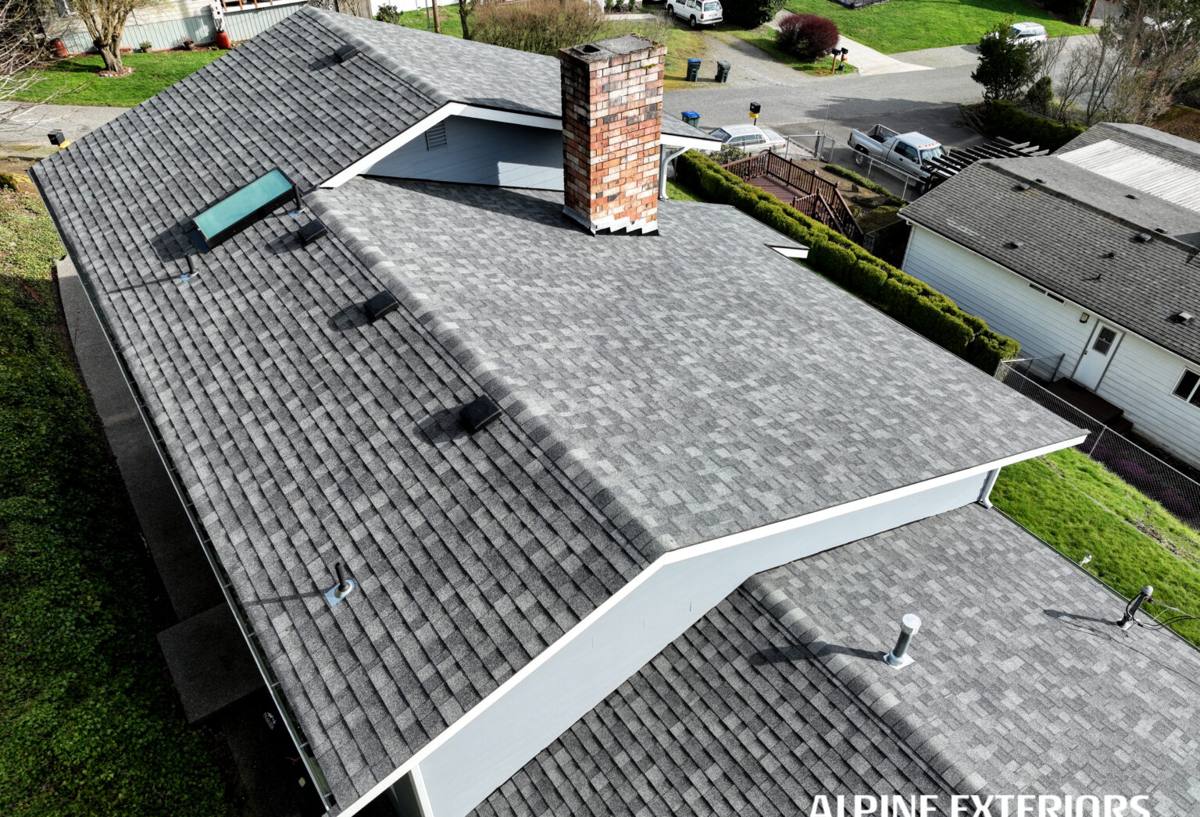
Repair or Replace? Signs to Watch For
Not every roof problem means a full replacement. But in this climate, small issues compound faster than homeowners expect, because a damaged shingle or open seam doesn't just leak — it holds water against the deck for days at a time. Here's what tells us a roof has crossed from "repair" into "replace" territory:
- Granule loss heavy enough that you can see bare, shiny patches on asphalt shingles
- Shingles curling, cupping, or cracking, especially on south- and west-facing slopes
- Moss mats thick enough to hold visible moisture against the shingle surface, not just surface staining
- Soft or spongy spots when walked on, which usually means the decking underneath has started to rot
- Daylight visible through the roof deck from inside the attic
- Ceiling stains, especially ones that reappear after being painted over
- A roof at or past 20–25 years old on standard architectural asphalt, even if it "looks fine" from the ground
- A pattern of repeat repairs — patching the same area more than once in a few years is a sign the underlying system has failed, not just one shingle
If a roof is showing one or two of these and is under 15 years old, targeted repair is often the honest answer. Multiple items on this list, or an older roof, usually means repair costs start approaching replacement costs without buying you much peace of mind.
What a Correct Roof Replacement Actually Involves
Tear-Off and Deck Inspection
A proper replacement starts with a full tear-off down to the deck — not a layover on top of existing shingles. That's the only way to actually see the plywood or sheathing underneath, which is where problems from years of slow leaks tend to hide. Any soft, delaminated, or water-stained decking gets cut out and replaced with matching material before anything new goes down. Skipping this step is one of the most common corners cut in this trade, and it's the one that causes the most expensive problems later.
Underlayment and Ice-and-Water Shield
Given how much wind-driven rain this area sees, underlayment choice matters more here than in drier climates. Synthetic underlayment holds up better than old-style felt paper under prolonged dampness and doesn't wrinkle or tear as easily during installation. At eaves, valleys, and around penetrations — the spots where wind-driven rain actually finds its way under shingles — a self-adhering ice-and-water membrane adds a second line of defense that ordinary underlayment can't provide on its own.
Ventilation Balance
A roof that traps moist attic air underneath it rots from the inside regardless of how good the shingles are. Correct ventilation balances intake (usually at the eaves) with exhaust (ridge or roof vents) so air actually moves through the attic space instead of just sitting there. In a shaded, damp neighborhood like York, getting this balance right is part of what keeps a new roof from developing hidden rot years before its shingles show any wear.
Flashing Details
Chimneys, skylights, sidewalls, and roof-to-wall transitions are where the overwhelming majority of roof leaks actually start — not in the open field of shingles. Correct flashing means step flashing woven properly at sidewalls, counter-flashing that's actually let into the material it meets rather than caulked on top of it, and new flashing at every penetration rather than reusing old pieces to save time. Caulk is a maintenance item, not a waterproofing detail, and we don't rely on it to do a flashing's job.
Material Options for a Wet, Mossy Climate
There's no single "best" roofing material — there's a best material for a given home, budget, and how much upkeep the owner wants to take on. Here's how the common options stack up for a shaded, damp lot in Whatcom County:
| Material | Typical Lifespan | Moisture & Moss Behavior | Maintenance | Relative Cost |
|---|---|---|---|---|
| Architectural asphalt shingle | 25–30 years | Good with proper ventilation and periodic moss treatment; algae-resistant shingles help | Low — occasional moss/debris removal | $ |
| Standing-seam metal | 40–50+ years | Sheds water fast, moss struggles to gain a foothold on a smooth panel | Very low | $$$ |
| Cedar shake | 20–30 years with upkeep | Attractive but holds moisture in shaded, damp spots without diligent upkeep | High — regular cleaning and treatment needed | $$ |
Our standard practice is to steer homeowners away from untreated cedar shake on heavily shaded York lots unless they're genuinely committed to the maintenance schedule it needs. It's not that shake is a bad product — it's that constant shade and damp air are the exact conditions where it demands the most upkeep to perform the way it's supposed to, and a missed maintenance cycle shows up as rot faster than most owners expect. Architectural asphalt with a good ventilation package is the practical middle ground for most homes here; metal is the low-maintenance option for owners planning to stay long-term and willing to pay more upfront.
Cost Factors on a York Reroof
Every estimate is different because every roof and lot is different, but these are the factors that actually move the number:
| Factor | Why It Matters |
|---|---|
| Roof size and number of squares | Straightforward — more material and labor to cover more roof |
| Pitch and complexity | Steep or cut-up roofs with lots of valleys and hips take longer and are less efficient to work |
| Layers being torn off | A roof with two layers of old shingles costs more to strip and haul than one |
| Deck repair needed | Rotted plywood found during tear-off is priced as it's discovered, since it can't always be seen beforehand |
| Access and tree canopy | Tight in-town lots with mature trees can mean more careful staging, hand-carrying material, and extra time protecting landscaping |
| Material selected | Asphalt, metal, and shake carry different material and labor costs, as shown above |
| Ventilation or decking upgrades | Adding intake vents, ridge vents, or upgrading undersized decking adds to the scope but pays off in roof lifespan |
We walk every roof and give a written number based on what we actually find — not a rough phone estimate that changes once the crew shows up.
Our Process, Start to Finish
- On-site inspection and measurements, including a look in the attic where accessible
- Written proposal that spells out materials, scope, and price — no vague allowances
- Permit pulled with the City of Bellingham before any work starts
- Material delivery and site staging, with care taken around landscaping, driveways, and trees
- Full tear-off to the deck, with old material bagged and hauled off the same day where possible
- Deck repair as needed, underlayment, ice-and-water shield, and flashing installed
- Ventilation components and new roofing material installed to manufacturer specification
- Magnet sweep of the yard and driveway for stray nails, plus general site cleanup
- Final walk-through with the homeowner and warranty paperwork handed over
Most straightforward single-layer tear-offs on an average-size home are a one- to two-day job once weather cooperates; steeper or more complex roofs, or ones needing significant deck repair, take longer. We plan around Whatcom County's rain patterns rather than rushing a roof onto a house during a wet stretch.
Why a Crew That Already Works York Matters
Older in-town neighborhoods like York have housing stock with real variation — some homes were built with skip sheathing that needs a plywood overlay before modern shingles can be installed correctly, others have additions with roof lines that don't quite match the original framing. A crew that's already worked on homes in this neighborhood recognizes these quirks on sight instead of discovering them as a surprise mid-job. That familiarity also extends to the practical side: narrower driveways, mature trees close to the house, and tighter side yards all mean more careful staging and equipment placement than a wide-open suburban lot requires.
There's also a permitting and inspection rhythm to working in Bellingham specifically — knowing what the city expects on a reroof permit and how inspections typically go smooths out a process that can otherwise stall a job for days. And when a windstorm off the Sound takes shingles off a roof or opens up a flashing seam, being local means a faster response instead of waiting on a crew that has to drive in from out of the area.
Keeping Your New Roof Performing After Installation
A correctly installed roof still benefits from basic upkeep, especially under tree cover. A little attention goes a long way toward getting the full lifespan out of the materials:
- Keep gutters clear — tree canopy common in York means more debris buildup than an open lot, and clogged gutters back water up under the roof edge
- Consider zinc or copper strips near the ridge on shaded slopes to slow moss regrowth between cleanings
- Walk the property after major wind or rain events and look for displaced shingles, granules in the gutters, or new ceiling stains
- Avoid pressure washing the roof surface — it strips granules and can drive water under shingles rather than actually cleaning anything
- Keep overhanging branches trimmed back to reduce shade, debris, and the risk of limb damage during storms
None of this requires a maintenance contract or a lot of time — just a few minutes a season paying attention to the roof the same way you'd keep an eye on anything else exposed to Whatcom County weather year-round.
If your York home's roof is showing its age or you just want an honest read on where it stands, we're happy to take a look. The estimate is free, there's no pressure to sign anything on the spot, and you'll get a straight answer about whether you're looking at a repair or a full replacement.