 Bellingham Siding
 Siding Installation in York: What the Climate Actually Demands
The York neighborhood sits close enough to Bellingham Bay that salt-laden air is a constant factor in how exterior materials age here, not an occasional nuisance. Add Whatcom County's driving rain — the kind that comes in sideways off the water during winter storms — and a moss season that can run eight months or more in shaded, north-facing spots, and you have one of the tougher exterior environments in Western Washington. Siding on a York home isn't just cladding; it's the primary barrier standing between that weather and the framing, sheathing, and insulation behind it.
Most siding failures we see in this part of Bellingham aren't dramatic. They're slow: a hairline gap at a butt joint that lets wind-driven rain track behind the siding, a caulk line that gave out three winters ago and was never noticed, or moss holding moisture against a wall long enough for rot to start in the sheathing underneath. By the time it's visible from the street, the damage has usually been building for years. Correct installation is what prevents that slow failure in the first place — and it matters more here than in drier parts of the state.
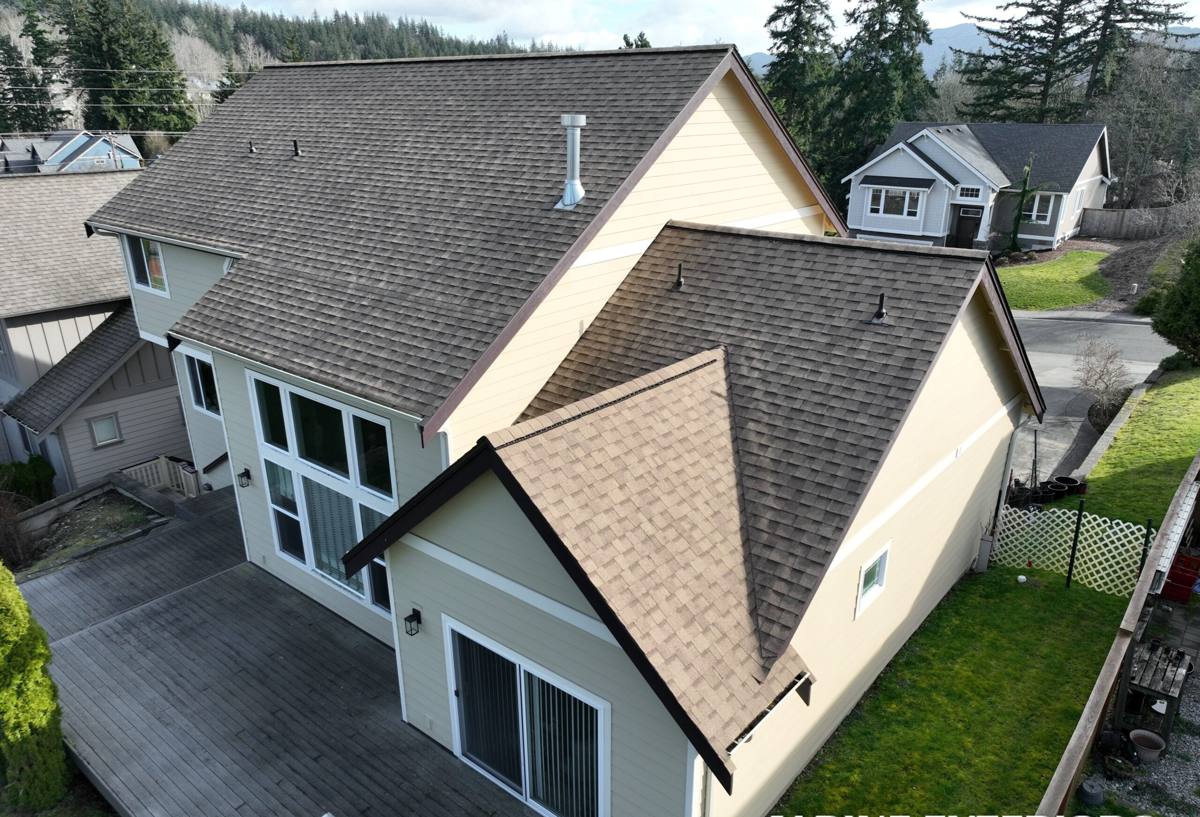
What Correct Siding Installation Actually Involves
Siding installation is a water-management system, not a cosmetic upgrade. Every layer behind the visible surface has a job, and skipping or rushing any one of them is where problems start.
The layers that do the real work
- Sheathing inspection: before anything new goes up, the sheathing underneath old siding gets checked for soft spots, water staining, or rot — problems that have to be fixed before a new weather barrier goes over them.
- Weather-resistive barrier: a properly lapped, sealed house wrap or building paper that sheds bulk water down and away from the wall assembly, installed shingle-style so every seam sheds water to the layer below it.
- Flashing at every penetration: windows, doors, hose bibs, light fixtures, and vents all need flashing that directs water back out, not into the wall cavity. This is the single most common shortcut we find on older siding jobs in this area.
- Rainscreen or drainage gap: a ventilated air space behind the siding lets any moisture that does get past the outer layer drain and dry out instead of sitting against the wall — a detail that matters more in a climate this wet than almost anywhere else in the country.
- Correct fastening: nail placement, spacing, and depth affect how the siding handles seasonal expansion and contraction. Overdriven or underdriven fasteners are a leading cause of cracking and premature failure.
- Sealed joints and clearances: proper caulking at butt joints and trim, plus the right ground clearance and gutter management, keep splashback and standing moisture away from the bottom courses.
Get all of that right and the siding itself becomes almost the easy part. Get any of it wrong, and even a premium product will underperform.
Why We Install Only James Hardie Fiber Cement
We don't install vinyl, LP SmartSide, Cemplank, Allura, primed spruce, or cedar. That's a deliberate standard, not a limitation on what we're capable of installing — we've simply seen how each of those materials performs over time in this exact climate, and we'd rather build our reputation on one product we trust completely than offer a menu of compromises.
James Hardie fiber cement is non-combustible, dimensionally stable in wet-dry cycling, and available in HZ5 formulations engineered for the moisture and temperature swings of the Pacific Northwest. The factory-applied ColorPlus finish is baked on under controlled conditions rather than field-painted, which matters directly for moss and mildew resistance — a uniform, dense finish gives organic growth far less to grip onto than a field-applied coat, and it holds its color without the fading and touch-up cycle that site-painted products need. It also carries a strong, transferable limited warranty, which only means something if the installation behind it is done to the manufacturer's specification — which is exactly what we get paid to guarantee.
None of this is a knock on every alternative product across the board. It's that we'd rather stand behind one system we know performs, coast to coast and especially here, than install something we'd have reservations recommending to our own family.
Signs Your York Home Needs New Siding
Not every siding problem requires full replacement, but these are the signs worth a professional look before they become structural:
- Visible cracking, warping, or buckling in panels or boards
- Soft or spongy spots when you press on the siding near the base of the wall
- Persistent moss or algae growth that returns within a season of cleaning
- Peeling or bubbling paint on wood or composite siding
- Rising energy bills with no other clear cause — often a sign of a compromised weather barrier
- Visible gaps at trim, corners, or butt joints where caulking has failed
- Interior wall staining or a musty smell near exterior walls
- Siding that's original to a home built more than 20-25 years ago, especially wood-based products
Material Comparison: What Homeowners in York Weigh
Every siding material has a real trade-off profile. Here's an honest look at how the common options stack up in a climate defined by salt air, driving rain, and a long moss season:
| Material | Moisture Behavior | Moss/Algae Resistance | Long-Term Maintenance |
|---|---|---|---|
| James Hardie fiber cement | Dimensionally stable, doesn't rot or swell | Dense factory finish resists organic growth | Occasional washing; no repainting for the life of the finish |
| Vinyl | Can warp or gap at seams, letting water track behind it | Moderate; grime and moss can build in seams and laps | Low upkeep but limited repair options if damaged |
| Cedar | Absorbs and releases moisture with the seasons; prone to swelling | Low; a favored surface for moss in shaded, damp areas | Regular sealing, staining, and moss treatment required |
| LP SmartSide / primed spruce | Engineered wood core is vulnerable if the factory seal is breached | Depends on field-applied paint quality and upkeep | Repainting cycle needed to protect the wood substrate |
Our Installation Process, Start to Finish
Every siding job in York follows the same sequence, because skipping steps is where climate-related failures start.
- On-site assessment: we walk the exterior, check for existing moisture damage, and evaluate exposure — which walls take the brunt of the wind-driven rain and which stay shaded long enough to hold moss.
- Removal and sheathing check: old siding comes off and the sheathing underneath gets inspected. Any soft or damaged sections are repaired before anything new goes on top.
- Weather barrier installation: a new, properly lapped weather-resistive barrier goes on, with flashing detailed at every window, door, and penetration.
- Rainscreen setup: a drainage gap is built in behind the siding so any incidental moisture can drain and dry rather than sit against the wall.
- Hardie installation to spec: panels or planks are installed with manufacturer-specified fastening, clearances, and joint treatment — the details that keep the warranty valid and the wall dry.
- Trim, caulking, and final detailing: corners, trim boards, and joints get sealed correctly, with attention to the spots that fail first on a rushed job.
- Walkthrough and cleanup: we review the finished work with the homeowner and leave the site clean.
What Siding Installation Costs in York
Every home is different, but the main cost drivers are consistent. A free on-site estimate is the only way to get a number specific to your house, but this is what tends to move the price:
| Factor | Why It Matters |
|---|---|
| Home size and wall complexity | More square footage and more corners, gables, and dormers mean more material and labor |
| Existing siding condition | Sheathing repair or rot remediation adds time and material before new siding can go on |
| Product line and profile | Lap siding, panel systems, and shingle-style profiles differ in material and install time |
| Trim and detail work | Window and door trim, corner treatments, and accent details add labor |
| Access and site conditions | Grading, landscaping, and how close the home sits to property lines affect setup and staging |
As a broad range, full siding replacement on a typical single-family home runs from the mid five figures into six figures depending on size and scope — but the only responsible way to quote your home is to walk it in person.
Why a Crew That Already Works in York Matters
A contractor who works this part of Bellingham regularly knows things a crew from outside the area doesn't: which walls in this neighborhood take the worst of the winter wind off the bay, how much of a rainscreen gap actually makes a difference in a climate this wet, and how Whatcom County's building and permitting requirements apply to a siding replacement on an existing home. That local familiarity shows up in details — flashing choices, ventilation, product selection — that a generic install wouldn't account for.
It also matters for accountability. A crew that plans to keep working in York and the surrounding Bellingham neighborhoods has every incentive to do the job right the first time, because a callback or a warranty issue shows up in a community where word travels. That's a different incentive structure than a crew passing through on a one-off job.
Caring for Your New Siding
James Hardie siding installed correctly needs very little from you, but a small amount of upkeep goes a long way in this climate:
- Rinse the siding with a garden hose once or twice a year to keep salt residue and grime from building up, especially on walls facing the bay
- Keep gutters clear so overflow doesn't run down the wall face
- Trim back shrubs and trees that keep siding shaded and damp, since that's exactly where moss takes hold
- Check caulking at trim and joints annually and have any gaps resealed before winter
- Address any impact damage promptly rather than letting a cracked panel sit through a wet season
If your York home's siding is showing its age, or you're planning ahead for a replacement, we're happy to come take a look. The estimate is free, there's no pressure, and you'll get a straight answer about what your home actually needs — just fill out the form below to get started.