 Bellingham Siding
 Roof Repair in Fairhaven: What This Neighborhood's Roofs Are Up Against
Fairhaven sits close enough to Bellingham Bay that the water shapes almost everything about how a roof ages here. It's one of Bellingham's older, more established neighborhoods, with a mix of housing that runs from early-century homes to newer construction tucked into the same hillside terrain leading up from the waterfront. Whatever the age of the house, the roof over it is dealing with the same basic combination of stresses: salt-tinged marine air, rain that gets pushed sideways by wind more often than it falls straight down, and a moss season that can run most of the year on shaded, tree-covered lots. We work throughout Whatcom County, and Fairhaven is one of the areas where that climate stress tends to show up earliest, usually as a slow leak or a soft spot long before anyone's thinking about a full roof replacement.
This page is about roof repair specifically, not full replacement. Most of the calls we get in Fairhaven start with a stain on a ceiling, a shingle that blew loose in a windstorm, or moss that's finally worked its way past the surface and into the roof deck underneath. Getting a repair right in this climate means understanding why the damage happened in the first place, not just patching the spot where the water finally showed up.
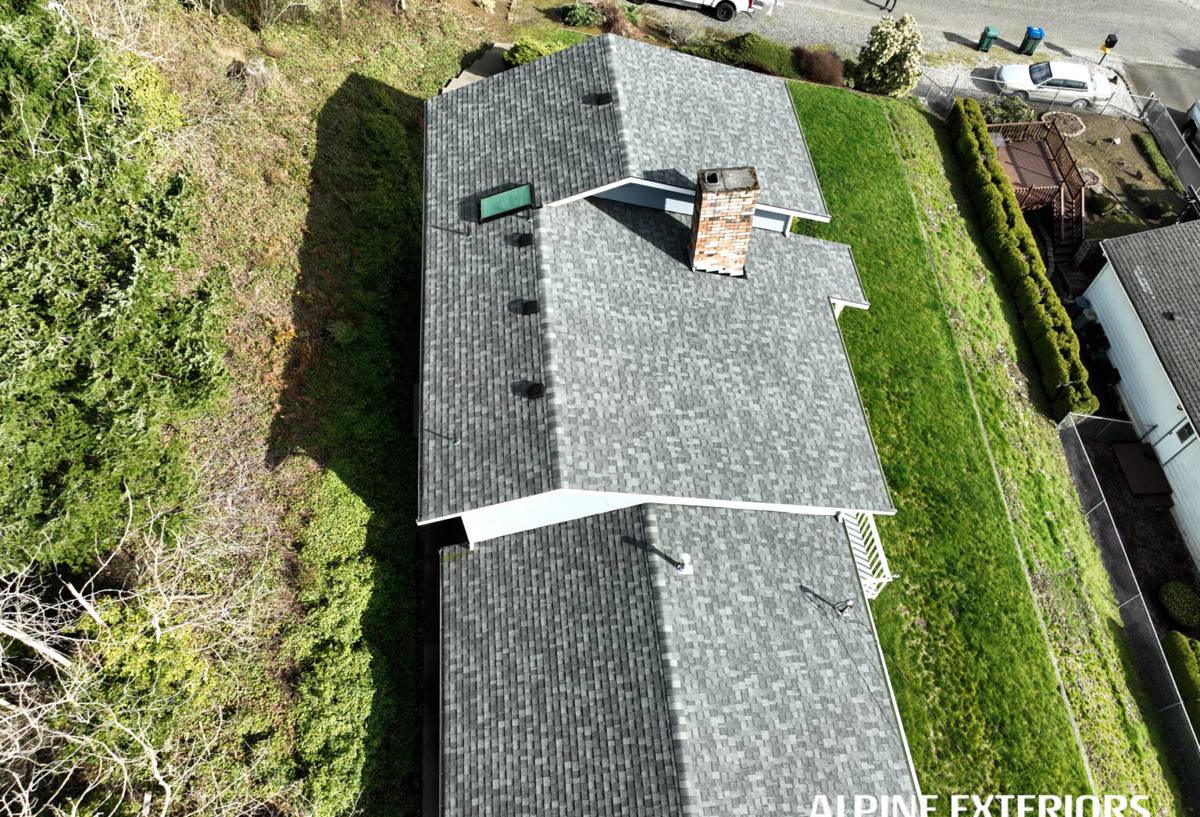
How Bellingham Bay Wears Down a Roof Over Time
Salt Air and Corrosion
Homes close to the bay sit in a steady drift of moisture-laden, mildly corrosive air, not just during storms but as a background condition most of the year. That exposure works slowly on exposed fasteners, flashing metal, and any hardware that wasn't rated for a marine environment. It's rarely dramatic. A nail head rusts, a fastener backs out a fraction of an inch, a flashing seam corrodes thin, and none of it is visible from the ground until water finds the opening.
Wind-Driven Rain
Fairhaven's position near open water means rain doesn't just fall on a roof, it gets pushed into it. Wind-driven rain works up under shingle tabs, into valleys, and against flashing from angles that a roof built for a calmer, drier climate was never really tested against. A repair that only addresses the surface, without accounting for how water is actually arriving at that spot, tends to fail again within a season or two.
A Long Moss Season
Mild temperatures, consistent dampness, and the mature tree canopy common around Fairhaven's older residential blocks add up to a moss season that can stretch across most of the calendar year on shaded or north-facing roof planes. Moss doesn't just look bad. It holds moisture directly against the shingle surface, works its way under tabs and around fasteners, and can lift materials enough to let water track underneath long before a leak becomes visible inside the house.
Hillside Runoff and Drainage
A fair amount of Fairhaven's housing sits on sloped terrain leading up from the waterfront, and that affects how water moves across a roof and off it. Undersized or clogged gutters, valleys that weren't built wide enough, and downspouts that dump water too close to the foundation all show up more often on hillside lots, and they all put extra strain on the roofing details that are supposed to be shedding that water in the first place.
Repair or Replace? How We Actually Make That Call
Not every roof problem in Fairhaven means a new roof. A surprising number of leaks trace back to one isolated failure point, something that can be repaired properly and left alone for years. The honest answer depends on the roof's age, how much of it is actually affected, and what we find once we're up there looking at it directly rather than guessing from the ground.
| Signal | Usually Points to Repair | Usually Points to Replacement |
|---|---|---|
| Age of roofing material | Under roughly 12-15 years, with the rest of the roof in reasonable shape | Near or past the shingle manufacturer's expected service life |
| Extent of damage | One valley, penetration, or section affected | Damage spread across multiple slopes or the whole roof plane |
| Moss and moisture pattern | Surface growth without deck-level softness | Soft or spongy decking found under moss-heavy areas |
| Cause of the leak | A single flashing, fastener, or shingle failure | Widespread underlayment failure or systemic material breakdown |
| Prior repair history | First real issue on an otherwise sound roof | Repeated patch jobs on the same roof over recent years |
We'll tell you plainly which category your roof is actually in. A repair that's genuinely going to hold is a better outcome for you than a replacement you didn't need, and we'd rather earn a repeat call in a few years than push a bigger job you don't yet need.
The Most Common Roof Repair Calls We Get in Fairhaven
- A ceiling stain that appears after a windstorm, usually tracing back to a lifted or missing shingle
- Leaks around a chimney, skylight, or vent pipe where flashing has corroded or come loose
- Moss buildup that's thick enough to hold standing moisture against the roof deck
- A valley that's leaking because it was undersized or improperly lapped during the original install
- Granule loss and cracking on an aging shingle roof that's not quite ready for full replacement
- Gutter and downspout backups that push water up under the roof edge instead of off of it
- Storm damage from wind gusts off the bay, including torn or missing shingles after a heavy blow
What a Correct Roof Repair Actually Involves
Diagnosing the Real Source
Water almost never shows up inside a house at the same spot it entered the roof. It tends to travel along the underlayment or a rafter before finding a gap in the ceiling below, which means a repair that just patches the visible stain's location often misses the actual entry point entirely. We trace the path from the interior damage back up through the attic and onto the roof itself before we decide what to fix.
Matching Materials and Techniques
A repair needs to integrate with the existing roof, not sit on top of it as a separate patch. That means matching shingle profile and, where possible, color, tying new underlayment into the old correctly at the seams, and using fasteners and flashing metal rated for the same marine exposure as the rest of the roof. A mismatched repair can shed water fine for a season and still fail at the seam between old and new material a year or two later.
Flashing Repair Done Right
Most leaks we trace back on Fairhaven roofs start at flashing, not in the open shingle field. Valleys, chimney step flashing, skylight curbs, and wall-to-roof transitions all need flashing that's properly lapped and integrated with the underlayment beneath it, not just caulked over as a quick fix. Caulk is a maintenance item, not a repair, and it buys you months, not years.
Moss and Debris Removal
Where moss is part of the problem, we remove it using methods that don't damage the shingle surface, and we look underneath it for softness or granule loss before calling the repair finished. Clearing moss without checking what it was hiding is how a repair job misses a second problem sitting right next to the first one.
Storm and Wind Damage Repair
Windstorms off the bay are a normal part of the season in this part of Whatcom County, and they're one of the most common reasons we get an urgent call. A gust strong enough to lift or tear off shingles can open a roof to water in a matter of hours, and the damage isn't always obvious from the ground, especially on a slope facing away from the street. After a significant blow, it's worth having a roof looked at even if nothing looks wrong from the driveway, since displaced shingles and torn flashing are easy to miss from below.
If you're dealing with an active leak during a storm, temporary measures like a tarp over the affected area can limit interior damage until a proper repair is possible. We treat storm calls as a priority, but we still diagnose the actual cause before we start work rather than just covering the first thing we see.
How Our Repair Process Works
- In-person inspection: We get on the roof and into the attic ourselves rather than estimating from a description or a photo, and we document what we actually find.
- Honest repair-or-replace assessment: You get a straight answer about which situation you're in, along with the reasoning behind it.
- Written estimate: The scope is itemized, covering the specific area of repair, materials, and labor, not a single vague line item.
- The repair itself: Work follows manufacturer specification for fastening, lapping, and flashing integration, with the same care we'd put into a full install.
- Verification before we leave: We check the repair holds and do a site and debris cleanup, including a magnetic nail sweep, before considering the job done.
Roof Repair Cost Factors in Fairhaven
| Factor | What It Affects | Why It Matters Here |
|---|---|---|
| Cause and location of the leak | Diagnosis time and scope of the fix | Flashing failures at valleys and penetrations are common on older Fairhaven roofs and take more care to trace than a straightforward shingle failure |
| Extent of hidden decking damage | Whether repair extends beyond the surface | Moisture that's been tracking under a roof near the bay for a while can soften decking before it's ever visible from outside |
| Roof pitch and access | Labor time and staging needs | Hillside lots common in Fairhaven can add setup time for safe access |
| Material matching | Whether a repair blends in or stands out | Older or discontinued shingle lines sometimes require a closer color or profile match than a newer, still-available product |
| Moss and debris removal | Added labor before the actual repair starts | Heavy moss buildup common on shaded Fairhaven lots often needs clearing before the real damage underneath can even be assessed |
Real numbers depend on what we actually find once we're on the roof, which is why we walk the property in person before quoting rather than pricing a repair sight unseen.
Why a Local Crew That Already Works Fairhaven Matters
A crew that repairs roofs in this stretch of Whatcom County on a regular basis has already seen how salt air corrodes underspecified flashing, how wind off the bay finds the weak point in a valley, and which roof orientations in Fairhaven hold moss the longest through the wet months. That experience shows up in the diagnosis, not just the fix. It's the difference between correctly tracing a leak back to its actual source on the first visit and chasing the same stain through two or three callbacks before finding it.
It also matters once the repair is done. A workmanship warranty only means something if the company behind it is still around and reachable a few years later, and a crew with an ongoing, established presence in the area is easier to call back than a name that did one job and moved on.
What to Check Before Hiring a Roof Repair Contractor
- Do they inspect the roof and attic in person, or quote based on a description alone?
- Does the estimate explain the cause of the leak, not just describe the fix?
- Do they carry current Washington state contractor licensing and liability insurance?
- Will they explain the difference between a repair and a full replacement in plain terms, and why they're recommending one over the other?
- Do they offer a written workmanship warranty separate from any manufacturer material warranty?
- Can they point to recent, real repair work in or near Fairhaven or the surrounding Bellingham area?
If you've got a leak, storm damage, or a roof that just needs an honest look before you decide what to do next, we're glad to come take a look at your Fairhaven home. Use the form below to request a free, no-pressure estimate.